THE SHORT ANSWER
The best buyer is the one with the strongest documented net settlement—not the loudest spot claim
Sell gold by first identifying what you own, then placing it in the correct market: bullion, collectible, secondhand jewelry or scrap. Calculate a fine-gold reference, collect comparable written net offers, control custody and price-lock terms, reconcile the final assay and keep the records. A high “percent of spot” promise is not enough.
Product, purity, condition and evidence.
Not unmatched headline bids.
Insurance, tracking and return rights.
Weight, assay, deductions and payment.
SALE AND SETTLEMENT FLOW
Follow one item from identity to cleared payment
A useful offer comparison keeps the exact asset, market route, reference time, written net bid, custody handoff, inspection deductions and payment deadline connected. If any link changes, recalculate the ranking before accepting the revised transaction.
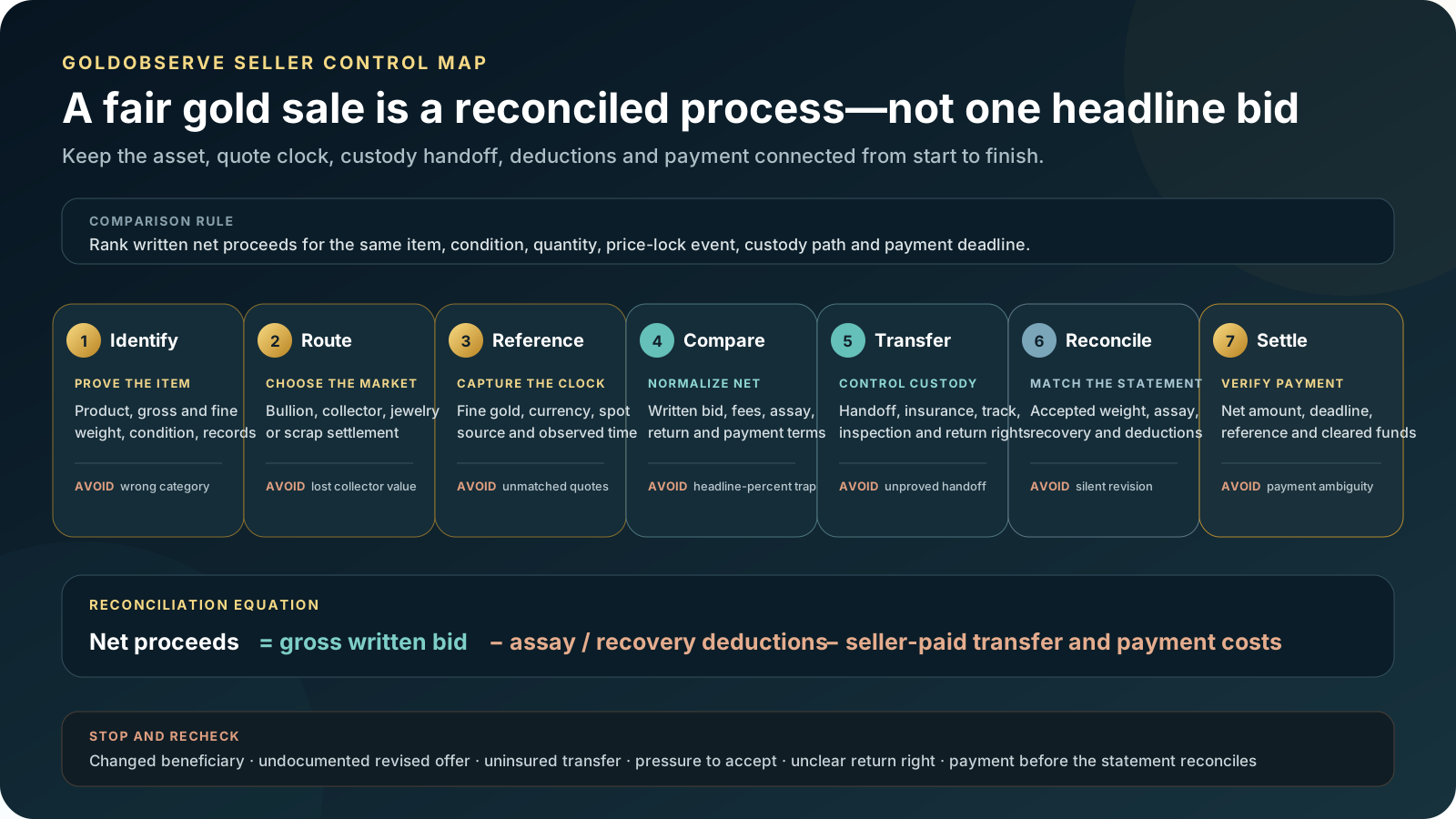
This diagram organizes seller evidence; it does not verify a buyer, authenticate an item, guarantee carrier coverage or decide whether an assay or deduction is reasonable. Use the specific written agreement and independently verified buyer, carrier, insurer and payment details.
STEP 1 / IDENTIFY
Do not let the buyer choose the category after taking custody
Record the form, maker or mint, product name, year, denomination, gross weight, published or marked fineness, condition, serial number, packaging, certificate and acquisition evidence. Photograph both sides, edges, marks and any damage. This is not just an authenticity step: the category controls the market.
Compare exact-product bids and verification requirements.
Obtain a specialist view before accepting melt-only pricing.
Maker, design, condition and stones may matter beyond gold.
Weight, accepted fineness, recovery and fees dominate.
The FTC explains that solid, plated, filled and overlay jewelry are different constructions. A surface mark alone does not prove the whole item is payable gold. Conversely, melting a collectible or signed piece can destroy information that supported a higher-value channel.
STEP 2 / BUILD A REFERENCE
Translate the item into fine gold before discussing a bid
For a documented bullion product, use the issuing mint or refiner's exact fine-gold specification. For homogeneous scrap, estimate fine gold as gross weight × fineness. For stone-set, hollow, plated, filled, soldered or mixed material, gross weight can overstate payable gold. Label the result as a reference until the accepted settlement method is known.
fine troy ounces = payable gold grams ÷ 31.1034768reference melt = fine troy ounces × same-currency spot pricenet proceeds = gross buyer payment − every seller-paid costCapture provider, currency, unit and observation time. The CFTC defines spot as the cash price for immediate physical metal and describes the dealer spread as the difference between selling above spot and buying below spot. A retail item does not automatically settle at the benchmark.
Calculate net gold sale proceedsSTEP 3 / CHOOSE THE MARKET
Channel fit can outweigh a small difference in quoted percentage
U.S. Mint Authorized Purchasers must maintain a two-way market for U.S. Mint bullion through the distribution network, but the Mint does not endorse a specific retail dealer. Market infrastructure does not remove the need to compare your actual net bid.
STEP 4 / CAPTURE COMPARABLE OFFERS
Normalize the offer before ranking it
Ask each buyer to identify the item category, fine-weight or assay basis, benchmark source, price-lock event, gross bid, payout percentage, recovery, fees, shipping, insurance, return rights, payment method and payment deadline. Record the same moment when possible. An offer locked at shipment cannot be compared directly with one locked after receipt if gold moved between them.
- Use the exact same item, quantity, condition and packaging.
- Separate product bid from metal-only settlement.
- Convert every route to net proceeds in one currency.
- Deduct insured shipping, assay, refining, commission, wire and return costs borne by you.
- Record how long the quote remains valid and what can change it.
- Do not count a conditional bonus until its written conditions are satisfied.
A slightly lower local offer can be better when payment is immediate, the item never leaves your control and there is no shipping or assay dispute. A higher mail-in offer can win when insurance, transparent inspection, rejection rights and prompt settlement are contractually clear.
STEP 5 / VERIFY THE BUYER
Reputation research is part of the price
The CFTC warns that precious-metals fraud often starts with unsolicited promotions and high-pressure sales. Before a sale, verify the legal business name, physical address, operating history, relevant licensing where applicable, named principals, complaint history, insurance and written terms. Do not treat an online review count as identity proof.
- Independently locate contact details rather than relying on a message or ad.
- Search the business and principals with complaint, lawsuit and enforcement terms.
- Confirm who receives the package and who legally owes payment.
- Refuse requests to pay a fee by gift card, crypto transfer or unusual irreversible method.
- Never allow an unsolicited stranger into your home to inspect valuable metals.
- For a private meeting, use a controlled public or professional verification location.
STEP 6 / CONTROL CUSTODY
A price is worthless if the transfer cannot be proven
Before shipment, document the item, tamper-evident packaging, carrier acceptance, tracking number, declared value and insurance scope. Confirm whether the carrier actually covers precious metals; a purchased label does not automatically mean the contents are insured. Keep package weight and handoff evidence. For in-person sales, do not let the item leave sight until verification, final written price and secure payment are complete.
Mail-in terms should explain what happens after inspection: acceptance, revised offer, rejection deadline, storage, return shipping, insurance and abandoned-property treatment. Silence is not consent to a lower revised price.
STEP 7 / RECONCILE
Match the settlement statement back to the item you sent
The final statement should identify received gross weight, rejected non-metal weight, sample or assay result, payable fine metal, recovery, benchmark price and timestamp, payout percentage, each fee, gross payment, net payment and payment reference. Challenge a mismatch before accepting when the agreement permits. Preserve the original and final offer rather than keeping only the deposit notification.
Understand assay and refining deductionsTAX AND REPORTING BOUNDARY
A form threshold is not the same as a tax exemption
IRS Publication 544 states that gold, silver, gems and coins are generally capital assets except when held for sale by a dealer. Gain, loss, basis, holding period and reporting depend on the facts. The IRS separately corrected the 2025 and 2026 Form 1099-B precious-metal instructions in June 2026. Whether a broker issues a form does not by itself decide whether a taxable gain must be reported.
Keep acquisition and sale records and use current official guidance for your jurisdiction. GoldObserve does not estimate tax, assume a basis or tell a buyer what information return to issue.
PRIMARY SOURCES
Official evidence used in this guide
- CFTC and FINRA: 10 questions on physical metals for spot, spread, written fees and dealer diligence.
- CFTC Precious Metal Frauds hub for unsolicited-contact and markup warnings.
- U.S. Mint Bullion Consumer Awareness and bullion program for two-way market and product-specification context.
- FTC precious-metal jewelry guidance for solid, plated, filled and overlay distinctions.
- LBMA sampling and assaying for settlement confidence.
- IRS Publication 544 and the 2026 reporting correction for U.S. boundaries.
FAQ
Selling gold questions
What is the safest way to sell gold?
Identify the item, preserve evidence, obtain multiple written same-time net offers, verify the buyer and custody terms, use insured transfer, and release ownership only through a documented settlement and payment process.
Where should I sell gold coins?
Common bullion usually belongs in a competitive bullion-dealer channel; rare or graded coins need a numismatic specialist or transparent auction comparison. A scrap buyer can erase collector value by pricing only metal.
Should I sell gold jewelry for melt value?
Not until checking whether maker, design, stones, condition or resale demand adds value. If the metal route remains best, separate non-gold parts, hallmark evidence, assay terms and every deduction.
How many gold buyers should I compare?
There is no magic number, but one quote gives no market evidence. Capture at least two complete offers for the same item, quantity, condition, price-lock time, payment method and transfer costs.
Can a buyer change the price after receiving my gold?
That depends on the written agreement. Before shipping, confirm inspection rights, assay method, price-lock event, rejection procedure, revised-offer consent and insured return terms.
Is selling gold below spot always unfair?
No. A buyer may bear verification, hedging, refining, inventory and resale costs. The useful test is whether the net discount is transparent and competitive for the exact product and channel.
What records should I keep after selling gold?
Keep identity and acquisition records, photographs, serials, grading documents, quotes, shipping and custody evidence, assay, settlement statement and proof of payment. Tax basis and reporting may depend on them.