THE SHORT ANSWER
A buyback quote is a product-specific bid, not the gold chart
Gold spot is a benchmark per fine troy ounce. Melt value translates your item into that benchmark. A buyback bid is what a specific buyer will pay under stated product, timing, verification and fee terms. Net proceeds are what remains after the costs you bear. Compare the last line.
Same currency and observation time.
Fine ounces × spot.
Product and terms matter.
Bid minus seller costs.
PRICE LADDER
Four numbers answer four different questions
The CFTC explains that dealers normally sell above spot and buy below it, with the difference called the dealer spread. That general market structure does not validate any particular spread. Each quote still needs competition and written terms.
BID / ASK MAP
Keep spot, melt, bid and net proceeds on separate lines
Spot is a reference, melt translates contained metal into that reference, a buyback bid is the buyer's product-specific offer, and net proceeds remain after seller-paid costs.
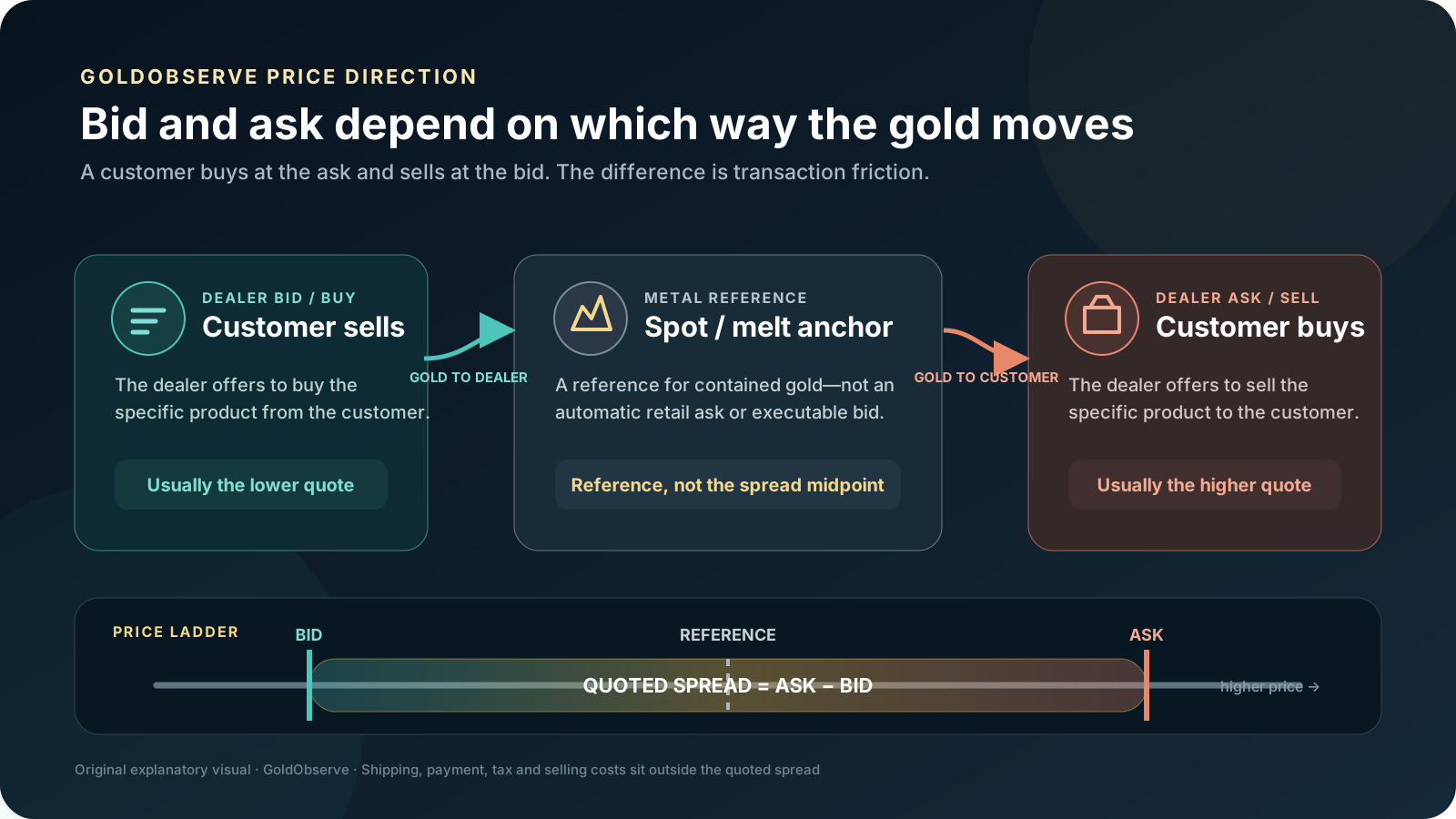
Quote boundary: The diagram explains price roles, not a current dealer quote. Record the exact product, reference time, accepted fine weight, deductions and payment terms before comparing offers.
PERCENTAGE QUOTES
“Percent of spot” needs a denominator and a clock
A statement such as “we pay 95%” is not comparable until it answers: 95% of which benchmark, in which currency, at what timestamp, applied to which accepted fine weight, before or after which fees? If assay occurs after receipt, the final denominator may differ from the seller's initial calculation.
quoted gross payment = accepted fine oz × locked spot × payout %net proceeds = quoted gross payment − seller-paid costsnet % of reference melt = net proceeds ÷ original reference melt × 100Use the original reference melt as a stable audit line and separately show any assay or recovery change. Folding both into one percentage makes it impossible to tell whether the price changed because of market movement, metal measurement or fees.
WHY BIDS DIFFER
The same gold can have different liquidity in different forms
A current, liquid coin or sealed bar may be easier to resell than an unknown piece.
Exact specifications, provenance and accepted authentication can reduce uncertainty.
Fixed inspection and payment costs affect small and large lots differently.
The buyer may price the interval between quote, receipt, verification and resale.
A product can receive a strong bid where it turns quickly and a weak bid elsewhere.
The wrong channel can discard a premium the right buyer recognizes.
The U.S. Mint says its Authorized Purchasers support a two-way market for Mint bullion through the distribution chain. This explains why widely recognized bullion can have organized bids, but it does not guarantee a retail price or endorse a dealer.
QUOTE NORMALIZATION
Use a same-product, same-time comparison
- Identify the same exact product, year or series, size, condition and packaging.
- Record one spot source, currency, unit and observation time.
- Ask when each buyer locks the price and how long acceptance lasts.
- Convert bids to total net proceeds and net amount per fine ounce.
- Deduct shipping, insurance, assay, refining, commission and payment fees borne by you.
- Keep verification, return and payment risk beside—not hidden inside—the price ranking.
COMMON ERRORS
Five comparisons that look precise but are wrong
- Comparing a one-ounce coin bid with a gram price without unit conversion.
- Applying spot to gross 14K jewelry weight as though it were fine gold.
- Comparing today's cash offer with yesterday's spot reference.
- Ranking a mail-in gross offer above a local net offer while ignoring shipping and assay.
- Sending a rare coin to a melt buyer because the metal percentage looks competitive.
A lower-percentage offer can produce higher net proceeds if it accepts more payable material, charges fewer fees or locks the price earlier. A higher-percentage offer wins only when its denominator, assay and costs are equally favorable.
PRIMARY SOURCES
Official market and consumer references
- CFTC and FINRA physical-metals questions for spot, spread, fee disclosure and buyback questions.
- U.S. Mint Bullion Consumer Awareness for dealer diligence and two-way market context.
- U.S. Mint bullion program for bullion product and distribution boundaries.
FAQ
Gold buyback price questions
What is a gold buyback price?
It is the price a buyer offers to acquire a specific gold item under stated conditions. It may be quoted per item, per fine ounce, as a percentage of melt, or as a final cash amount.
Why is a gold buyback price below spot?
Spot is a wholesale benchmark for immediate metal, while a retail buyer may bear verification, hedging, inventory, refining, payment and resale costs. Product demand and competition also affect the bid.
What does 95% of spot mean when selling gold?
It is incomplete unless the contract identifies which weight, fineness, assay, benchmark, price-lock time and fees define that percentage. Calculate the final amount after every deduction.
Is a dealer spread the same as my selling loss?
No. Dealer spread is the gap between ask and bid for the product. Your realized gain or loss also depends on original purchase cost, later spot price, storage, shipping, taxes and other costs.
Do collectible coins have a spot-based buyback price?
They have metal value, but collector bids can depend more on exact issue, rarity, grade, population, provenance and buyer demand. A scrap or generic bullion bid may omit that value.
How do I compare two gold buyback quotes?
Match the exact item, quantity, condition, quote time, price-lock event, verification route, fees, transfer cost and payment method. Rank net proceeds, not the largest headline percentage.