THE SHORT ANSWER
Compare net proceeds, not the headline percentage
A gold sale starts with contained fine gold, but the money received can also depend on assay fineness, payable recovery, the buyer's payout percentage, fixed fees, shipping and insurance. This calculator keeps every deduction visible and compares an optional cash offer. No commercial quote is prefilled.
Fine gold × same-time spot.
Assay × recovery.
Enter the written term.
After every entered cost.
SETTLEMENT FLOW
Follow one item from identification to cleared payment
Keep the product record, timed reference price, written offer, custody handoff, deductions and payment reference connected. The final amount is a settlement result, not a headline payout percentage.
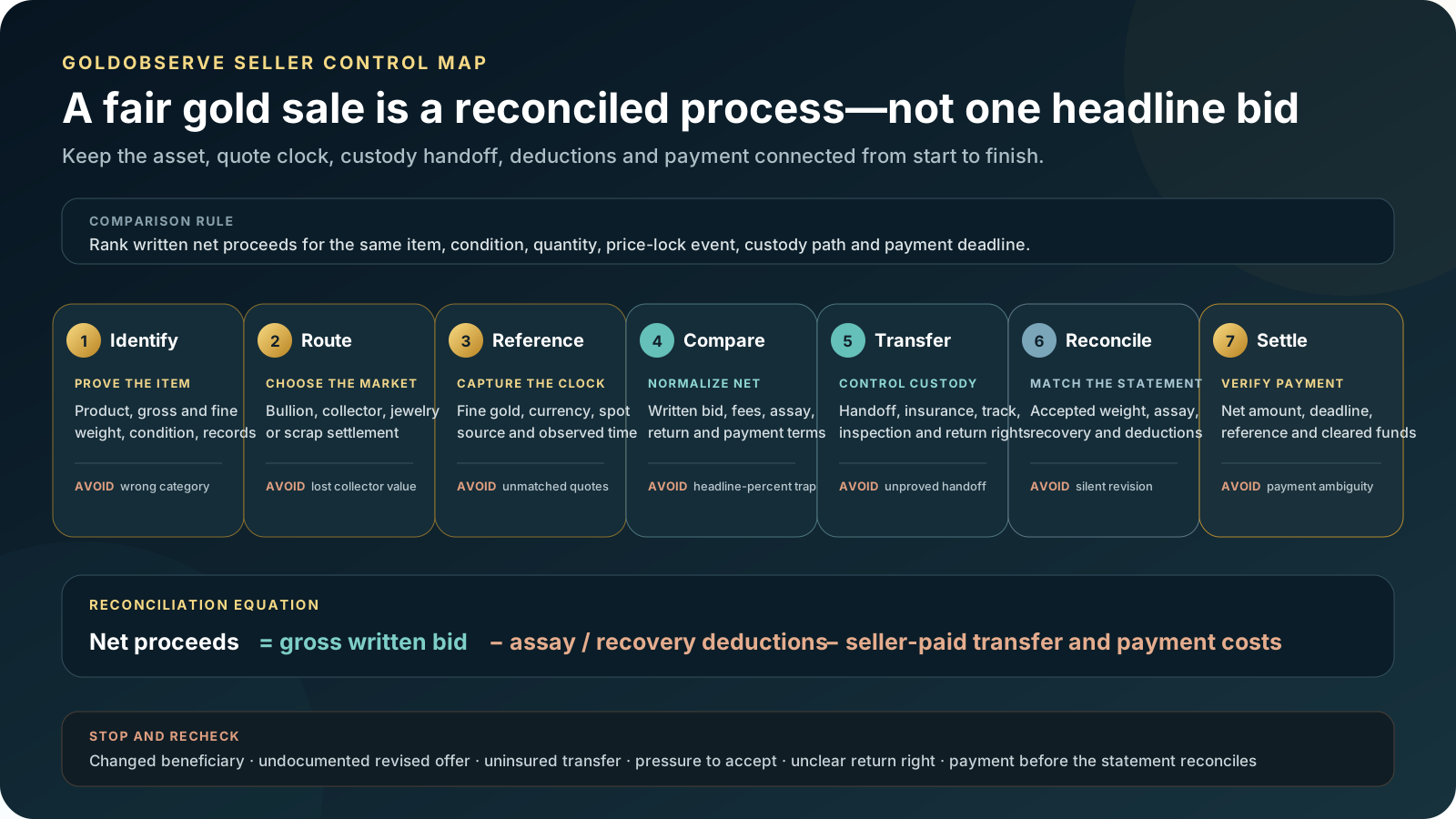
Method boundary: The flow organizes evidence; it does not verify a buyer, authenticate an item, guarantee carrier coverage or decide whether an assay or deduction is reasonable.
INTERACTIVE WORKSHEET
Model the complete settlement waterfall
Choose the currency, enter the lot's gross weight and declared fineness, then copy the buyer's written assay, recovery, payout and fee terms. The live reference includes provider and observation time; a manual price remains possible when the feed is unavailable.
Price reference
Shows the source and observation time of the metal price used here. Product premiums, dealer quotes and taxes are separate.
- Source
- No provider
- Observed
- Observation time unavailable
- Age
- Checking age…
- Delivery
- No data layer available
Checking the current market reference.
FORMULA
One payout percentage cannot explain every deduction
declared fine oz = gross grams × declared fineness / 1,000 ÷ 31.1034768payable fine oz = gross grams × assay fineness / 1,000 ÷ 31.1034768 × recovery %modeled net = payable fine oz × spot × payout % − assay fee − shipping − other costsThe declared-melt line is a comparison reference. It is not a promise that every part of the item is gold, that the assay will match a hallmark, that recovery is 100%, or that a buyer will pay spot. Keep each variable separate so a lower quoted percentage is not mistaken for a hidden fee—or a high percentage for a better net offer.
THREE VALUATION PATHS
Coins, bars and jewelry do not enter the sale process the same way
A documented coin or bar may trade from its exact product identity and marketability, not only scrap content.
Gross weight, accepted fineness, recovery and fees usually dominate.
Rarity, date, mint, grade and provenance can exceed melt; do not destroy that evidence through a scrap route.
Design, maker and condition may support a resale channel beyond metal-only payout.
QUOTE AUDIT
Ask seven questions before transferring custody
- What exact product, weight and fineness will be priced?
- When is the metal price locked: booking, receipt, inspection or acceptance?
- Is the offer a fixed cash amount or a percentage of which melt definition?
- How is the sample taken, which assay method is used and can you challenge the result?
- Which recovery, treatment, stone, solder or non-payable deductions apply?
- Who pays insured shipping, return shipping and loss while the lot is in transit?
- When and how is payment released, and what record identifies the settled lot?
The CFTC advises obtaining fees and agreed prices in writing and asking what the metal could be sold back for. The U.S. Mint also recommends knowing the dealer and checking published bullion specifications. Those buyer-side warnings translate directly into a seller rule: do not surrender the item while material settlement terms remain verbal.
RECORDS AND TAX BOUNDARY
Keep the evidence that explains both basis and proceeds
Retain acquisition records, invoices, inherited or gifted basis documents, photographs, serial numbers, grading certificates, shipment tracking, insurance, assay report, written quote, final settlement and payment confirmation. IRS Publication 544 says gold, silver, coins and similar property are generally capital assets except when held for sale by a dealer. That general statement does not determine a specific seller's rate, loss treatment or reporting form.
The IRS published a June 2026 correction to the 2025 and 2026 Form 1099-B instructions for certain precious-metal sales. Use current official instructions and professional advice rather than a dealer myth or an old quantity chart.
METHOD AND LIMITS
Reproducible math, user-entered commercial terms
- One troy ounce equals 31.1034768 grams.
- The loaded gold price is labelled with provider, freshness and observation time.
- A blank assay uses declared fineness only for scenario comparison; it is not a test result.
- Recovery starts at a visible 100% neutral assumption and should be replaced when the written terms differ.
- Payout percentage and cash offer remain blank until entered by the user.
- No dealer ranking, appraisal, authenticity decision, tax result or future price is generated.
PRIMARY SOURCES
Consumer, market and tax records
- CFTC and FINRA physical-metals questions for spot, spread, written fees and buyback questions.
- U.S. Mint Bullion Consumer Awareness for two-way markets, dealer diligence and published specifications.
- LBMA sampling and assaying chapter for settlement confidence and independent assayer context.
- IRS Publication 544 and the 2026 precious-metal reporting correction for U.S. tax boundaries.
FAQ
Gold sale proceeds questions
How do I calculate what I will receive for selling gold?
Start with gross weight and a defensible fineness, convert contained gold to fine troy ounces, multiply by a same-currency spot reference, then apply the written assay, recovery, payout and fee terms. Net proceeds are the amount left after every sale cost.
What percentage of spot should a gold buyer pay?
There is no universal correct percentage. Product identity, quantity, verification cost, market depth, price risk and the buyer's business model matter. Compare written net proceeds from multiple buyers at the same quote time.
Why is the assay result separate from the hallmark?
A hallmark or published coin specification is identification evidence; an assay is a measurement used for settlement. Jewelry can also contain non-gold parts, solder, stones or plating, so a buyer may price only accepted payable material.
Does the calculator supply a real buyer quote?
No. The market reference can load live, but payout, recovery, assay and fees stay blank or neutral until you enter written terms. GoldObserve does not scrape, invent or endorse dealer offers.
Should shipping and insurance be deducted from a mail-in offer?
Yes when you bear those costs. Also confirm custody, loss responsibility, return-shipping terms, price-lock timing and whether an offer can change after inspection.
Does selling gold create a tax obligation?
It can. Tax treatment depends on jurisdiction, asset type, basis, holding facts and seller status. The IRS, for example, treats gold and coins as capital assets in many non-dealer cases, but owner-specific reporting requires current professional advice.