THE SHORT ANSWER
Settlement depends on the sample, assay, payable metal and fees—not one purity number
A refiner or scrap buyer may sample a lot, report assay fineness, apply payable recovery, multiply payable fine gold by a locked benchmark and subtract processing costs. The seller should know the formula and dispute process before the material is altered. An assay result alone is not the final payment.
Control mixing and reserve portions.
Name method and uncertainty.
Keep separate from assay.
Reconcile every line.
SETTLEMENT WATERFALL
Follow the metal from received weight to net payment
- Received gross weight: identify the lot and reconcile packaging, stones, moisture or other non-metal.
- Prepared material: document sorting, melting, homogenization or other preparation.
- Representative sample: define who samples, when, how many portions and which seals identify them.
- Assay fineness: state method, units, laboratory and result.
- Contained fine gold: accepted metal weight × assay fineness.
- Payable fine gold: contained fine gold × written recovery or payable percentage.
- Price and costs: apply the defined benchmark and payout, then subtract itemized charges.
assayed fine oz = accepted grams × assay fineness / 1,000 ÷ 31.1034768payable fine oz = assayed fine oz × payable recovery %net settlement = payable fine oz × locked spot × payout % − itemized feesSAMPLING
A precise laboratory result can still misprice an unrepresentative sample
Mixed jewelry, solder, plated material, electronic scrap, sweeps and other recycled feed can be heterogeneous. A surface reading from one point may not represent the entire lot. The agreement should state sorting, preparation, melt or homogenization, sample size, number of portions, sealing and chain of custody.
LBMA's refining chapter notes that independent assayers help counterparties gain confidence in precious-metal valuation and settlement. At wholesale scale, referee and proficiency systems exist because measurement disagreement is a real commercial risk—not because one handheld reading settles every material.
Agree whether a witnessed or sealed reserve sample will exist, who can test it, which tolerance triggers an umpire assay and who pays. After the entire lot is melted or processed, reconstructing the original dispute can be impossible.
METHOD BOUNDARIES
Choose the assay question before choosing the instrument
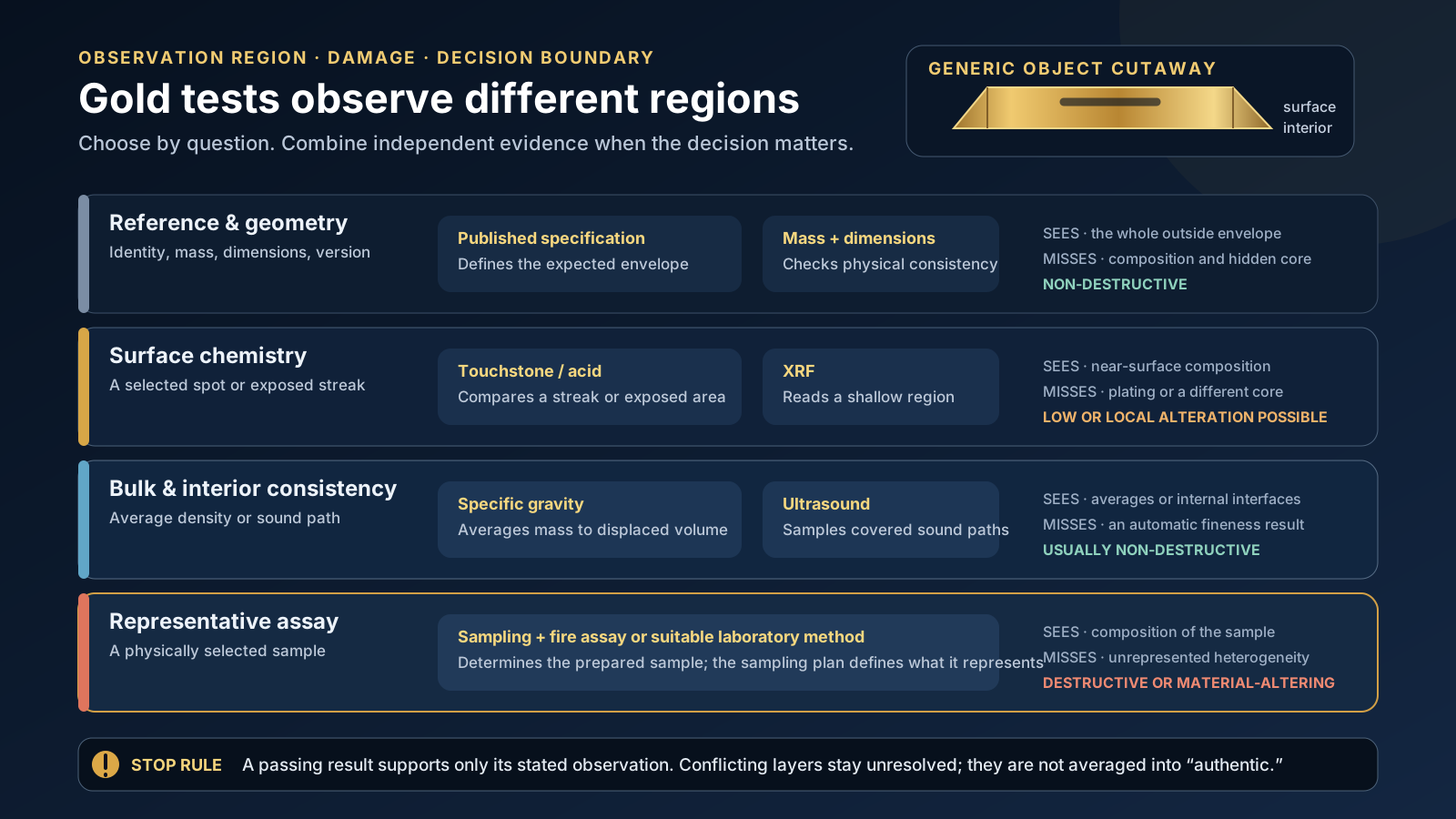
Method boundary: The diagram compares observation depth and evidence scope; it is not an accuracy ranking. A settlement result still depends on representative sampling, calibration, lot identity and the written dispute procedure.
LBMA's Good Delivery monitoring discusses corrected fire assay across a wide gold-fineness range and permits spectrographic approaches in defined high-purity contexts. That wholesale standard illustrates method discipline; it does not convert a retail test into an authenticity certificate.
For a method-by-method decision, compare gold testing methods, then review the dedicated XRF surface-analysis limits and fire-assay sampling chain.
FEE ANATOMY
Separate measurement, processing and price terms
Per sample, lot, method or minimum charge.
Fixed, weight-based, value-based or tiered.
A percentage of assayed content, not a cash fee.
Percentage of payable melt or a defined benchmark adjustment.
Charges for difficult, hazardous or low-grade feed.
Shipping, insurance, return, wire or administration.
Ask whether minimum fees apply, whether multiple items are combined into one lot, whether taxes apply to services, and whether the payout percentage already embeds refining economics. Do not subtract the same cost twice.
DISPUTE CHECKLIST
Write the umpire process before a result is disputed
- Define the lot and accepted gross weight.
- Name the preparation, sampling and primary assay method.
- Preserve sealed reserve samples under documented custody.
- Name the independent laboratory or method for a challenge.
- Set the allowed difference and the result that controls settlement.
- Assign assay, umpire, shipping and delay costs.
- State whether the metal can be sold, returned or held during dispute.
A buyer's internal screen may be reasonable for a small immediate offer, but the seller should understand that accepting the price can also mean accepting the method. Larger or unusual lots justify more formal sampling and dispute protection.
WHOLESALE BOUNDARY
Good Delivery does not mean every product from a listed refiner is a Good Delivery bar
LBMA states that only bars meeting Good Delivery requirements are acceptable for Loco London settlement, and its FAQ makes clear that other products from a listed refiner are not automatically London Good Delivery. The lists and responsible-sourcing program provide valuable refinery context, but they do not guarantee the terms of a retail scrap transaction.
Use refinery accreditation, responsible-sourcing disclosures and assaying competence as evidence inputs. Still read the actual retail contract, insurance, pricing, fees and complaint process.
PRIMARY SOURCES
LBMA technical and sourcing records
- LBMA: Sampling and Assaying for independent-assayer and settlement context.
- LBMA: London Good Delivery Gold and Silver for qualifying-bar and market boundaries.
- LBMA Responsible Gold Guidance V9 introduction for listed-refiner sourcing requirements.
FAQ
Gold assay and refining questions
What is a gold assay?
An assay estimates or determines the gold content of a sample using a stated method. For settlement, the sampling plan and lot identity matter as much as the reported fineness number.
Why can a refiner pay less fine gold than the assay suggests?
The contract may apply payable recovery, treatment losses, minimum deductions or non-payable material. Each term should be separate from the assay result.
Is XRF the same as fire assay?
No. XRF is a non-destructive surface-analysis method, while corrected fire assay is a destructive laboratory method used for high-accuracy gold analysis. Suitability depends on the lot and settlement agreement.
What is a refining fee?
It is a charge for processing or settlement services. It may be fixed, weight-based, value-based or embedded in the payout percentage. Ask for the exact formula and minimum charge.
How can I challenge a gold assay?
Agree in advance on sealed reserve samples, independent umpire or referee procedures, tolerances, costs and which result controls settlement. A dispute process invented after melting is weak protection.
Does LBMA Good Delivery status certify my retail scrap buyer?
No. LBMA Good Delivery applies to listed refiners and qualifying bars in the wholesale market. It is useful process context, not a retail-buyer guarantee or appraisal.