THE SHORT ANSWER
No single test answers every gold question
Select a method by the exact object, risk and decision. Official specifications and calibrated mass and dimension checks test product consistency; touchstone and acid methods give an early surface indication; XRF estimates elemental composition near the surface; density tests the object's average mass-to-volume relationship; ultrasound looks for internal interfaces; representative fire assay can determine fineness but consumes a sample. A defensible process preserves conflicts instead of turning them into a pass score.
VISUAL METHOD MAP
Match the observation region to the decision
Read down the map by evidence region rather than by a supposed accuracy score. The methods answer different questions: exterior consistency, selected surface chemistry, whole-object averages, covered internal paths or the composition of a prepared sample.
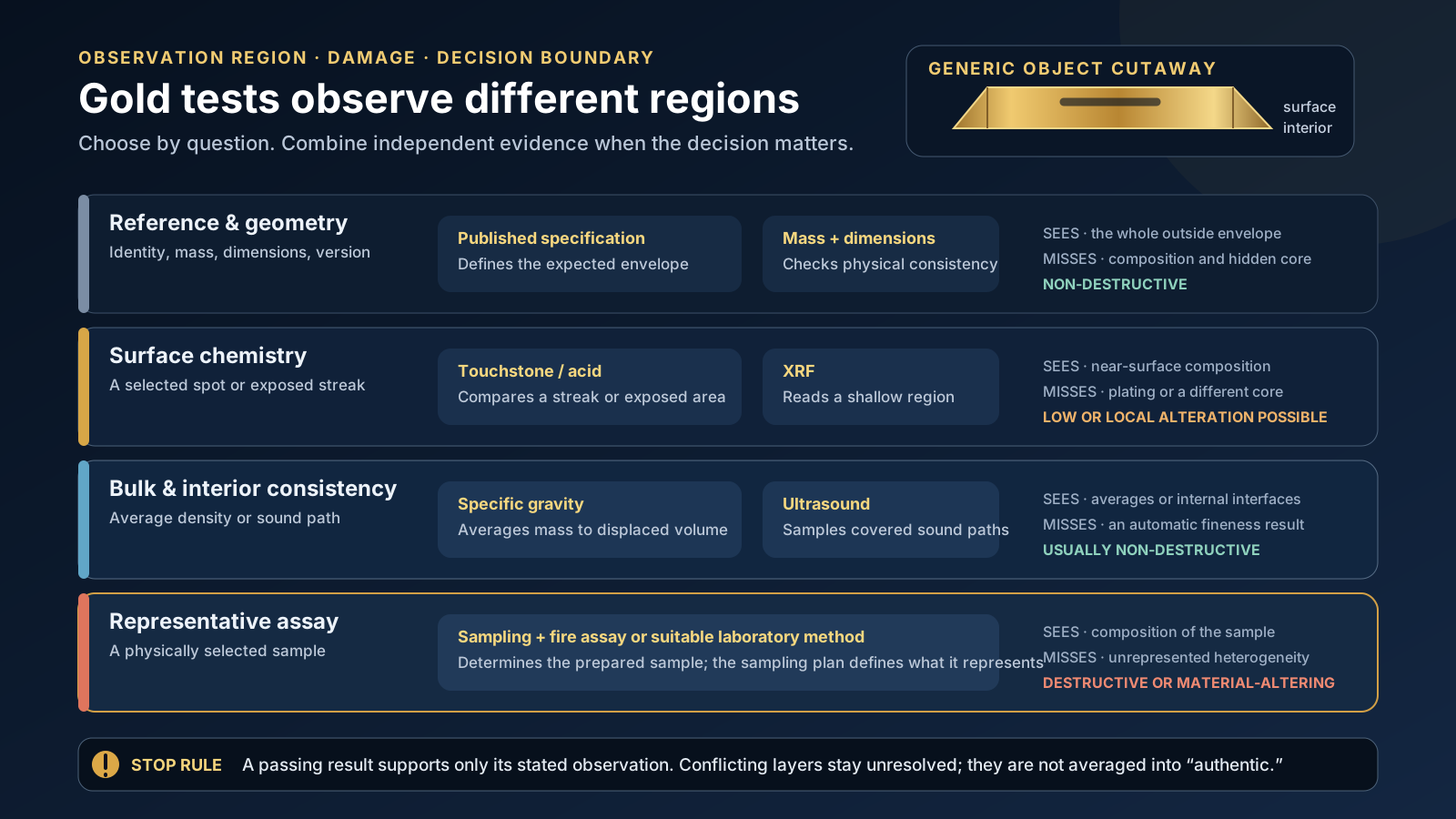
Method boundary: This schematic does not rank instruments, prescribe a test plan or authenticate an item. Actual depth, uncertainty and damage depend on the object, preparation, calibration, operator, coverage and sampling design. Preserve raw observations and unresolved conflicts.
DECISION TABLE
Start with the question the method can actually answer
EVIDENCE LADDER
Escalate when risk or contradiction rises
Exact mint, refiner, product, year, marks and legitimate version.
Invoice, seller identity, payment protection, return window and sealed-state evidence.
Official mass, dimensions, design and package—not a marketplace listing.
Use calibrated non-destructive methods with raw observations and stated limits.
A failed or conflicting layer is a stop signal, not something to average away.
Qualified independent testing, representative sampling or rejection as the decision requires.
OBJECT FIRST
A coin, sealed bar and scrap lot need different plans
PRIMARY AND STANDARDS SOURCES
Methods are only as strong as their scope and controls
- LBMA Physical Market Guidelines distinguish surface XRF, ultrasound, eddy current and representative destructive analysis. LBMA states that no definitive non-destructive solution is currently endorsed.
- Hallmarking Convention technical glossary defines touch acid and touchstone testing as early indications used in screening, not final fineness determinations.
- Hallmarking Convention technical decisions separate homogeneity screening from approved analysis and identify cupellation under ISO 11426 for gold fineness.
Sources reviewed July 31, 2026. Instrument procedures, safety data, standards and acceptance criteria can change. Use the current method documentation for the exact item, instrument, laboratory and decision.
FREQUENTLY ASKED QUESTIONS
Gold testing method questions
What is the most accurate way to test gold?
There is no universal single best test. Representative sampling plus an appropriate laboratory method can determine fineness, but destroys or alters the item. Non-destructive methods answer narrower surface, geometry or interior-consistency questions.
Can one non-destructive test prove a gold bar is genuine?
No. LBMA says there is no definitive non-destructive testing solution it can endorse. Product identity, provenance, measurements, surface and interior evidence, operator competence and recourse should be combined.
Should I test sealed gold?
Opening packaging can affect resale or recourse. First verify the product, seller, package and official specifications, then agree in writing who may open or test it and what happens if evidence conflicts.
Does a passing test establish market value?
No. Testing can support identity, composition or internal-consistency evidence. Value also depends on weight, condition, market, premium, grade, fees and the effective date.