THE SHORT ANSWER
Verify the beneficiary through a channel the payment message cannot control
A correct invoice and familiar email thread do not prove new wire instructions are genuine. FBI IC3 warns that compromised email accounts can redirect legitimate payments. Independently call a known authorized contact, read back the beneficiary and account, reconcile the legal entity and document the verification before sending money.
OUT-OF-BAND CHECK
The verifier must not come from the message being verified
Read the flow from left to right. The message remains untrusted until an authorized person reached through a previously known channel confirms every payment field. A partial match is a stop condition, not permission to send.
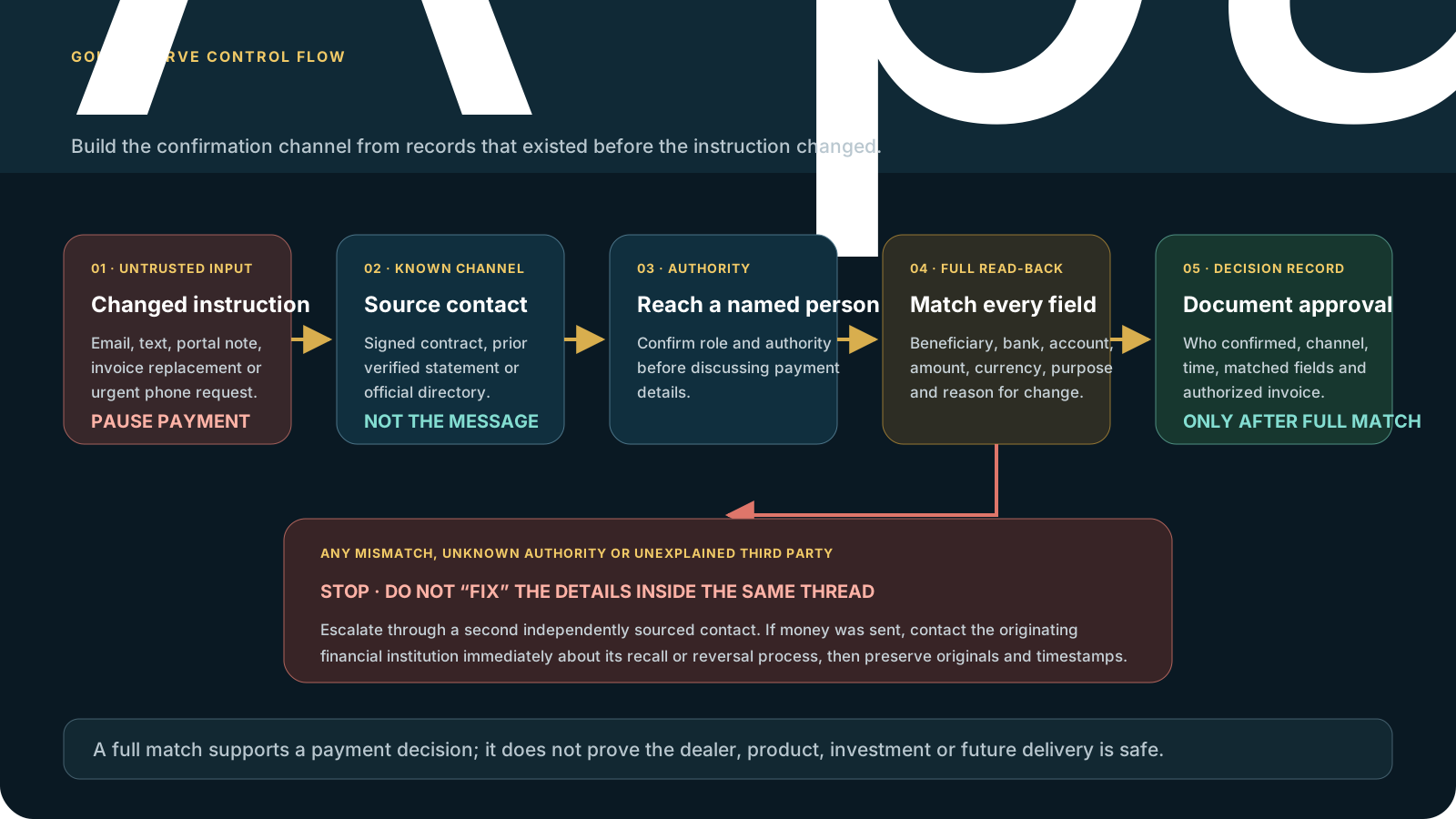
Do not reply or use embedded links.
Contract, statement, card or official site.
Reach an authorized employee.
Beneficiary, bank, account and amount.
Document why any instruction changed.
Keep who verified, how and when.
DECISION RECORD
Record the fields that matched—and the authority that confirmed them
MESSAGE FORENSICS
Preserve headers and originals before forwarding or editing
Save the original email, full headers, attachment, link destination, exact sender and reply-to addresses, call logs and text messages. Look for a new domain, changed punctuation, a mobile-only request, secrecy, urgency or a switch in beneficiary country. None is a standalone verdict. Together they help a bank or investigator reconstruct the instruction path.
AFTER PAYMENT
Bank action comes before a perfectly written complaint
IC3 advises contacting the originating financial institution as soon as fraud is recognized to request recall or reversal procedures. The FTC likewise recommends asking the company used to send the payment whether it can reverse the transaction. Then record the amount, timestamp, beneficiary, bank, account, reference numbers and every verification conversation. Reporting does not guarantee a recall or recovery.
OFFICIAL SOURCES
Regulator, consumer-protection and law-enforcement guidance
- Joint CFTC/FINRA physical-metals advisory for rollover pitches, spreads, fees and dealer questions.
- SEC, NASAA and FINRA self-directed IRA alert for custodian limitations, fake-custodian risk, liquidity and independent valuation.
- FTC post-scam action guide for payment-specific recall, dispute and account-security steps.
- FBI IC3 business-email-compromise guidance for changed payment instructions, verified callbacks and urgent bank contact.
- FTC ReportFraud, FBI IC3 complaint and SEC TCR are different reporting channels with different scopes.
- FINRA investor help covers complaints involving brokerage firms or their employees.
Reviewed July 31, 2026. Reporting forms, jurisdiction and recovery options can change. Open the current official page and preserve the confirmation number for every submission.
FAQ
Gold payment instruction questions
How do I verify gold dealer wire instructions?
Use a phone number from the signed contract, prior verified statement or official website and independently call an authorized person. Do not use the phone number in the message announcing the change.
Is an email from the dealer's real account safe?
Not necessarily. FBI IC3 describes business email compromise as involving spoofed or compromised legitimate accounts. Verify significant payment changes through a secondary channel.
What if the beneficiary differs from the dealer?
Pause. Obtain a written explanation, identify the recipient's legal role and independently verify it. Do not let urgency substitute for a reconciled contract and beneficiary.
What should I do after a fraudulent wire?
Contact the originating financial institution immediately and ask about recall or reversal procedures, then preserve the transaction details and file the appropriate official reports.