THE SHORT ANSWER
Compare the checkout total per fine ounce, not the advertised price
The cheapest gold dealer quote is the one with the lowest complete cost for the same verified product, not necessarily the lowest price shown in a product grid. Normalize every offer to fine troy ounces, use one same-currency spot observation, multiply the per-item ask by the same quantity, then add shipping, insurance, payment fees, tax and other checkout costs. Compare authenticity controls, delivery and return terms separately because a price calculator cannot rank counterparty quality.
Refiner or mint, fine content, condition, packaging and quantity.
Metal prices and retail premiums can move while you compare.
Ask, delivery, payment surcharge, tax and other entered costs.
Identity, custody, insurance, returns and buyback conditions.
ALL-IN COST PATH
Follow the quote from fine gold to the checkout total
Use one product record and one price clock, then keep weight, purity, premium, delivery, tax and payment costs visible. The lowest displayed ask is only one input to the comparison.
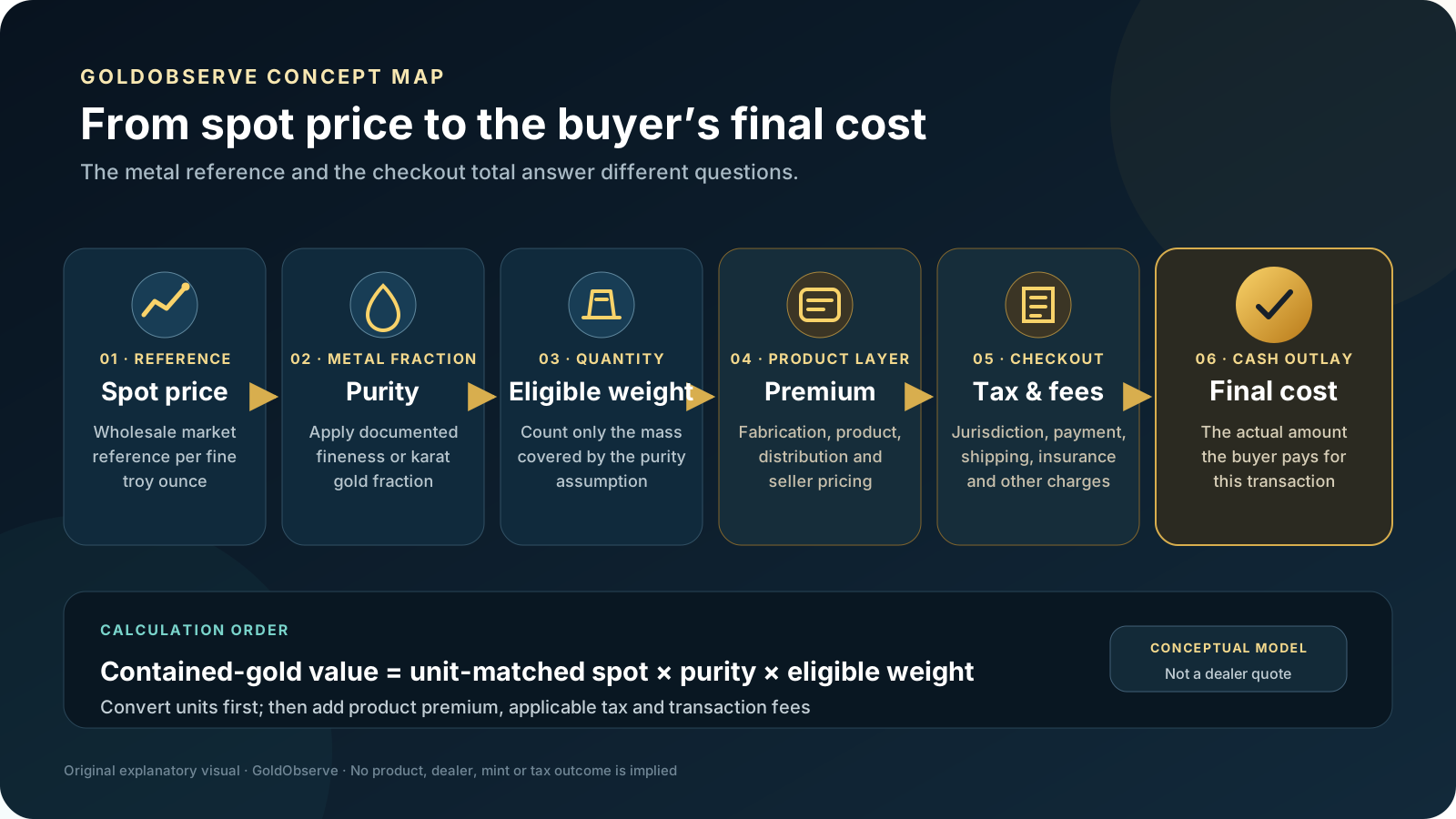
Method boundary: The diagram describes the cost path; it does not supply a dealer quote, determine tax, verify a seller or rank counterparty risk.
GOLD DEALER PRICE COMPARISON CALCULATOR
Rank up to three real offers on one fine-gold basis
Enter offers you captured directly from dealer listings, written quotes or checkout pages. The tool does not scrape dealers, recommend sellers or invent “typical” premiums. It supplies a live, source-labelled gold reference when available, but every retail ask, fee, tax amount and buyback price remains your input. Leave the optional third offer or buyback fields blank when you do not have them.
Price reference
Shows the source and observation time of the metal price used here. Product premiums, dealer quotes and taxes are separate.
- Source
- No provider
- Observed
- Observation time unavailable
- Age
- Checking age…
- Delivery
- No data layer available
Checking the current market reference.
WHY STICKER PRICE FAILS
A lower gold ask can become the higher-cost order at checkout
Dealer A may show a lower per-coin price but charge insured delivery. Dealer B may offer free delivery but display a bank-wire price that rises when a card is selected. Dealer C may have the best checkout total yet quote a materially weaker same-day buyback. None of those comparisons is visible in a single headline price.
NORMALIZATION ORDER
Use four calculations in a fixed sequence
Gross weight × fineness, converted to troy ounces when needed.
Fine troy ounces × same-currency spot per fine troy ounce.
Ask × quantity + payment fee + delivery + tax + other costs.
All-in premium and effective cost per fine troy ounce.
The lowest result is the lowest entered acquisition cost. It is not automatically the best overall seller, safest delivery route or most liquid product.
Fine-gold normalization is essential when two products look similar but contain different amounts of metal. A one-ounce American Gold Eagle contains one fine troy ounce even though its alloyed gross weight is higher; a 22-karat item described only by gross weight does not contain one fine ounce unless its official specification says so. Use the mint, refiner or assay documentation—not a marketplace title—to establish contained gold.
SAME-PRODUCT TEST
Do not call two offers comparable until these facts match
If any of these attributes differ, the calculator can still show acquisition costs, but the ranking has changed from a pure price comparison into a product-and-service choice. That may be legitimate; it simply needs to be described honestly.
PREMIUM AND SPREAD
Purchase premium and round-trip gap answer different questions
The all-in premium measures how far the acquisition total sits above the contained metal reference. The round-trip gap subtracts net same-product buyback proceeds from the acquisition total. The first describes entry friction; the second describes an immediate hypothetical exit using the entered bid.
A dealer may quote an attractive buyback today because it needs that product, then change the bid as inventory and market conditions change. A buyback policy also may require intact packaging, identity checks, shipment to an assay desk or minimum quantities. Treat the current bid as a dated executable observation only after those conditions are understood.
For a detailed two-sided analysis of one quote, use the gold buy/sell spread calculator. For product structure before requesting quotes, compare gold bar sizes with official bullion coin specifications.
DEALER DUE DILIGENCE
Price ranking begins only after the offer appears real and verifiable
The joint FINRA and CFTC investor bulletin on physical precious metals advises investors to understand the spread, remember that each dealer sets its own spread, shop around and obtain the agreed price plus fees and commissions in writing. The CFTC also warns buyers to verify the company, understand every cost and confirm that physical metal exists when a seller proposes storage or financing.
Identify the legal business. Match the website, invoice, payment recipient, physical address and customer-service details.
Read the executable terms. Record quote expiry, cancellation rules, delivery timing, insurance, signature and loss claims.
Confirm product provenance. Use official weight and fineness specifications; understand assay, packaging and authentication.
Get costs in writing. Preserve the product price, quantity tier, payment rate, tax, delivery and any membership or platform charge.
Inspect the exit path. Ask who buys the product, how it is verified, how long settlement takes and which deductions apply.
Reject pressure and implausible discounts. A below-market pitch, leverage or urgency is a reason for more verification, not less.
U.S. MINT BOUNDARY
Authorized Purchaser is a distribution role, not a blanket retail endorsement
The U.S. Mint states that it does not sell bullion coins directly to the public. It distributes through Authorized Purchasers that meet financial and market-making requirements, and those firms may resell to secondary retailers. The Mint also says not all Authorized Purchasers sell to consumers and that links to external businesses do not constitute endorsement or guarantee.
That distinction prevents two common errors. First, the Mint's wholesale premium to an Authorized Purchaser is not the consumer's final retail premium. Second, a seller's relationship within a distribution chain does not remove the need to verify the actual transaction, product, payment recipient, delivery terms and after-sale support.
It does not label dealers “authorized,” scrape current inventories, certify products, score business solvency, determine tax, guarantee delivery or forecast gold prices. Those claims require evidence beyond arithmetic.
WHEN THE CHEAPEST OFFER SHOULD LOSE
Five conditions can reverse a price-only ranking
A small, documented cost difference rarely justifies taking a materially weaker custody or counterparty arrangement. Conversely, a famous brand name alone does not justify any premium; the service difference should be specific enough to evaluate.
REPEATABLE BUYING WORKFLOW
Build a quote sheet before you open the checkout page
- Choose one product specification. Record official fine-gold content, manufacturer, condition and packaging.
- Fix the quantity and payment method. Quantity discounts and payment tiers must match across quotes.
- Open all offers in one short window. Record the displayed spot reference, ask, time and quote-expiry rule.
- Advance far enough to see complete costs. Capture insured delivery, payment surcharge, tax and other charges without submitting an order.
- Enter every figure into the calculator. Investigate zeros rather than assuming a missing fee is free.
- Run the non-price check. Compare identity, authenticity, delivery, loss claims, returns, cancellation and customer support.
- Save the evidence. Retain the quote, invoice, payment confirmation, tracking, serial or assay information and delivery record.
If you are still deciding between physical bullion and an exchange-traded exposure, start with the physical gold versus gold ETP decision guide. If your intended holding includes storage or insurance over time, add the gold storage cost calculator before comparing the result with an alternative.
METHODOLOGY AND SOURCES
Transparent arithmetic, user-supplied dealer data and official risk guidance
GoldObserve computes fine gold from the selected content preset or gross weight and fineness. Melt value equals fine troy ounces multiplied by the displayed same-currency spot reference. A payment surcharge is applied to merchandise value; shipping, insurance, tax and other purchase costs are treated as full-order amounts. Offers are ranked by all-in acquisition total. When a buyback is entered, the round-trip gap uses that dealer's same-product bid less entered sale costs. Values are rounded for display, while percentage calculations retain greater precision.
Live metal data is a reference, may be delayed and is not a tradable dealer quote. Retail data is never populated unless you enter it. The tool does not retain or transmit entries to a dealer. It provides educational arithmetic, not investment, legal, tax, authentication or counterparty advice.
FREQUENTLY ASKED QUESTIONS
Gold dealer price comparison FAQ
How do I compare gold dealer prices correctly?
Compare the same product, fine-gold content, condition, quantity, currency, payment method and capture time. Add shipping, insurance, payment fees, tax and other checkout costs to each merchandise price, then divide the all-in total by the total fine troy ounces.
Is the dealer with the lowest gold price always cheapest?
No. A lower advertised price can lose after card or bank-payment surcharges, shipping, insurance, tax, minimum-order rules or other checkout costs. Product differences and counterparty risk can also make price-only ranking misleading.
What is an all-in gold premium?
The all-in premium is the complete acquisition total minus the contained gold's same-currency melt reference. Dividing that difference by melt value expresses the premium as a percentage.
Should I compare a dealer buyback price too?
A current same-product buyback quote can reveal the immediate round-trip gap, but it is not a guaranteed future exit price. Dealer inventory, product condition, market liquidity and verification requirements can change the bid.
Does U.S. Mint Authorized Purchaser status guarantee a retail dealer?
No. The U.S. Mint says it does not sell bullion coins directly to the public, not all Authorized Purchasers sell to consumers, and a link from the Mint is not an endorsement or guarantee of an external business.
Does this calculator determine sales tax on gold?
No. Tax treatment depends on the product, transaction, location and current law. Enter a tax amount from the actual checkout or qualified local guidance; the calculator does not provide tax advice.
CONTINUE THE WORKFLOW