THE SHORT ANSWER
Translate gold into euros, qualify the exact product, then price the complete round trip
The gold price in Germany starts with a same-time euro value for one fine troy ounce. Divide by 31.1034768 for a fine gram, then multiply by the product's verified fine-gold weight. A retail order adds product premium, payment, delivery and storage. German VAT law exempts qualifying investment gold, but the result depends on the statutory bar, wafer or coin test—not the word “bullion” in a listing.
Provider, status and Berlin observation time remain visible.
Every value uses the exact troy-ounce conversion.
Bars, wafers and coins have different qualification rules.
Premium, tax scenario, delivery and exit stay separate.
LIVE GERMANY GOLD WORKBENCH
Calculate euro gold value, investment-gold qualification and purchase friction
Start with the source-labelled EUR observation or enter a documented price scenario. Choose a common bar weight or a custom product, enter actual dealer costs and test the evidence relevant to the product form. All premium and buyback inputs begin at neutral zero or 100% references; GoldObserve does not insert invented German dealer averages.
Price reference
Shows the source and observation time of the metal price used here. Product premiums, dealer quotes and taxes are separate.
- Source
- No provider
- Observed
- Observation time unavailable
- Age
- Checking age…
- Delivery
- No data layer available
Checking the current market reference.
Enter a positive price and weight, valid fineness, whole quantity and non-negative cost assumptions.
EUR PRICE FORMATION
The German gold price has a metal leg and a currency leg
Product premium, VAT and delivery enter only after this currency translation.
Euro gold can rise while dollar gold is unchanged if the euro weakens against the dollar. A stronger euro can offset part of a dollar-gold increase. The effects compound rather than simply add, so the correct period return multiplies the metal and exchange-rate changes.
Enter comparable gold and exchange-rate values
Use the same dates and one consistent exchange-rate convention.
Local return = (1 + USD gold return) × (1 + local-currency-per-USD return) - 1.
Market translation only. Physical premiums, dealer spreads, tax, delivery, storage and observation-time differences are not inferred.
These are editable scenarios, not historical observations or forecasts. GoldObserve does not apply today's exchange rate backward to manufacture a German price series. Historical EUR returns require gold and foreign-exchange observations matched by date under documented source terms.
GERMAN §25C DECISION MAP
Investment-gold VAT exemption begins with the exact legal definition
Germany's Umsatzsteuergesetz §25c exempts the supply, import and intra-Community acquisition of qualifying investment gold. The same section defines two principal physical categories. The calculator translates those criteria into a checklist, but it cannot inspect the product or bind a tax authority.
The weight must also be accepted by the gold markets.
A gold color or bullion label does not establish this fact.
The exact issue must be current or former legal tender in its country of origin.
The statutory test uses the normal selling price, not one isolated promotion.
Article 345 of the EU VAT Directive provides an annual European Commission list of coins deemed to meet the criteria for that year. The German Federal Ministry of Finance publishes the applicable list. A coin not on the list is not automatically disqualified if it independently meets the statutory criteria; the actual issue and transaction still matter.
BAR SIZE ECONOMICS
Small denominations buy flexibility, but fixed costs become heavier
“Cheapest per gram” is only one objective. An investor who expects several small future sales may rationally accept a higher entry premium for smaller units. An investor with insured professional storage and a long holding period may prefer fewer, larger bars. Test the actual checkout and simultaneous buyback instead of assuming the premium will be recovered.
FROM SPOT TO DEALER ASK
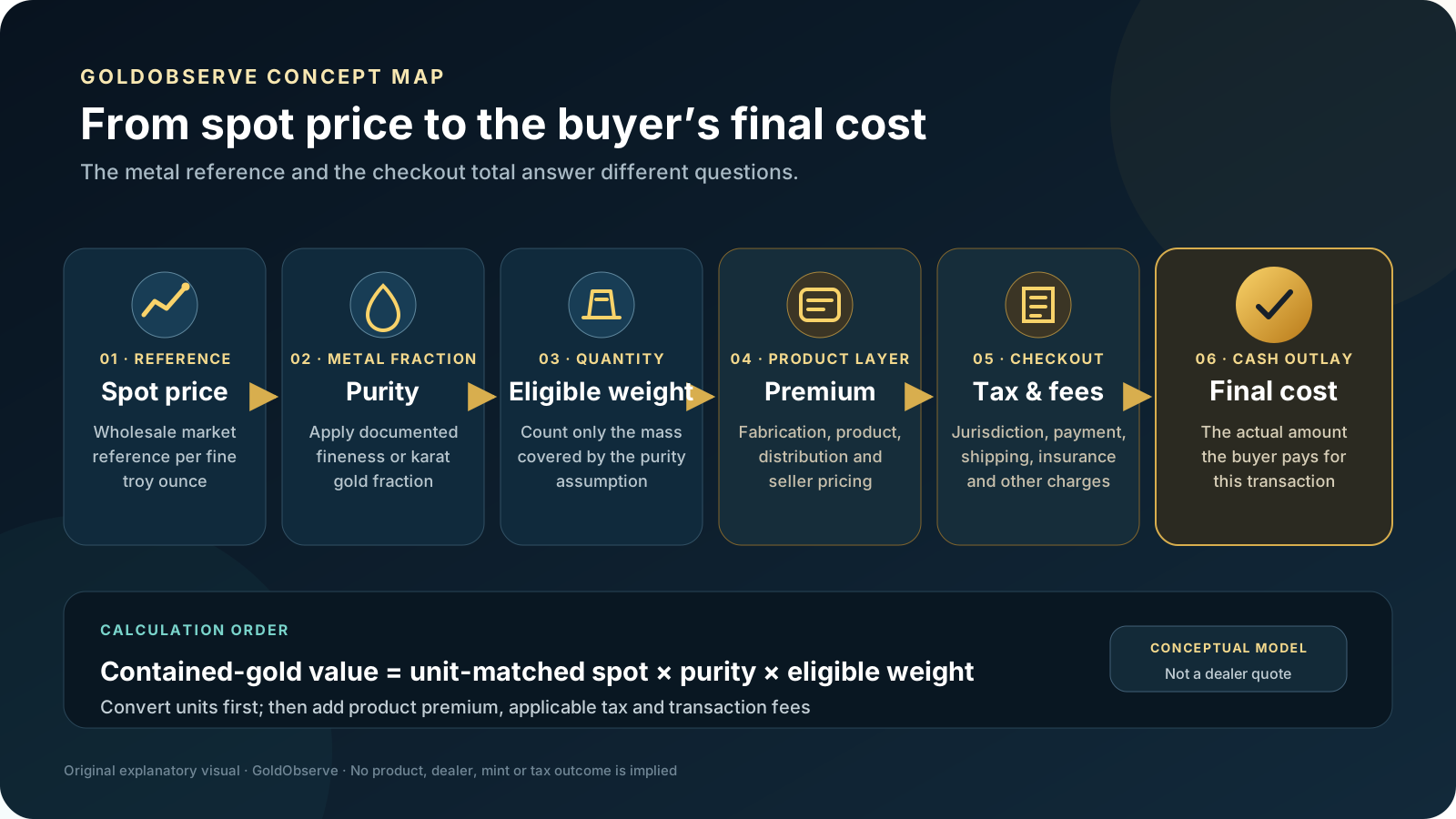
A German physical-gold quote contains at least seven layers
Fine ounces × source-labelled EUR reference.
Bar size, minting, assay packaging and product design.
Inventory, hedge, service and margin.
Exempt only when the investment-gold conditions apply.
Payment method, insured delivery and handling.
Home security, safe deposit box, vault and insurance.
Buyer bid, assay, packaging and settlement deductions.
Use the gold dealer comparison calculator to rank two or three same-product German offers after payment and delivery costs. Use the buy/sell spread calculator when one dealer supplies an executable ask and bid for the exact same product.
COINS: BULLION VS. COLLECTING
Legal tender and high purity do not make every gold coin equivalent
A coin can satisfy the investment-gold tax definition yet trade at a premium driven by scarcity, condition, packaging or collector demand. Conversely, a commemorative or damaged coin can require a different valuation route even when it contains substantial gold. Keep three values separate:
The Deutsche Bundesbank explains that Germany issues euro collector coins, including gold denominations, and points buyers to the official Münze Deutschland sales channel. A collector issue should not be valued automatically as a generic one-ounce bullion coin. Verify the exact specification, minting quality and resale market.
BUYING AND SELLING CHECKLIST
Record the product, price and exit conditions before paying
Verify fine content. Record refiner or mint, gross weight, fineness and contained fine grams.
Verify §25c facts. Keep the product specification, annual-list evidence when relevant and invoice treatment.
Capture one quote time. Record EUR metal reference, dealer ask, payment tier and quote expiry together.
Price delivery and custody. Include insured shipping, storage access, insurance limits and withdrawal charges.
Obtain multiple buyback offers. Verbraucherzentrale recommends calculating material value and comparing offers before selling.
Protect the evidence chain. Preserve invoice, payment, tracking, assay packaging, serial details and ownership records.
Verbraucherzentrale also warns that very small physical-gold purchases and some savings plans can carry unusually high spreads and fees. The exact cost varies, so this page does not repeat a generic percentage as if it were your quote. Enter the real ask, delivery, storage and buyback conditions instead.
WHAT CHANGES THE ANSWER
The lowest acquisition total can still be the wrong purchase
METHODOLOGY AND PRIMARY SOURCES
Official tax definitions, exact mass conversion and no invented dealer quote
GoldObserve requests a source-labelled EUR gold observation and displays the provider, freshness state and observation time. Fine gold equals gross grams multiplied by fineness divided by 1,000. Fine troy ounces equal fine grams divided by 31.1034768. The physical model adds only the premium, charges, VAT treatment, delivery, storage, buyback ratio and deductions entered by the user.
The investment-gold worksheet follows the physical definitions in Germany's UStG §25c and the related EU VAT Directive. The 19% taxable-product starting rate follows UStG §12 and remains editable. This page does not determine personal income tax, authenticate metal, verify a dealer, classify an invoice or offer legal or tax advice.
FREQUENTLY ASKED QUESTIONS
Gold price in Germany FAQ
What is the gold price in Germany today?
GoldObserve displays a source-labelled euro reference per fine troy ounce and converts the same observation to fine grams, 10 grams, 20 grams, 100 grams and kilograms. It is a metal reference, not a German dealer's executable ask or bid.
How do I calculate the gold price per gram in euros?
Divide the euro price per fine troy ounce by exactly 31.1034768. For an alloyed item, multiply gross grams by fineness divided by 1,000 before applying the fine-gram price.
Is investment gold exempt from VAT in Germany?
German UStG §25c exempts supplies, imports and intra-Community acquisitions of qualifying investment gold. Qualification depends on the statutory bar, wafer or coin tests; a seller's label alone is not enough.
What fineness must a gold bar have for the German investment-gold test?
Under UStG §25c, a bar or wafer must have fineness of at least 995 thousandths and a weight accepted by the gold markets. Verify the actual product and transaction rather than relying only on a calculator preset.
Which gold coins qualify as investment gold in Germany?
The statutory coin test uses at least 900 fineness, minting after 1800, current or former legal-tender status in the country of origin, and a normal selling price no more than 80% above contained open-market gold value. An annual European Commission list can deem named coins compliant for that year.
What VAT rate does the calculator use for a non-qualifying product?
The taxable-product scenario starts with Germany's 19% standard rate under UStG §12. It remains editable because the actual supply, product and invoice determine tax treatment.
Why is a German dealer's gold price higher than euro spot?
A physical ask can include fabrication, denomination, brand, inventory, hedging, payment, insured delivery, storage and dealer margin. A later buyer may apply a separate discount or deduction.
Does the calculator include German income or capital-gains tax?
No. It models only entered purchase costs, a VAT scenario and an optional immediate buyback. Personal tax treatment depends on facts and current law and requires qualified German guidance.
RELATED GOLD WORKSPACES