THE SHORT ANSWER
Store gold where ownership, insurance, access and exit can all be proved
A strong storage plan does more than make theft difficult. It proves what you own, who can reach it, which losses are actually insured, how heirs or an authorized person gain access, and how the metal reaches a buyer. Home custody offers direct control. A bank box changes physical security but does not create FDIC insurance. An allocated vault can identify specific metal, while an unallocated account is a claim on an institution rather than title to named bars.
Invoice, serial, weight, fineness and account title.
Named location, limits, evidence and settlement basis.
Hours, authorization, emergency and estate path.
Delivery, assay, sale venue, delay and all fees.

CUSTODY CHAIN
Trace the metal, authority and exit as three separate chains
Start with the purchase record, then match the specific asset to its legal title, named custodian, protection evidence, authorized access procedure and eventual withdrawal or sale. A break in any one chain can leave real metal inaccessible, an account claim unsupported or an exit more expensive than expected.
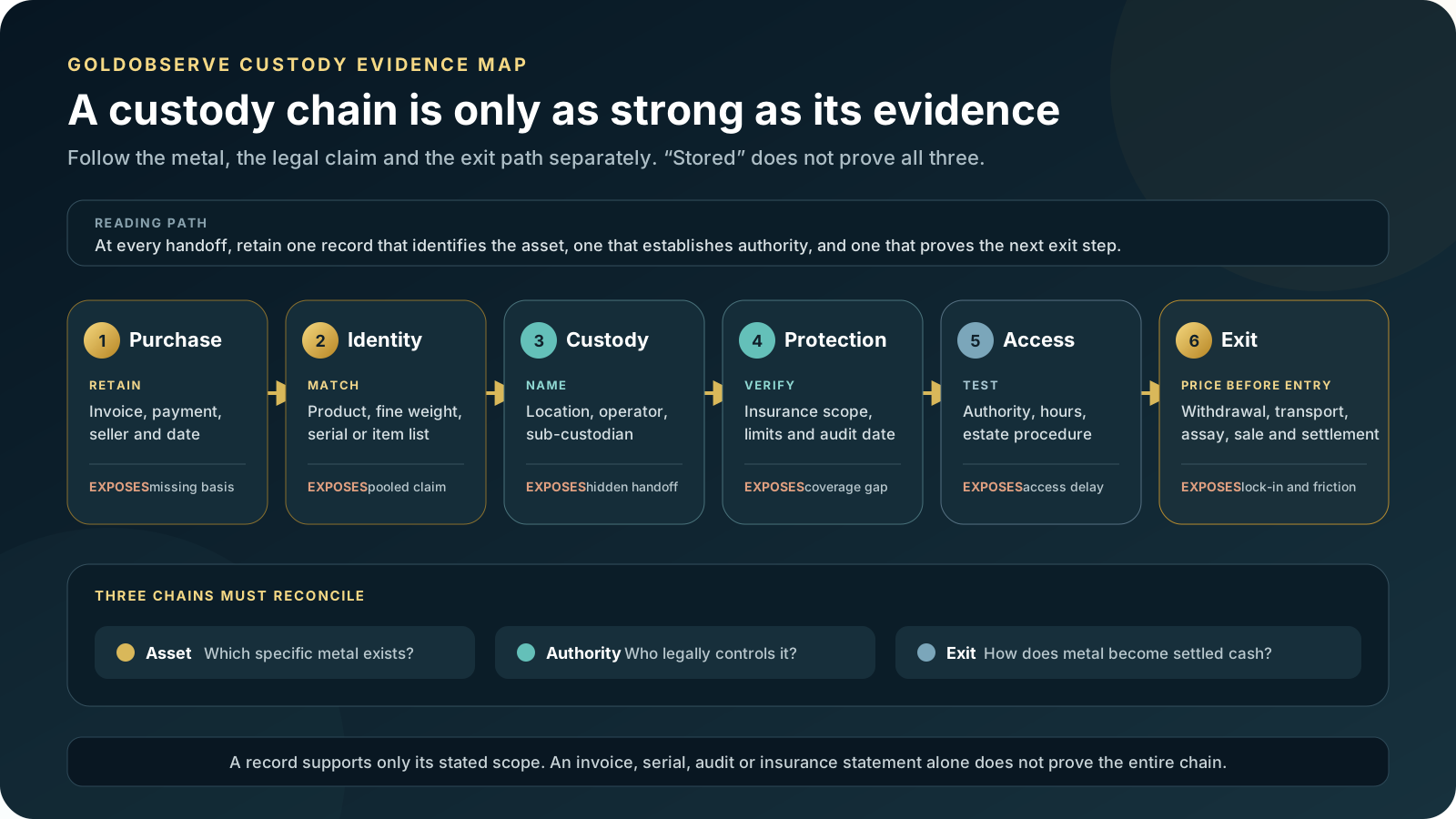
This diagram is a decision framework, not proof that a provider, vault, safe-deposit box, insurer or home arrangement is safe. Contracts, audit scopes, insurance limits, access rules and applicable law must be checked for the specific arrangement.
STORAGE COST CALCULATOR
Compare the full holding period, not one annual fee
Enter written quotes for three possible arrangements. The model separates setup, fixed annual, percentage-of-value, insurance and exit costs. Its annualized hurdle is the constant annual increase in exit value needed only to recover the entered nominal storage costs; it is not a gold-price forecast or investment return.
Illustrative inputs only. Replace every default with a written quote or documented personal cost. Zero never means a risk is insured or a service is free.
4.35% of starting value · 0.86% annualized hurdle
4.35% of starting value · 0.86% annualized hurdle
3.00% of starting value · 0.59% annualized hurdle
Total nominal cost = setup + years × (annual fixed fee + starting value × annual percentage fee + annual insurance) + exit cost. The model keeps starting value constant; it does not predict gold, inflation or future provider fees.
DECISION MATRIX
Home, bank box and vault solve different problems
Do not collapse these into a single “safety” score. A person who needs rapid partial access has a different problem from an owner who values independent third-party inventory evidence. Splitting a holding across arrangements can reduce one concentration risk while adding more records, fees and handoff points.
HOME CUSTODY
A safe is only one layer of the home-storage system
Consider theft, coercion, fire, water, accidental disposal and disclosure—not just safe construction.
Follow the manufacturer's anchoring, floor-loading, fire and environmental requirements; use an appropriate professional.
Limit who knows the location while preserving a lawful emergency and estate-access plan.
Ask the insurer to confirm the covered property, location, limit, exclusions, proof and claim valuation in writing.
Keep an encrypted or otherwise protected inventory away from the metal so one event does not destroy both.
This page cannot recommend a hiding place, safe rating or security installation for a particular property. Building, insurer and local-law requirements vary. Avoid publishing the location, photographing clues around it or treating a generic household policy as confirmed bullion cover.
SAFE-DEPOSIT BOX
A box at an insured bank is not an insured bank deposit
The US Federal Deposit Insurance Corporation states that safe-deposit box contents are not covered by FDIC deposit insurance. It advises reading the rental agreement and considering separate fire and theft coverage. The FDIC also warns against placing items in a box when they may be needed quickly or while the bank is closed.
ALLOCATED VS UNALLOCATED
The account label changes the ownership and counterparty analysis
LBMA's market guide says an allocated account is backed by specific bars and should provide a weight list showing identifiers, gross weight, assay or fineness and fine weight. By contrast, an unallocated balance is a contractual claim against the account provider rather than ownership of a specific bar, which creates credit exposure to that institution.
Match identifiers, weights and fineness to statements and independent audit scope.
Confirm whose balance sheet holds the metal and what happens in insolvency.
Identify vault, account operator, sub-custodian and controlling jurisdiction.
Minimums, available formats, fabrication, notice, shipping, insurance and fees.
LBMA describes wholesale market practice; it does not certify every retail program that uses the word allocated. Require the retail contract and actual account evidence to support the same conclusion. A pooled or fractional product may have different identification and withdrawal mechanics.
INSURANCE AUDIT
“Insured” is incomplete until the policy answers six questions
Ask whether insurance is provider-owned or protects you directly, who receives claim proceeds, whether limits are shared across all customers and whether the insurer can be independently verified. GoldObserve does not validate a policy or recommend an insurer.
INVENTORY AND AUDIT
Evidence must survive the same event that threatens the metal
01Record seller, purchase date, amount paid, product name, quantity, gross weight, fine weight and stated fineness.
02Capture serial numbers, assay packaging, distinguishing marks and clear photographs without exposing location metadata.
03Keep invoice, payment proof, authentication or assay evidence and dealer correspondence.
04For a vault, reconcile statements to the bar or item list and understand the independent auditor's scope and date.
05Protect a current inventory separately from the gold and test whether the authorized backup person can locate required documents.
06Review records after purchases, sales, moves, policy changes, contract revisions and major value changes.
A third-party audit is useful only within its stated scope. Check whether it covers existence, customer allocation, title, insurance, internal controls or merely aggregate metal. Neither an audit nor a serial number substitutes for the legal contract.
EXIT TEST
Rehearse withdrawal and sale before committing the metal
The CFTC and FINRA advise physical precious-metals buyers to ask for fees in writing and include storage, insurance and administrative costs. Their advisory also warns that fraudulent dealers have charged storage and insurance for metal that did not exist. Verification therefore starts before purchase, not after a withdrawal problem.
WHAT CHANGES THE ANSWER
The preferred arrangement can reverse as value, access and household circumstances change
- Value rises: a policy sublimit or safe capacity that once covered the holding may become inadequate.
- Access need changes: emergency liquidity, travel, disability or a planned sale can make branch or vault notice periods decisive.
- Household changes: relocation, contractors, family disclosure, separation or estate planning can alter home-custody risk.
- Provider terms change: storage rate, minimum, sub-custodian, jurisdiction, insurance, audit or withdrawal rules may reverse a cost comparison.
- Product mix changes: large bars are compact but less divisible; many small products add count, records, packaging and handling.
Review the plan at least when one of those facts changes. The goal is not secrecy without continuity or institutional convenience without ownership evidence; it is a documented chain from purchase to custody to lawful access and sale.
PRIMARY REFERENCES & MODEL BOUNDARY
The guide separates official facts from user-entered assumptions
- FDIC financial products not insured for the safe-deposit box insurance boundary and separate-coverage guidance.
- FDIC safe-deposit boxes, home safes and valuables guide for access, contract and insurance considerations.
- LBMA precious metal accounts guide for allocated and unallocated account characteristics, weight-list evidence and fee structures.
- LBMA clearing and bullion accounts overview for title to specific bars versus a general entitlement.
- CFTC and FINRA physical precious-metals advisory for written fee, dealer, storage, insurance and existence checks.
The calculator does not quote a provider, estimate theft probability, value security hardware, verify insurance, predict gold prices, compound future fee changes, model inflation or tax, or recommend a storage location. Percentage fees are applied to the entered starting value throughout the scenario so every result remains reproducible.
RELATED TOOLS
Connect custody cost to product size and eventual resale
FAQ
Physical gold storage questions
What is the safest way to store physical gold?
There is no universal safest option. Home custody reduces third-party dependence but concentrates theft, disaster and secrecy risk. A safe-deposit box changes access and insurance questions. An allocated vault can document specific metal but adds operator, contract, withdrawal and fee risk. The right choice follows verified ownership, insurance, access and exit evidence.
Is gold in a bank safe-deposit box FDIC insured?
No. The FDIC states that a safe-deposit box is not a deposit account and that its contents are not covered by FDIC deposit insurance. Read the box agreement and obtain separate written insurance confirmation where needed.
What is allocated gold storage?
LBMA describes an allocated account as one backed by specific bars identified on a weight list with bar number, gross weight, assay or fineness and fine weight. The account operator acts as custodian. Retail vault contracts can differ, so verify that the same ownership evidence applies.
What is unallocated gold?
LBMA describes an unallocated account as a general entitlement to metal rather than ownership of specific bars. The account holder has credit exposure to the institution. Do not use the word storage alone to infer allocated title.
How much does gold storage cost?
There is no reliable universal rate. Compare setup, annual fixed, value-based, insurance, administration, audit, withdrawal, delivery and sale costs from written quotes. GoldObserve's calculator uses user-entered scenarios and does not publish invented market averages.
Should I keep invoices and serial-number records separately from the gold?
Yes. Preserve purchase invoice, payment evidence, product specifications, serial or identifying marks, photographs, assay documentation, custody statements and insurance records in a secure location separate from the metal. A serial number helps identify an item but does not prove current legal ownership by itself.
Can I access a safe-deposit box whenever I need the gold?
Not necessarily. Access depends on branch hours, identity and authorization procedures, closures, estate rules and the rental agreement. The FDIC advises against putting items in a box when you may need them quickly or when the bank is closed.
Does the cheapest storage quote have the lowest total cost?
Not always. A low annual fee can be offset by setup, insurance, audit, minimum-balance, withdrawal, fabrication, shipping, assay or sale charges. It can also represent a different ownership structure. Compare the full holding period and exit path.