PHYSICAL GOLD BUYER GUIDE · 15 MIN READ
Gold bars vs. gold coins
Gold bars usually fit buyers who want more gold for each currency unit and compact storage. Widely traded bullion coins usually fit buyers who value smaller sale sizes, familiar specifications and flexible resale. Neither format is automatically cheaper after the full round trip. Compare the exact purchase premium, payment and delivery costs, storage, likely buyback discount and the amount you may need to sell at once. For many buyers, a core position in bars plus a smaller allocation to recognized coins is the most practical answer.
Especially larger, widely accepted investment bars.
Sell part of a holding without liquidating one large unit.
Choose products dealers actively quote in both directions.
The buy quote alone is not enough.

DECISION MATRIX
Bars and bullion coins compared side by side
BAR COST WORKBENCH
Measure a gold bar premium and realistic exit gap
Enter the bar size, purchase price and transaction costs. The tool separates contained metal value, headline premium, all-in premium, effective price per ounce, a buyback scenario and the gold price required to break even under those assumptions.
COIN VALUE WORKBENCH
Separate bullion coin melt value from purchase premium
Choose a supported official specification or enter custom weight and fineness. The tool calculates fine gold content, melt value, price premium, dealer payout and conditional break-even without treating face value or collectible claims as metal value.
Price reference
Shows the source and observation time of the metal price used here. Product premiums, dealer quotes and taxes are separate.
- Source
- No provider
- Observed
- Observation time unavailable
- Age
- Checking age…
- Delivery
- No data layer available
Checking the current market reference.
Specification source: United States Mint ↗
Measure premium, discount and break-even spot
Enter the purchase price or buyer offer for one coin. Negative premium means the entered price is below calculated melt value.
Compare official fine-gold contents
| Coin | Fine gold | Fineness | Melt value | Source |
|---|
Preset specifications are product references from the named official mints. Verify the exact year, variant and authenticity of the coin before a transaction. One troy ounce equals 31.1034768 grams.
PREMIUM ECONOMICS
Smaller pieces buy flexibility at a price
Fabrication, minting, quality control, handling, packaging and distribution do not scale perfectly with gold weight. That is why a one-tenth-ounce coin can carry a higher percentage premium than a one-ounce coin, and why a small bar can carry more premium per ounce than a larger bar.
The U.S. Mint authorized-purchaser schedule illustrates the size effect: its percentage premium for Gold Eagles rises as denomination falls. Retail premiums can differ further because wholesalers and dealers add their own costs and margins.
Total acquisition cost can include payment fees, delivery, insurance and applicable transaction charges.
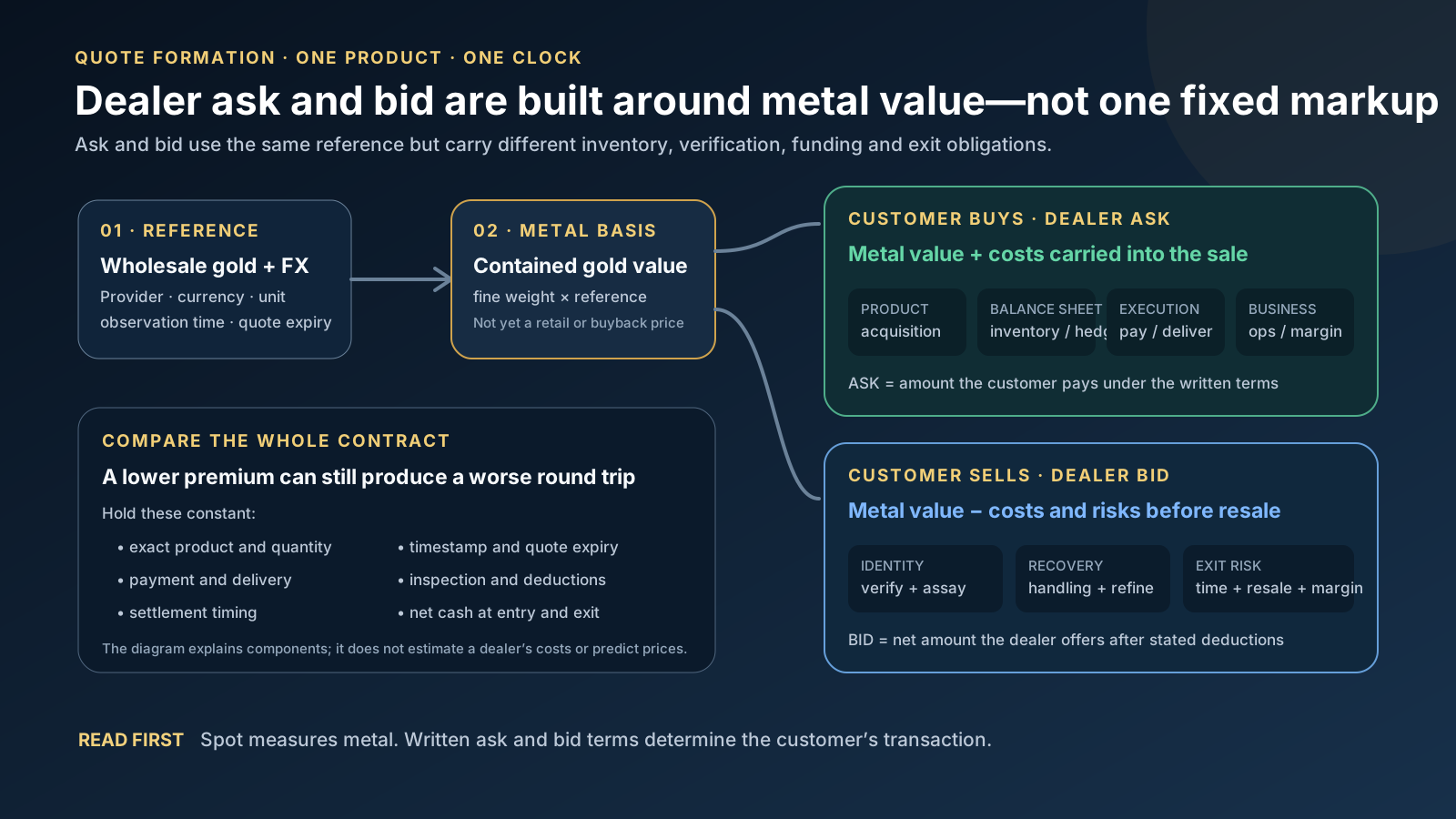
Comparison boundary: The diagram explains how a product quote is formed; it is not a current bar or coin offer. Use the exact specification, written ask, same-time reference, fees and buyback terms for a real decision.
ROUND-TRIP COST
The lowest purchase premium can still lose the comparison
Fine troy ounces × the same-currency gold reference.
Premium, payment fee, delivery, insurance and tax where applicable.
Ask whether payout is spot, melt, a fixed spread or a product quote.
Expected sale proceeds minus total acquisition cost.
Use written quotes for the same product, condition, currency and observation time.
DIVISIBILITY
Choose the smallest unit you may realistically need to sell
A single large bar may minimize acquisition premium, but it forces an all-or-nothing sale. Ten smaller units let the owner sell part of the holding, although the combined purchase premium and storage handling may be higher. Divisibility has value only when the smaller units also have a healthy local buyback market.
RECOGNITION AND LIQUIDITY
Buy what your likely future buyer already knows how to quote
Product recognition is local. A sovereign coin familiar in one country may be less liquid elsewhere, and a bar from a well-known refiner may receive different treatment depending on packaging, serial number, condition and dealer policy. Ask several dealers for both a sell quote and their current buyback method before buying.
The U.S. Mint advises bullion buyers to understand current market premiums and know the vendor. Its authorized-purchaser network is required to support a two-way market in U.S. Mint bullion coins, but that does not guarantee a specific retail spread or that every dealer will buy every coin.
BULLION VS. COLLECTIBLE
A proof or rare coin is not simply a smaller gold bar
Bullion coins are primarily valued by metal weight and fineness. Numismatic and collectible coins can be valued for limited mintage, rarity, condition, provenance or design. A large premium may therefore reflect a separate collector market rather than extra gold.
Usually easier to benchmark against spot.
Requires specialist evidence and a deeper resale market.
It is not the coin's gold market value.
Request comparable transactions and a buyback route.
VERIFICATION AND STORAGE
Bars and coins fail in different ways
- Match weight, dimensions, fineness and markings with the product's official or refinery specification.
- Record serial numbers and assay packaging for bars when supplied.
- Do not assume intact packaging proves authenticity or that opening it always destroys resale value.
- Use appropriate professional verification when value or uncertainty justifies it.
- Document allocated ownership, withdrawal rights, insurance and audits when a third party stores the metal.
- Include storage and insurance in the total cost comparison.
LBMA Good Delivery standards cover fine weight, purity, appearance and markings for large London-market bars, but LBMA explicitly notes that other refined products are outside that Good Delivery scope. A retail bar should not be described as an LBMA Good Delivery bar merely because its refiner appears on a list.
BUYER SCENARIOS
Three decisions that produce different answers
WHAT CHANGES THE ANSWER
Choose coins over bars when these conditions dominate
- You expect partial sales and a large bar would force unwanted liquidation.
- Local dealers publish tighter two-way quotes for a specific bullion coin.
- Official specifications make the chosen coin easier to verify and resell in your market.
- The coin's total round-trip cost is competitive after all fees.
Choose bars over coins when these conditions dominate
- Your priority is minimizing premium per fine ounce.
- You can store and insure fewer, larger units efficiently.
- The refiner and exact bar format receive strong local buyback quotes.
- You do not need coin features, fractional sizes or collector exposure.
PURCHASE CHECKLIST
Compare the same facts before sending money
01Record exact product, fine-gold weight, gross weight, fineness and manufacturer or mint.
02Calculate melt value using a source-labelled price at the quote time.
03List premium, payment fee, delivery, insurance, storage and applicable tax separately.
04Request the dealer's same-time buyback quote or written buyback method.
05Verify authenticity procedures, return policy and rejected-product handling.
06Reject pressure, guaranteed-profit claims and hidden or unexplained storage arrangements.
PRIMARY SOURCES & METHOD
Official guidance used for this comparison
- U.S. Mint bullion consumer awareness for premium awareness, vendor diligence and two-way market context.
- U.S. Mint authorized-purchaser premiums for a current official example of denomination-based premium differences.
- LBMA Good Delivery overview for the scope and specifications of London-market bars.
- CFTC physical precious-metals advisory for dealer spread, fees, storage and fraud due diligence.
- GoldObserve methodology for melt value, premiums, spreads, sources and timestamps.
RELATED TOOLS & GUIDES
Turn the comparison into a quoted purchase decision
FAQ
Gold bars and coins questions
Are gold bars or coins better for investment?
Bars often minimize premium, while recognized coins often improve divisibility. Compare actual buy and buyback quotes.
Why are fractional gold coins expensive per ounce?
Minting, handling, packaging and distribution costs are spread across less gold, increasing percentage premium.
Are gold coins easier to sell?
Some are, in markets where dealers actively quote them. Recognition and spreads are product- and location-specific.
Does a gold bar need assay packaging?
Dealer policy varies. Packaging can support provenance, but it is not a substitute for product verification.
Are bullion coins the same as collectible coins?
No. Bullion value is primarily metal-based; collector value can depend on rarity, condition, provenance and demand.
Is a mixed holding sensible?
It can be. Larger bars may form a lower-premium core while smaller recognized units provide partial-sale flexibility.