PHYSICAL GOLD VALUATION · 14 MIN READ
How to calculate the melt value of gold
Gold melt value equals eligible gold-alloy weight in grams multiplied by purity and by the pure gold price per gram. If the market reference is quoted per troy ounce, divide it by 31.1034768 first. Melt value measures contained gold only. It excludes stones, non-gold parts, fabrication, brand, tax, transaction fees and collector value, and it is not a promise that a dealer will pay the calculated amount.
Exclude stones and identifiable non-gold parts.
Use karat, fineness or an appropriate assay.
Keep currency and timestamp explicit.
Transaction economics remain separate.
LIVE MELT VALUE WORKBENCH
Calculate weight, purity, metal value and payout scenarios
Select a weight unit, karat and currency. The calculator loads a source-labelled gold reference and keeps melt value, an optional retail premium and an optional dealer payout percentage in separate result lines. You can edit the market reference for a documented historical or quoted scenario and copy a shareable result.
Price reference
Shows the source and observation time of the metal price used here. Product premiums, dealer quotes and taxes are separate.
- Source
- No provider
- Observed
- Observation time unavailable
- Age
- Checking age…
- Delivery
- No data layer available
Checking the current market reference.
MASTER FORMULA
The four inputs that determine theoretical gold melt value
Every input must refer to the same item and price currency; retain full precision until the final display.
The portion of the object that is the claimed gold alloy.
Convert the documented weight to grams with the correct unit system.
Karat ÷ 24 or fineness ÷ 1,000.
A source, observation time, currency and troy-ounce basis.
WORKED EXAMPLE
15 grams of 14K gold at $2,400 per troy ounce
14 ÷ 24 = 0.583333 theoretical purity.
15 g × 14/24 = 8.75 pure gold grams.
$2,400 ÷ 31.1034768 = about $77.16 per gram.
8.75 g × the unrounded gram price = about $675.17.
If a documented assay says 585 fineness, use 0.585 instead of the mathematical 14/24 fraction.
PURITY SENSITIVITY
Ten grams at the same $2,400 gold reference
The table changes only purity. It assumes every one of the 10 grams is eligible alloy weight and excludes assay variation, surface-layer construction and transaction costs.
WEIGHT UNITS
Convert the scale reading before applying a gold price
NIST provides the 31.1034768-gram troy ounce and 1.55517384-gram pennyweight conversion used here. A common error is to divide by the 28.349523125-gram ordinary ounce, which materially overstates price per gram. The gold price per pennyweight guide applies this relationship to live dwt value, Karat purity and buyer-offer checks.
ELIGIBLE WEIGHT
The scale weight may not be the gold-alloy weight
Jewelry can include gemstones, enamel, watch movements, springs, base-metal findings or mixed-metal sections. Melt value should use the gold-alloy portion, not every gram on the scale. Hollow construction still has gold-alloy mass, but it may make visual size a poor guide to weight.
Useful starting measurement, not always eligible mass.
Stones and other identifiable material.
The simplified gold-alloy mass used in the formula.
Do not manufacture a precise answer from an unresolved item.
MELT VALUE VS. TRANSACTION VALUE
One object can have several defensible price references
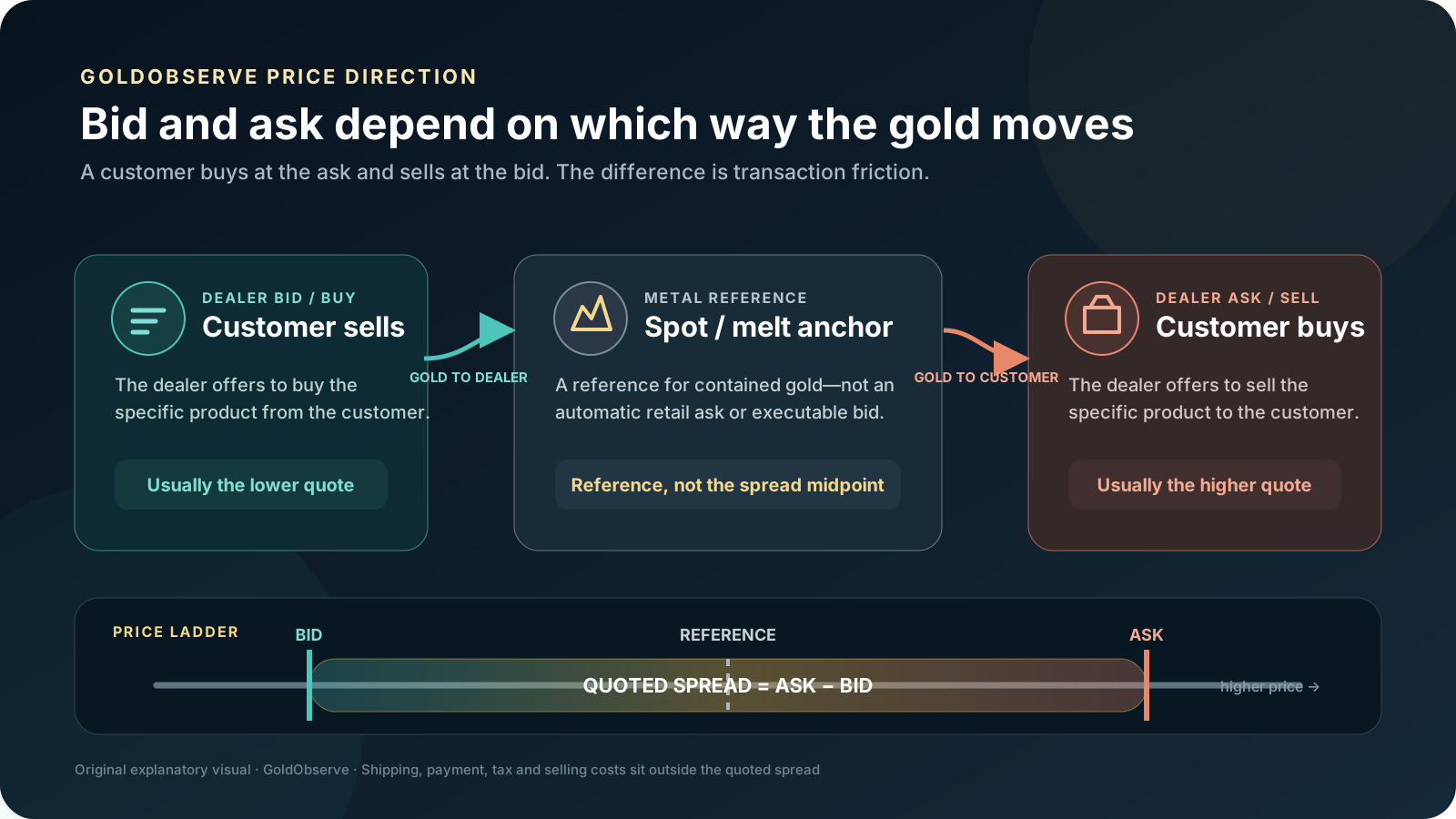
The spread diagram explains quote roles, not a current dealer quote. Actual bids, asks, testing deductions, shipping, tax and settlement terms must be recorded from the same product and observation window.
Melt value is most useful as a common denominator. It helps compare an item with a market reference, but it does not decide whether the item should be melted, sold intact or retained.
DEALER PAYOUT
Convert a buyer offer into a percentage of melt
Compare offers using the same batch, assay basis, spot timestamp, fees and settlement terms.
In the $675.17 example, an 85% payout assumption produces about $573.89 before any separately stated fees. The percentage is a comparison measure, not a judgment that a quote is fair. Item size, certainty, refining route, local competition and payment timing all matter.
MIXED ITEMS
Calculate each karat separately before adding a batch
A mixed lot of 10K, 14K and 18K pieces should not be assigned one average karat unless an assay supports that treatment. Calculate eligible grams, purity and melt value row by row, then add the results. This preserves the audit trail and prevents a heavy low-karat item from distorting a simple average.
The scrap gold calculator performs this row-by-row method.
COMMON ERRORS
Eight mistakes that make a melt-value result unreliable
01Using an ordinary ounce instead of a 31.1034768-gram troy ounce.
02Applying a 24K price to 18K, 14K or 10K alloy without a purity factor.
03Counting stones, movements or base-metal parts as gold-alloy weight.
04Treating GP, GEP, GF or RGP construction as solid gold of the full item weight.
05Using a stale or unidentified gold price and omitting the currency.
06Rounding unit conversion and purity before the final calculation.
07Calling a retail price or dealer offer “melt value” without separating the adjustments.
08Ignoring collectible, historical or intact-product value that may exceed metal value.
PRIMARY SOURCES & METHOD
Conversion and purity references used
- NIST precious-metal conversion chart for troy ounce, pennyweight and price-per-gram conversions.
- FTC gold jewelry guidance for karat content and distinctions among gold alloy, plated, filled and overlay products.
- LBMA benchmark information for the international gold price quotation convention per troy ounce.
- GoldObserve methodology for sources, timestamps, FX, units, purity and rounding order.
GoldObserve calculates contained-metal value only after weight normalization and purity. It keeps retail premium and dealer payout as explicit, independent assumptions.
RELATED TOOLS & GUIDES
Choose the calculator that matches the object
FAQ
Gold melt value questions
What is the gold melt value formula?
Eligible grams × purity × pure gold price per gram. Divide an ounce quote by 31.1034768 to get the pure gram price.
Is melt value the same as spot price?
Spot is the market input. Melt value applies that input to the item's actual eligible weight and purity.
Will a gold buyer pay 100% of melt value?
Not necessarily. A buyer offer can reflect testing, refining, hedging, logistics, operating costs and margin.
Do gemstones count toward melt value?
No. Gemstones and identifiable non-gold parts should be excluded from gold-alloy weight.
Can I use a hallmark as the purity?
It is a starting input. The entire mark and product context matter, and a material transaction may require testing.
Can a coin be worth more than melt value?
Yes. Fabrication, scarcity, condition, provenance and collector demand can create value beyond contained gold.