GOLD PRICE FOUNDATIONS · 13 MIN READ
Gold price per gram explained
To calculate pure gold price per gram, divide the gold price per troy ounce by 31.1034768. For an alloy, multiply that result by its gold purity: 18K uses 18/24, or 75%; 14K uses 14/24, or about 58.333%. This gives theoretical metal value, not a jewelry shop price or a guaranteed dealer offer. The answer also depends on quote currency, observation time and how much of the weighed object is actually gold alloy.
Converts one troy-ounce quote into 24K price per gram.
Uses karat divided by 24 or an assay fineness.
Exclude stones and non-gold components.
Keep transaction economics separate from metal content.
ORIGINAL EXPLAINER · COST LAYERS
See where metal value ends and transaction cost begins
Read from left to right. First normalize the spot reference to the item's weight unit, then apply documented purity and eligible gold-bearing weight. Only after contained-gold value is known should a product premium, applicable tax and transaction fees be added.
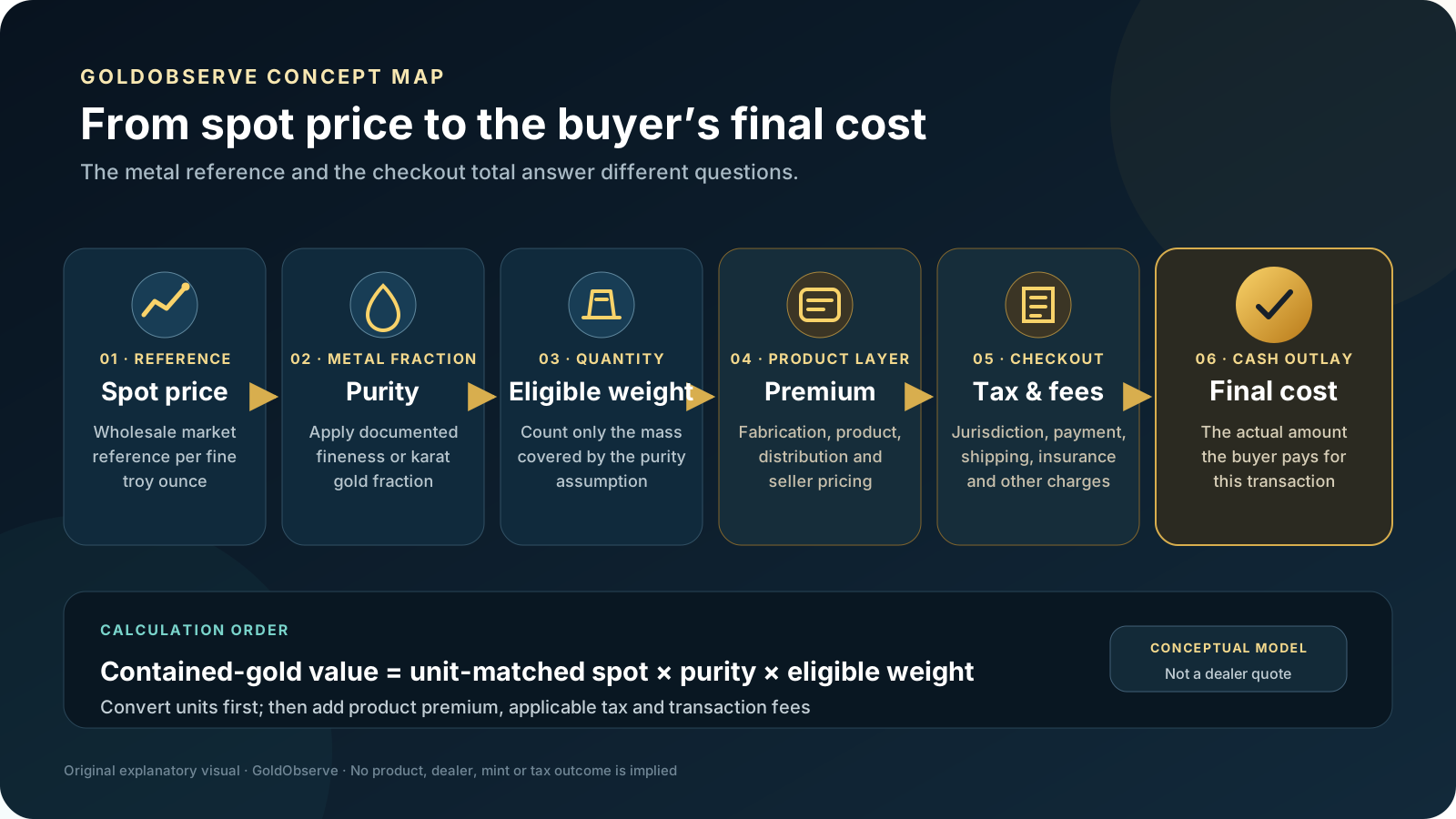
Method boundary: the diagram is a calculation order, not a quotation or tax conclusion. Actual premiums, taxable treatment and fees depend on the exact product, seller, payment route and jurisdiction.
LIVE CALCULATOR
Check gold price per gram by currency and karat
The calculator loads a source-labelled gold reference, converts it to grams, and applies the selected gold content. You can edit the quote for a documented manual scenario, compare common weights, convert a budget into theoretical grams, copy a shareable result or download the karat table.
Price reference
Shows the source and observation time of the metal price used here. Product premiums, dealer quotes and taxes are separate.
- Source
- No provider
- Observed
- Observation time unavailable
- Age
- Checking age…
- Delivery
- No data layer available
Checking the current market reference.
How many grams at metal value?
This is a theoretical metal-only quantity and excludes dealer premiums, fabrication, fees and tax.
Formula: spot price per troy ounce ÷ 31.1034768 × purity = gold metal value per gram.
WORKED EXAMPLE
From $2,400 per troy ounce to 18K gold per gram
$2,400 per troy ounce in USD at a stated observation time.
$2,400 ÷ 31.1034768 = about $77.16 per gram.
$77.16 × 0.75 = about $57.87 per gram of 18K alloy.
10 eligible grams × the unrounded value = about $578.71 in contained-gold value.
Values displayed above are rounded; the calculation should retain full precision until the final result.
KARAT COMPARISON
What common karats are worth at the same gold price
This example holds the reference at $2,400 per troy ounce so purity is the only changing variable. It uses the mathematical karat fraction, not a product-specific assay. Actual fineness, eligible weight and transaction terms can change a real valuation.
A fineness stamp can be a more direct input than a rounded karat label. For example, 585 means 58.5% gold, while the exact 14/24 fraction is about 58.333%. Use the documented assay or governing product specification when precision matters.
FOUR DIFFERENT PRICES
Spot, melt, retail and dealer offer answer different questions
Saying that a ring is “worth the gold price per gram” is incomplete. First identify which price is being discussed, then match it to the correct weight and purity. A retail premium is not contained gold, and a dealer discount does not change the metal quantity.
JEWELRY WEIGHT
Do not multiply the scale weight before removing non-gold parts
A scale measures gross mass. Jewelry can also contain stones, springs, solder, clasps or components with a different composition. If a 10-gram piece contains two grams of non-gold material, applying an 18K price to all 10 grams overstates the theoretical metal value. The eligible alloy weight in this simplified case is eight grams.
An assay and appropriate equipment may be required when composition is uncertain. A hallmark is evidence, not a complete assay.
CURRENCY AND TIME
A correct formula can still use mismatched market inputs
- Use a gold quote and FX rate from the same or a reasonably aligned observation time.
- Confirm that the source quote is per troy ounce, not per ordinary ounce or per kilogram.
- Keep the quote currency explicit throughout the calculation.
- Label delayed or stale data instead of presenting it as a newly tradable price.
- Round only the displayed result; retain full conversion precision internally.
A local-currency result is a translated reference. It does not automatically include local taxes, import costs, fabrication or dealer inventory conditions.
SENSITIVITY
How the result changes when gold or purity changes
With currency and purity held constant, metal value per gram moves in direct proportion to the gold reference. A 1% rise in the ounce price produces a 1% rise in theoretical gram value. Purity is also linear: an 18K alloy has 75% of the pure-gold gram value under the karat formula.
When currency and purity are unchanged.
When gold in the base currency is unchanged.
Before product-specific assay adjustments.
When excluded material reduces eligible mass.
COMMON ERRORS
Seven mistakes that materially change gold value per gram
01Dividing by 28.349523125, the ordinary-ounce constant, instead of the troy-ounce constant.
02Treating 18K or 14K alloy as pure 24K gold.
03Using the gross weight of stones and non-gold components.
04Comparing a retail price with a metal-only melt value as if they were equivalent.
05Assuming a dealer offer must equal calculated melt value.
06Mixing a current gold quote with an old or unidentified currency rate.
07Rounding the ounce conversion before purity and weight are applied.
PRIMARY SOURCES & METHOD
Where the unit and purity rules come from
- NIST precious-metal conversion chart for the 31.1034768-gram troy ounce and the price-per-ounce to price-per-gram method.
- LBMA precious-metal benchmarks guide for the gold benchmark quotation convention per troy ounce.
- FTC consumer guidance on gold jewelry for the 24-part karat system and common jewelry disclosures.
- GoldObserve methodology for source timestamps, FX translation, unit normalization, purity and rounding order.
GoldObserve calculates pure price per gram as quote per troy ounce divided by 31.1034768. It then multiplies by the selected purity and eligible gram weight. Premiums, fees, tax and dealer discounts remain separate inputs so metal content is not confused with transaction price.
RELATED TOOLS & GUIDES
Move from a gram reference to a real item decision
FAQ
Gold price per gram questions
How do you calculate gold price per gram?
Divide the gold price per troy ounce by 31.1034768, then multiply by purity for gold below 24K.
How much is 18K gold per gram?
Multiply the pure gold price per gram by 0.75. The live amount changes with the gold reference and selected currency.
Is 14K exactly 58.5% gold?
The mathematical karat fraction 14/24 is about 58.333%. A 585 fineness mark means 58.5%. Use the documented assay or product standard for the actual item.
Does price per gram include a jewelry premium?
Not in a metal-value calculation. Fabrication, design, brand, stones, tax and seller margin are separate.
Why is a gold buyer's offer lower than the calculated value?
The offer may reflect assay uncertainty, refining, hedging, operating costs and margin. Compare the payout percentage with melt value.
Can I calculate grams from a budget?
Yes. Divide the budget by the selected theoretical gold price per gram, then reduce the result for any premiums, fees or taxes that apply.