THE SHORT ANSWER
Choose the ownership system before comparing the fee
Physical gold is usually the stronger fit when direct possession, specific title or independence from a brokerage account is the core requirement—and the buyer can authenticate, secure, insure and eventually sell the product. A well-understood gold exchange-traded product is often more practical when small increments, exchange liquidity, portfolio rebalancing and avoiding personal storage are more important. Neither format removes gold-price risk, and the cheaper choice can reverse with purchase size, holding period, custody cost, product expense and exit terms.
Prove fine weight, authenticity, title, custody, insurance and resale.
Read assets, structure, sponsor fee, tracking, custody and redemption rights.
Entry, holding and exit costs belong in one horizon-specific comparison.
Neither possession nor exchange trading guarantees principal or future return.
ORIGINAL EXPLAINER · OWNERSHIP STRUCTURES
Start with what is legally owned, not the word “gold”
Read each column from ownership to obligations and exit. Coins and bars are physical products with product-specific verification and resale. An ETF is an exchange-traded legal interest defined by current documents. A futures position is a margined contract with expiry and settlement rules.
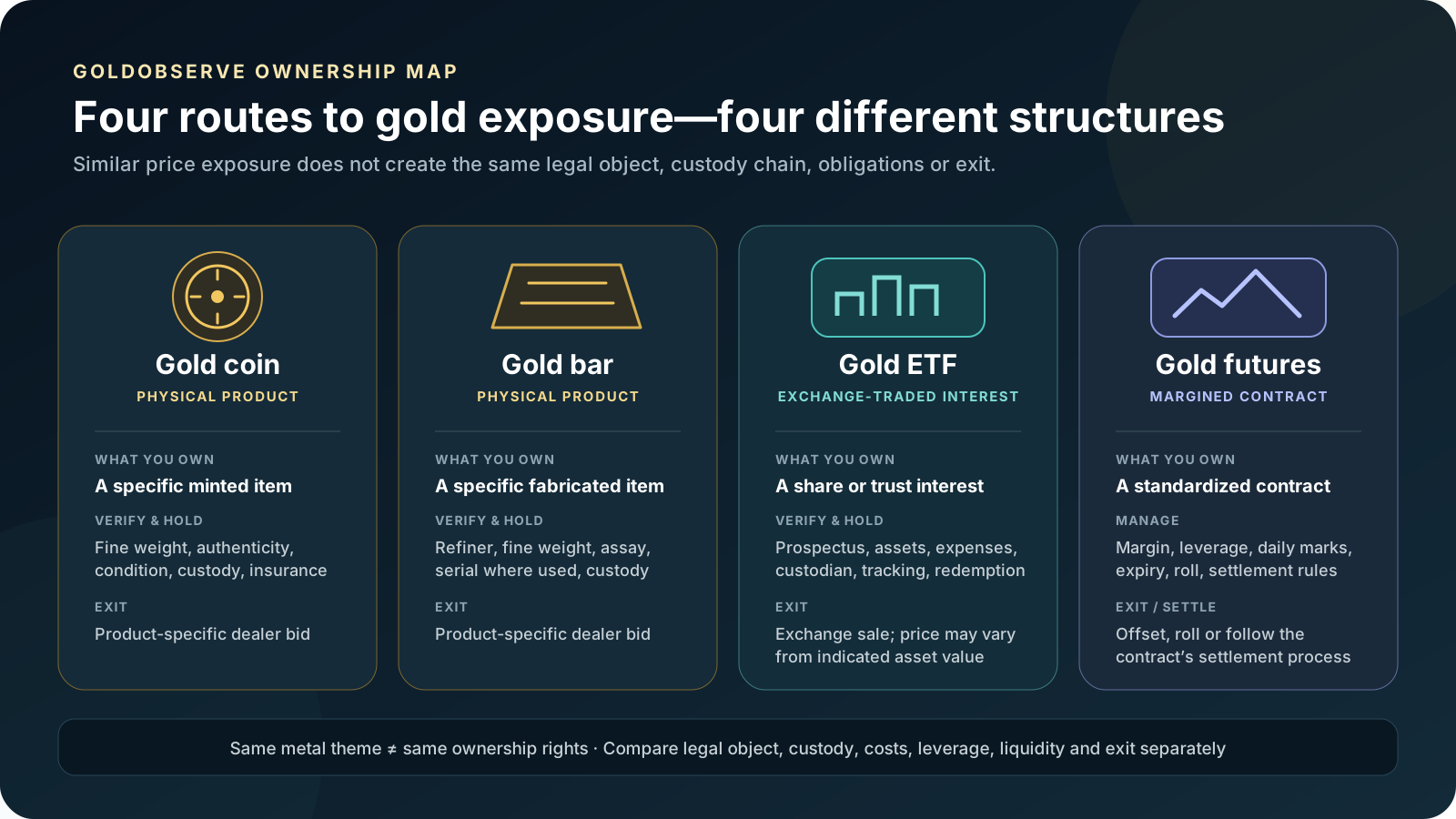
Method boundary: this is a structural comparison, not a ranking or product recommendation. Individual funds and contracts can use different assets, fees, redemption, margin and settlement terms.
GOLD OWNERSHIP COST LAB
Follow the complete cost path, not one headline fee
Start with the same capital, USD gold reference, holding period and price scenario. Then enter the written cost stack for each route. Inspect every modeled month, separate entry, holding and exit drag, and export the exact assumptions with their source state. The model does not scrape fund fees, invent dealer spreads or recommend a product. Its defaults are visibly illustrative and must be replaced before a real decision.
Price reference
Shows the source and observation time of the metal price used here. Product premiums, dealer quotes and taxes are separate.
- Source
- No provider
- Observed
- Observation time unavailable
- Age
- Checking age…
- Delivery
- No data layer available
Checking the current market reference.
Capital and spot must be positive; one-time fees must remain below capital, and percentage costs must remain inside the stated ranges.
Gold reference: manual USD input. The comparison is arithmetic, not a forecast, recommendation, fund quote, insurance review or tax calculation.
CSV becomes available only after a valid, source-labelled series loads.
WHAT YOU OWN
“Backed by gold” does not mean a shareholder owns a chosen bar
The CFTC notes that commodity-backed exchange-traded products can hold physical commodities, derivatives or a combination. The ticker and the word “gold” are therefore insufficient. Read what the product owns, how expenses are paid, which benchmark it seeks to track and what rights an ordinary shareholder actually has.
THE COMPLETE COST STACK
Compare costs on the same capital and the same exit date
The purchase premium reduces fine-gold exposure on day one.
Actual resale can also depend on product, condition, assay, dealer and settlement.
Entry cost is a user-entered execution scenario, not a quoted spread.
Actual tracking can differ for reasons beyond the stated annual charge.
The calculator uses a linear average-value convention, not a forecast path.
This isolates modeled friction but does not measure ownership utility or risk.
LIQUIDITY AND EXECUTION
Exchange liquidity and physical resale solve different problems
Orders can use limits, but price can move and shares may trade above or below indicated asset value.
Size, brand, mint, condition, packaging, location, testing and current inventory demand can change the bid.
A physical holding is divided only by selling a whole product or arranging a different bar or coin size.
Exchange halts, brokerage restrictions, wide spreads, dealer closures, shipping delays and vault access limits are different failure modes.
CUSTODY, INSURANCE AND PROTECTION
Each route moves risk; neither makes custody disappear
Personal possession removes a fund structure but adds theft, fire, disaster, secrecy, access, inventory, insurance and estate-continuity duties. Third-party allocated storage adds a provider contract, audit scope, sub-custody and withdrawal terms. An exchange-traded bullion product avoids personal handling, yet still depends on the product's trustee, custodian, sub-custodians, operational controls and legal documents.
PRODUCT-STRUCTURE AUDIT
Ten prospectus questions before calling an ETP “gold exposure”
01What legal structure issued the share: registered fund, commodity trust, note or another vehicle?
02Does it hold allocated bullion, unallocated claims, futures, swaps, mining shares, cash or a mixture?
03Which benchmark is tracked, at what valuation time and after which expenses?
04What sponsor fee or expense is charged, and how is it paid—cash, gold sales or another method?
05Who are the trustee, custodian and permitted sub-custodians, and under which jurisdiction?
06Is a current bar list available, and what exactly does an independent inspection or audit cover?
07Who may create and redeem baskets, in what size, for cash or metal, and with which fees?
08Can an ordinary shareholder obtain metal, or only sell shares on the exchange?
09What events can suspend valuation, issuance, redemption, trading or access to the underlying?
10What tax reporting, brokerage, account and estate rules apply to this investor and jurisdiction?
As a concrete structural example—not a recommendation—the iShares Gold Trust's 2025 SEC annual report says the trust's activities are limited to issuing baskets for deposited gold, selling gold to cover fees and liabilities, and delivering gold for surrendered baskets. That filing also identifies a sponsor, trustee and custodian. Another product can use different terms, so the current filing must be reviewed rather than copied by analogy.
PHYSICAL PURCHASE AUDIT
Ten written checks before paying a dealer or vault
01Record the exact product, gross weight, fine weight, fineness, mint or refiner and quantity.
02Compare metal value with the dealer's all-in ask, including shipping, card, wire and administrative fees.
03Obtain the same-time buyback bid for that exact product and calculate the immediate round-trip gap.
04Confirm authenticity evidence, assay packaging, serial information and testing consequences.
05Identify who owns the metal at every stage from payment through delivery or vault allocation.
06For storage, name the vault, account operator, sub-custodian, jurisdiction and audit evidence.
07Verify insurance property, location, perils, limits, deductible and claim beneficiary.
08Document withdrawal minimums, notice, fabrication, shipping, insurance and settlement costs.
09Preserve invoices, photos, serials, payment evidence, statements and an estate-access process.
10Reject leverage, urgency and any storage fee unsupported by evidence that the metal exists.
WHAT CHANGES THE ANSWER
Five conditions can reverse the preferred route
- Purchase size: one fixed physical custody fee can dominate a small holding, while a larger purchase may negotiate different premiums or storage terms.
- Holding period: an upfront physical premium is paid once, while an annual product expense compounds; a short and long horizon can rank the same products differently.
- Purpose: tactical allocation, automatic rebalancing and personal contingency access are different objectives and should not be collapsed into one fee score.
- Account and jurisdiction: brokerage eligibility, tax, retirement-account rules, insurance and estate procedures can outweigh a small modeled cost difference.
- Provider evidence: an attractive quoted fee does not compensate for unclear title, weak custody documents, inaccessible redemption or an unauditable physical product.
A hybrid choice can also be rational: exchange-traded exposure for liquid portfolio rebalancing and a separately documented physical allocation for a distinct possession objective. The two positions should be measured separately because their evidence, costs and exit routes are not interchangeable.
PRIMARY SOURCES & MODEL BOUNDARY
Regulatory guidance and current filings define the comparison
- CFTC commodity, physical-metal and ETP advisory for product-structure, volatility, spread and prospectus boundaries.
- CFTC and FINRA physical precious-metals questions for spot, dealer spread, written fees, storage, insurance and existence checks.
- FINRA physical precious-metals guide for loss, storage, leverage and full-fee risks.
- FINRA futures and commodities overview for physically backed and other commodity ETP structures, tracking and volatility.
- SIPC protection scope for the distinction between eligible securities at a failed member brokerage and unprotected market losses or commodities.
- LBMA allocated and unallocated account overview for title to specific bars versus a general entitlement.
- iShares Gold Trust 2025 Form 10-K filed with the SEC as one current example of trust activities, custody, expenses and basket mechanics.
The calculator applies only the entered USD capital, live or manual gold reference, one price-change scenario and stated cost assumptions. It does not forecast gold, select or verify an ETP, model intraday premium/discount to NAV, simulate an unknown future price path, verify bullion or insurance, assign probabilities, model income or distributions, calculate tax, or provide investment, legal or insurance advice. A lower modeled cost is not a recommendation.
RELATED GOLD DECISIONS
Continue from exposure type to product, custody and return evidence
PHYSICAL GOLD VS GOLD ETF FAQ
Frequently asked questions
Is a gold ETF the same as owning physical gold?
No. Physical bullion is a tangible product whose ownership, authenticity, custody and insurance must be proved. An exchange-traded gold product is a security or trust interest governed by its prospectus. Its assets, fees, creation and redemption process, custody chain and investor rights depend on the specific product.
Which is cheaper, physical gold or a gold ETF?
It depends on the exact product, purchase size and holding period. Physical gold can have an upfront premium, dealer exit discount, shipping, storage and insurance. An exchange-traded product can have trading costs, brokerage fees, an annual sponsor or expense charge and tracking differences. Enter written costs into the calculator rather than assuming one format is always cheaper.
Can ordinary investors redeem gold ETP shares for bars?
Do not assume so. Some bullion trusts create and redeem large baskets through authorized participants, while ordinary shareholders normally buy and sell shares on an exchange. Redemption rights, basket sizes, fees and whether metal delivery is possible must be checked in the current prospectus.
Does SIPC protect physical gold or prevent gold ETP losses?
SIPC says physical gold and silver coins are not securities eligible for SIPC protection. For eligible securities held at a SIPC-member broker, SIPC addresses missing customer property when the broker fails; it does not protect market losses or promises of investment performance.
Does this comparison include tax?
No. Tax treatment can depend on jurisdiction, account type, holding period, legal structure and the investor. The calculator deliberately excludes tax and does not classify a product. Review current official rules and obtain qualified advice when tax could change the decision.
Does a lower modeled cost mean the product is better?
No. Cost is only one decision dimension. Physical access, legal title, insurance, authenticity, liquidity, brokerage access, product structure, tracking, custody, estate handling and the purpose of the allocation can reverse the choice.