THE SHORT ANSWER
Choose the legal and economic exposure before comparing tickers
A “gold ETF” can mean several materially different products. A physically backed commodity trust may hold bullion and seek to reflect gold less expenses; a registered fund may use futures; a mining-stock ETF owns operating companies; an exchange-traded note is issuer debt. Start with the prospectus objective, assets, custody and tax classification. Only then compare expense ratio, tracking difference, bid-ask spread and premium or discount to NAV.
Trust interest, fund share, company portfolio or debt claim.
Bullion, derivatives, corporate earnings or issuer credit.
Expenses, spread, NAV gap, commission, tax and tracking.
Secondary-market sale or an eligible basket redemption.
OWNERSHIP MAP
Gold exposure does not create one universal ownership system
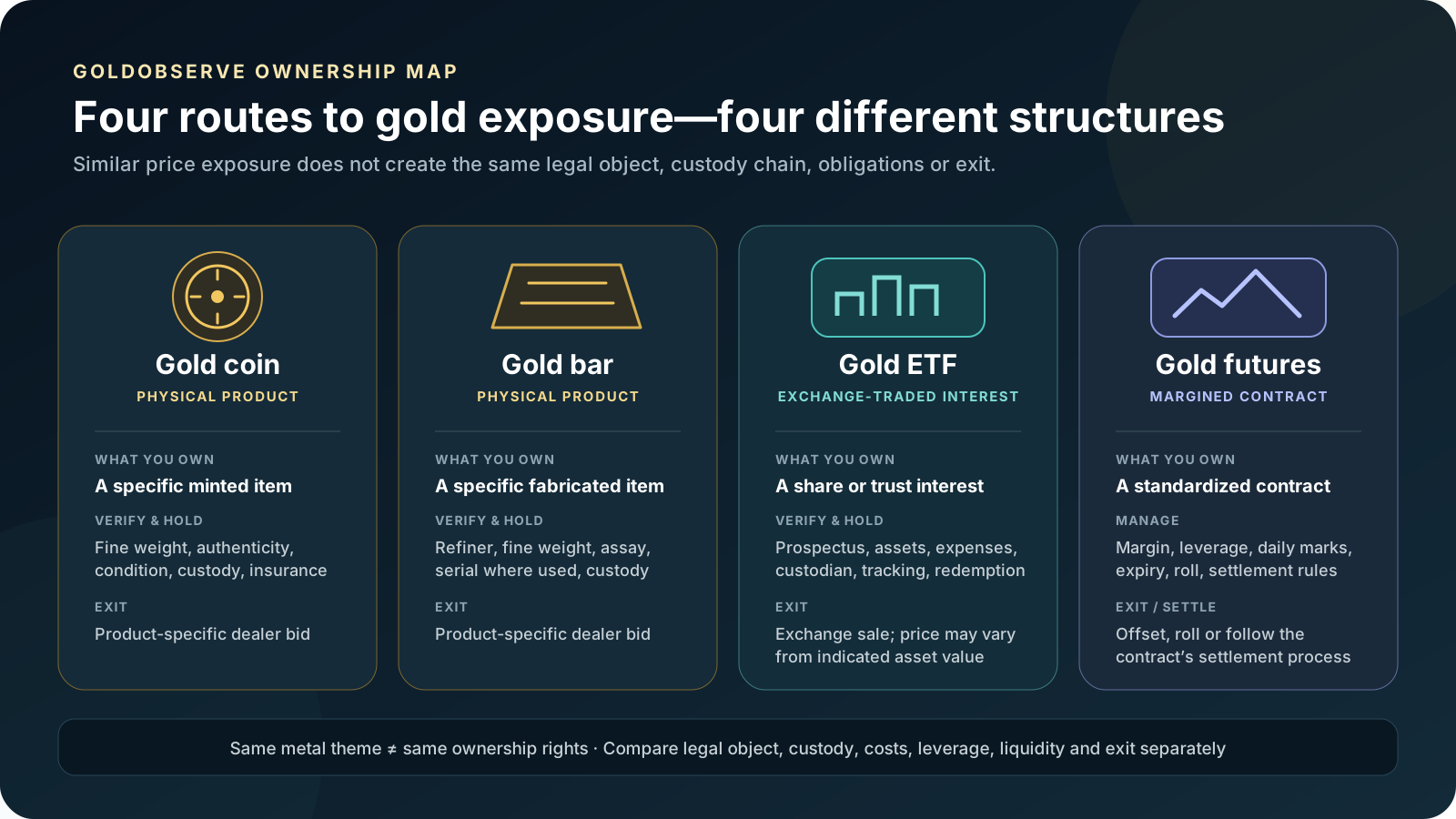
Use the visual to separate a physical product from an exchange-traded legal interest and a dated futures contract. For an ETF or ETP, the exact prospectus—not the word gold—defines permitted assets, custody, fees, creation or redemption rights and tax treatment.
PRODUCT MAP
Four products can share the word “gold” and still behave differently
The label is not the asset. Some well-known bullion products are commodity trusts and are not registered investment companies under the Investment Company Act of 1940. That distinction changes the protections, disclosures and tax analysis a reader should expect.
TOTAL-COST CHECK
Compare the costs that occur at different times
Read the current prospectus, annual report, custody description, tax section and creation-unit rules.
Record ask price, contemporaneous NAV or indicative value, bid-ask spread and commission.
Track sponsor or fund expenses, tracking difference, asset-per-share change and account fees.
Record bid price, NAV gap, commission, holding period, tax basis and product tax documents.
Use the gold ETF cost calculator to put the measurable frictions on one timeline. The model deliberately does not guess future tracking difference or taxes.
DUE-DILIGENCE FILE
Ten fields worth saving before placing an order
01Exact legal product name, ticker, CUSIP and exchange.
02Registration and legal structure, including whether it is a 1940 Act fund.
03Investment objective and the assets actually permitted.
04Latest expense ratio or sponsor fee and other expenses.
05Custodian, sub-custody language and audit or inspection reports.
06NAV methodology, benchmark time and valuation source.
07Median spread and historical premium/discount disclosure where available.
08Creation-unit size, Authorized Participant process and retail redemption rights.
09Current U.S. federal tax discussion and any annual tax statement.
10Your order type, executable quote, account fee and intended holding period.
WHAT REVERSES THE CHOICE
A liquid wrapper can be useful without being equivalent to bullion
A bullion-backed exchange-traded product is often the more practical route for portfolio rebalancing, small purchases and brokerage-account liquidity. That conclusion can reverse when the investor needs direct possession, verified title to specific bars, non-market-hours access or delivery rights the product does not grant. It can also reverse in the other direction when personal storage, insurance, authenticity and dealer exit costs dominate the physical holding.
Neither route removes gold-price risk. A convenient wrapper can still decline sharply; physical possession can still be bought at an uneconomic premium. Match the ownership system to the use case, then compare written costs.
PRIMARY SOURCES & REVIEW BOUNDARY
Read the regulator first, then the exact product filing
- SEC Investor Bulletin: Exchange-Traded Funds for market price, NAV, bid-ask spread, premium/discount and retail trading explanations.
- SEC Rule 6c-11 compliance guide for daily ETF disclosures, median bid-ask spread and premium/discount reporting. Commodity trusts may have a different legal structure, so confirm applicability.
- SPDR Gold Trust 2025 Form 10-K and iShares Gold Trust prospectus dated December 31, 2025 as product-specific examples of bullion custody, expenses and basket redemption terms.
Sources were reviewed August 2, 2026. GoldObserve does not republish holdings, NAV history or quotes from these issuers. Product fees, basket sizes, custodians, tax language and trading conditions can change; verify the latest prospectus, annual report, fund website and executable brokerage quote before acting.
GOLD ETF RESEARCH PATH
Continue with the next distinct decision
FREQUENTLY ASKED QUESTIONS
Questions to resolve before choosing a gold ETF
Is a gold ETF the same as physical gold?
No. A share is a security or trust interest governed by product documents. It can provide gold-price exposure without personal storage, but ownership rights, custody, fees and redemption are product-specific.
Do all gold ETFs hold physical bullion?
No. Products described casually as gold ETFs may hold bullion, futures, swaps, mining-company equities or unsecured debt. Read the investment objective and principal holdings, not only the name or ticker.
What is the most important gold ETF cost?
There is no single universal cost. Compare annual expenses, bid-ask spread, commissions, premium or discount to NAV, tracking difference, tax treatment and any account-level fee on the same holding period.
Can an individual redeem gold ETF shares for bars?
Usually not in ordinary retail quantities. Bullion trusts commonly create and redeem only large baskets through Authorized Participants; the exact prospectus controls.
Does a lower expense ratio guarantee a better result?
No. A lower stated ratio helps, but execution, premium or discount, tracking difference, liquidity, structure, tax and account costs can reverse a small fee advantage.