THE SHORT ANSWER
Institutions exchange large baskets; retail investors usually exchange shares for cash
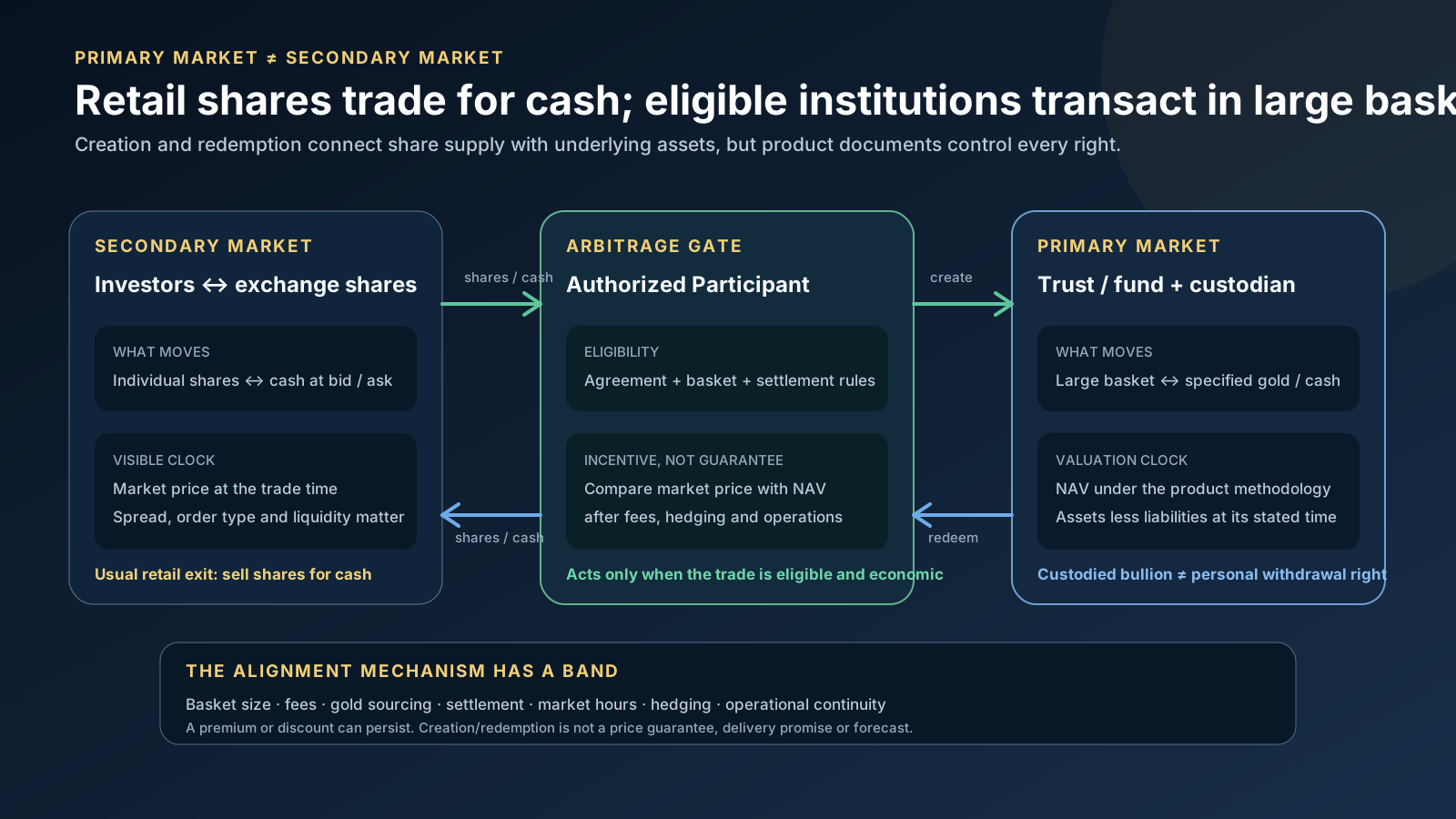
Creation and redemption connect an exchange-traded product's share supply with its underlying assets. Authorized Participants deliver the specified gold or cash for a large block of shares, or return a basket of shares for the stated redemption property. Ordinary investors generally buy and sell individual shares on the exchange and do not possess direct basket rights.
MARKET MECHANISM MAP
Keep the share market, arbitrage gate and asset basket separate
Read the cycle from the retail exchange market through the eligible institutional gate to the product's primary-market basket. Market price and NAV can use different clocks, and the product documents—not the diagram—control eligibility and settlement.
TWO MARKETS
The primary market and secondary market perform different jobs
ARBITRAGE LOGIC
Share supply can respond when market price departs from NAV
An eligible participant may find it economic to deliver assets, create shares and sell them.
New shares can help move market price toward underlying value.
An eligible participant may buy shares, assemble a basket and redeem it.
Redemption can help move market price toward underlying value.
This is an incentive mechanism, not a guarantee. Fees, minimum basket size, gold sourcing, settlement, hedging, market closures and operational limits create a no-arbitrage band.
PROSPECTUS AUDIT
Six creation-unit details can change the conclusion
01Current shares per basket and whether the value changes.
02Who qualifies and which participant agreement applies.
03Whether creations and redemptions use gold, cash or both.
04Transaction fee, settlement location and delivery standard.
05When orders may be rejected, suspended or postponed.
06Whether a separate retail physical-redemption program exists and its conditions.
Do not publish a timeless basket-size table from one filing. The SPDR Gold Trust and iShares Gold Trust documents cited below demonstrate that product terms differ and can be amended.
PRIMARY SOURCES & REVIEW BOUNDARY
Read the regulator first, then the exact product filing
- SEC Investor Bulletin: Exchange-Traded Funds for market price, NAV, bid-ask spread, premium/discount and retail trading explanations.
- SEC Rule 6c-11 compliance guide for daily ETF disclosures, median bid-ask spread and premium/discount reporting. Commodity trusts may have a different legal structure, so confirm applicability.
- SPDR Gold Trust 2025 Form 10-K and iShares Gold Trust prospectus dated December 31, 2025 as product-specific examples of bullion custody, expenses and basket redemption terms.
Sources were reviewed August 2, 2026. GoldObserve does not republish holdings, NAV history or quotes from these issuers. Product fees, basket sizes, custodians, tax language and trading conditions can change; verify the latest prospectus, annual report, fund website and executable brokerage quote before acting.
GOLD ETF RESEARCH PATH
Continue with the next distinct decision
FREQUENTLY ASKED QUESTIONS
Gold ETF creation and redemption questions
Who can create or redeem gold ETF baskets?
The product documents normally limit direct basket orders to Authorized Participants that meet the stated agreements and market-participant requirements.
Can I combine my retail shares with other investors and demand gold?
Do not assume so. Basket size alone does not grant redemption eligibility; Authorized Participant status, procedures, fees and delivery rules also apply.
Why does creation and redemption matter to a retail investor?
It can expand or contract share supply and support arbitrage between market price and NAV, affecting premiums, discounts and liquidity.