DIRECT ANSWER · 18 MIN READ
Dealers quote two prices around the value of the gold
A gold dealer's sell price, or ask, starts with the contained metal value and adds the product premium plus applicable transaction costs. The dealer's buy price, or bid, starts with the same metal value and subtracts the expected verification, handling, resale and risk costs. The difference between ask and bid is the visible spread, but your true round-trip gap also includes payment, delivery and selling costs.
A timestamped basis, not a retail promise.
The product's contained-gold value.
Metal value plus retail premium and costs.
Metal value adjusted for buyback terms.

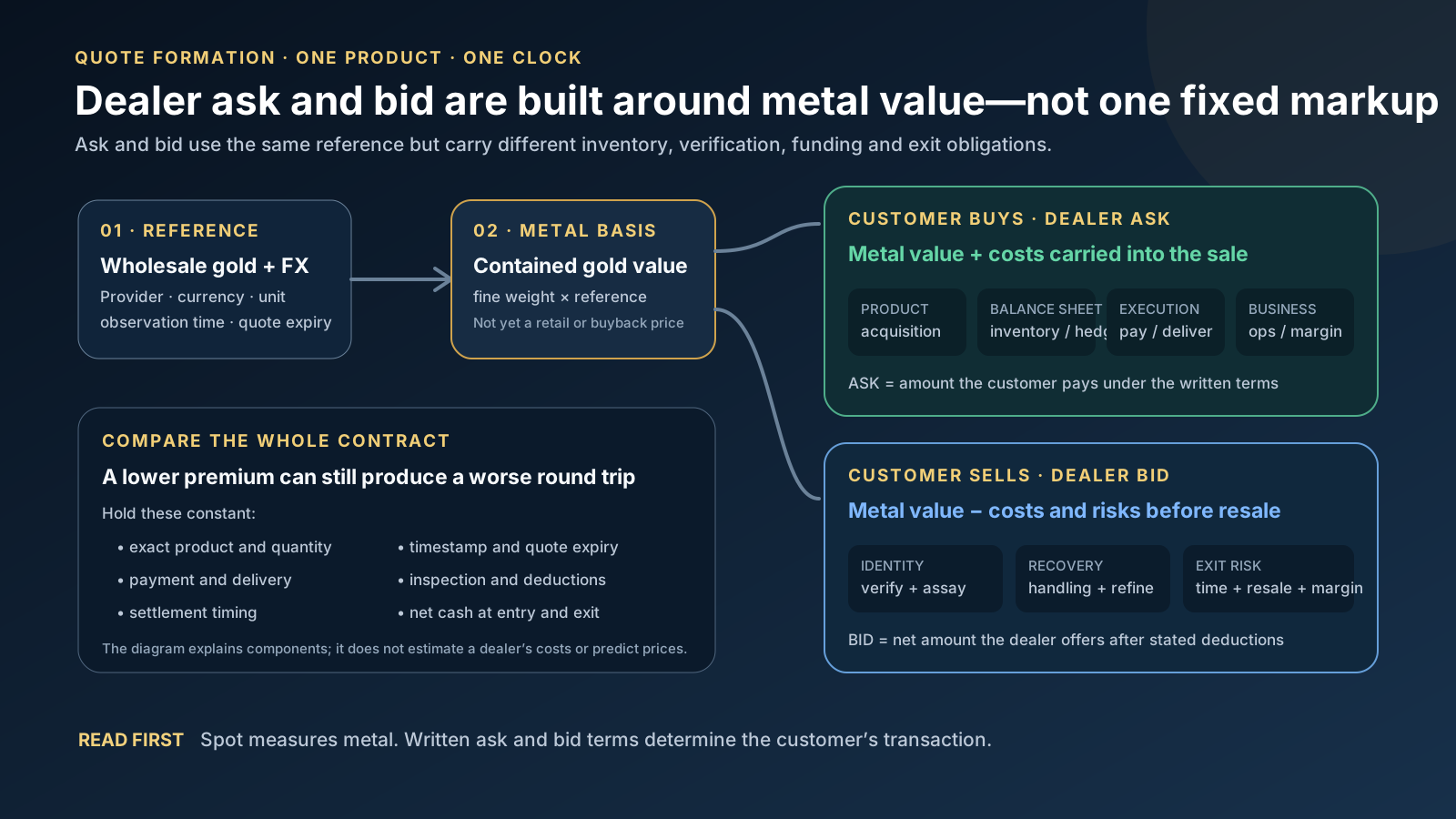
PRICE FORMATION MAP
Trace the quote from metal reference to customer cash
The diagram separates the shared metal basis from the obligations carried on each side of the dealer's book. It is a mechanism map, not an estimate of any dealer's actual cost or profit.
INTERACTIVE DEALER SPREAD WORKBENCH
Measure the quote, costs and conditional break-even
Enter the dealer ask and bid for one product, then add costs that sit outside those quotes. The calculator uses a source-labelled gold price when available and keeps metal value, purchase outlay, net sale proceeds, immediate loss and conditional break-even separate. A modeled break-even is not a future gold-price forecast.
Price reference
Shows the source and observation time of the metal price used here. Product premiums, dealer quotes and taxes are separate.
- Source
- No provider
- Observed
- Observation time unavailable
- Age
- Checking age…
- Delivery
- No data layer available
Checking the current market reference.
Enter prices captured at the same time
Ask is what you pay the dealer. Bid is what the dealer pays you for the same product and quantity basis.
Model the complete round trip
All four entries are totals for the full quantity, not per-item amounts.
Enter quotes for the same product, quantity, payment method and timestamp. This arithmetic does not authenticate bullion, guarantee dealer execution or judge whether a quote is fair.
HOW THE QUOTE IS BUILT
Four price layers prevent the word “spot” from becoming misleading
The LBMA Gold Price is a twice-daily benchmark in U.S. dollars per troy ounce. It is useful as a common reference but does not dictate a retail shop's executable price. A live screen quote, an auction benchmark and a dealer's locked order can therefore be different without any one of them being inherently false.
THE CORE FORMULAS
Normalize every dealer quote to contained fine gold
The result changes if the future bid formula, product premium, costs, currency or condition changes.
WORKED ROUND-TRIP EXAMPLE
A 6% purchase premium can require more than an 8% gold move
One fine troy ounce × a $2,500 reference price.
A 6% ask premium creates a $150 purchase markup.
A bid 2% below metal value creates a $200 ask-bid gap.
$2,650 ÷ 0.98; gold must rise about 8.16% if the same bid ratio persists.
The $200 displayed gap equals 7.55% of the $2,650 purchase price. Shipping, card fees, tax, storage, insurance or assay would widen the customer's actual gap. A future dealer might quote a stronger or weaker bid, so the example is conditional, not predictive.
WHAT THE SPREAD PAYS FOR
The gross gap is not the dealer's net profit
This does not make every spread reasonable. It explains why comparing only “percent over spot” is incomplete. Competition matters: request executable two-way quotes from several established dealers.
WHY QUOTES CHANGE
The same dealer can quote the same product differently tomorrow
PRODUCT-SPECIFIC BUYBACKS
One generic “we buy gold” percentage cannot price every object
A bullion spread calculator cannot authenticate a product or value craftsmanship, gemstones, rarity, provenance or collector demand. Use specialist evidence when value depends on more than contained gold.
FIVE BUYBACK FORMATS
Translate the wording before comparing the number
- Percentage of spot: for example, 98% of the dealer's named reference at lock time.
- Fixed currency amount under or over: for example, $40 below reference per fine ounce.
- Product-specific bid: a cash amount for an exact coin, bar, mint, year, quantity and condition.
- Assay or melt settlement: payment follows measured recoverable content, less disclosed deductions.
- Delayed price fixing: the product is received or verified before the market price is locked.
Ask which reference the percentage uses, whether it is live or fixed, how long the quote lasts, who pays shipping and insurance, when ownership or market risk transfers, and what can reduce the final payment.
WRITTEN QUOTE CHECKLIST
Collect both sides of the market at the same time
01Identify the exact product, quantity, fine-gold content, purity, refiner or mint and condition.
02Record the reference source, currency, unit and observation time.
03Request the all-in ask for the intended payment and delivery method.
04Ask what the same dealer would pay for the same product at that moment.
05List every purchase and sale fee, including inspection, assay, shipping and insurance.
06Confirm quote expiry, price-lock trigger, cancellation policy and settlement time.
07Calculate ask premium, bid discount, net spread and conditional break-even.
08Compare at least three quotes under identical assumptions and save the evidence.
LOCAL CURRENCY AND UNIT CONTROL
A quote can move even when the U.S. dollar gold price does not
A local dealer normally converts a wholesale gold reference into local currency and the market's preferred weight before applying product economics. Local metal value is approximately USD gold per troy ounce × local currency per USD ÷ 31.1034768 for a pure-gold gram. A 22-karat item then requires a purity factor of 22 ÷ 24 unless an official fine-gold specification is available.
Keep the FX timestamp aligned with the gold timestamp. Never confuse a troy ounce with the 28.349523125-gram ordinary ounce, and do not compare per-item quotes until both products have been normalized to fine-gold weight. GoldObserve's gold weight converter handles both systems explicitly.
SALES-PRACTICE RED FLAGS
Walk away when the basic economics cannot be written down
- A salesperson guarantees appreciation, risk-free returns or a future buyer.
- The advertised “spot price” cannot be matched to a source, unit, currency or timestamp.
- The company refuses to provide fees and a same-time repurchase price in writing.
- A supposedly “free” coin, bonus metal or storage offer conceals a much wider spread.
- Pressure, unsolicited calls or financing are used to rush a large retirement-account transfer.
- Stored metal cannot be independently identified, inspected or verified with a legitimate custodian.
The CFTC and FINRA advise buyers to calculate the difference between a dealer's sale price and buyback price, obtain all fees in writing and ask for a same-time buyback quote. They also warn that leverage, financing and unverifiable storage can materially increase risk.
PRIMARY SOURCES AND SCOPE
What this guide establishes—and what it does not
The U.S. Mint Authorized Purchaser program shows that bullion distribution includes two-way wholesale markets and reference-plus-premium pricing. The U.S. Mint bullion consumer guide tells buyers to understand both market price and premium. The CFTC and FINRA precious-metals advisory defines the retail spread and recommends written fees and a same-time buyback quote. FINRA separately explains physical precious-metals costs and risks. Benchmark context comes from the LBMA daily auction price documentation.
GoldObserve does not endorse a dealer, authenticate metal, predict a future bid, determine tax treatment or provide investment advice. Tax, consumer-protection, cash-reporting and import rules vary by jurisdiction. Verify current local requirements with qualified professionals before a material transaction.
RELATED TOOLS AND GUIDES
Continue from quote to product and portfolio decision
FREQUENTLY ASKED QUESTIONS
Gold dealer pricing questions
What is the difference between ask and bid?
Ask is what the customer pays the dealer; bid is what the dealer pays the customer. Always label the direction because “buy price” can mean opposite things to the two parties.
Why is the dealer price different from spot?
Spot is a wholesale reference. A physical product adds fabrication, distribution, inventory, payment, delivery, verification and operating costs.
Is a narrow ask premium enough to identify the best deal?
No. A low ask can be offset by card fees, shipping, weak local recognition or a poor buyback bid. Compare the all-in acquisition with net same-time resale proceeds.
Will I recover the premium when I sell?
Not necessarily. The future product bid depends on demand, inventory, condition and market structure at that time. Treat recoverable premium as uncertain.
How long is a gold quote valid?
There is no universal duration. Fast markets can shorten quote windows. Confirm the expiry and the exact action that locks the price.