PERFORMANCE BOND / DAILY CASH FLOW
Margin controls access to the contract; it does not cap the loss
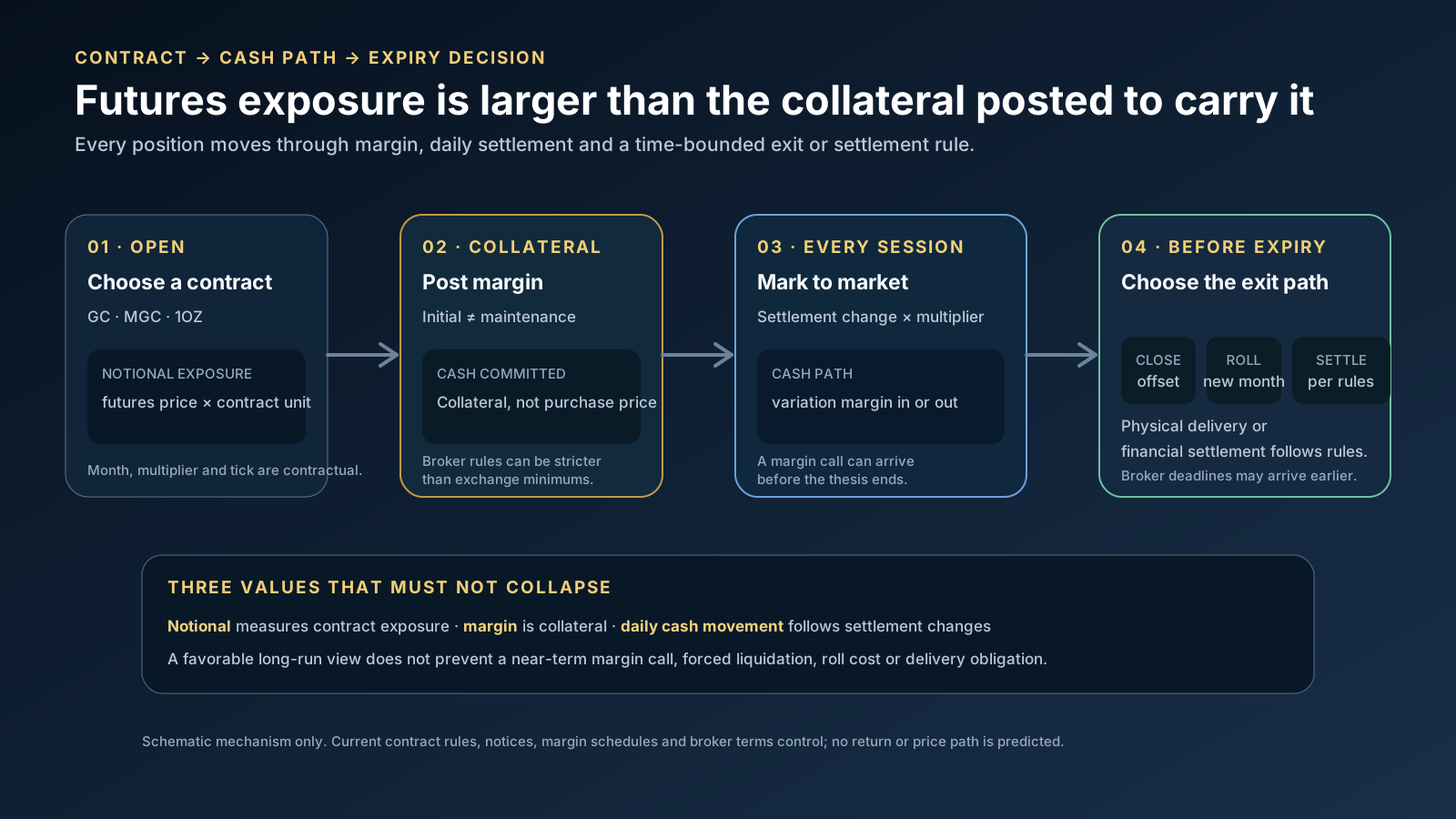
Futures margin is collateral supporting performance, not a partial payment for gold. A trader posts initial margin while profit and loss accrue on the full GC, MGC or 1OZ exposure. The account is marked to market, maintenance equity must be preserved, and a broker can require more than the exchange minimum or liquidate according to its agreement.
NOTIONAL / COLLATERAL / CASH
Three values move through one position but must stay separate
The same lifecycle that governs a futures position explains why margin is not the loss limit. Notional determines dollar exposure, margin is collateral, and settlement changes create cash movements that can force action before the long-run thesis or expiry decision.
CASH-FLOW SEQUENCE
How a margin call develops
Post the broker's current initial margin and fees.
Full contract P/L changes account equity, not just the margin percentage.
Losses debit and gains credit the account under clearing and broker rules.
The broker may demand funds, reduce positions or liquidate.
Higher house or exchange margin can create a call without a new price move.
EXPOSURE EXAMPLE
Leverage is the ratio that makes a normal gold move consequential
Assume one MGC contract at an illustrative $4,000 per ounce and $4,000 of entered initial margin. The contract controls 10 ounces, or $40,000 notional, creating a simple 10x notional-to-margin ratio. A 2% adverse gold move is $80 per ounce and therefore an $800 loss before costs, equal to 20% of the entered margin.
The example does not state a current MGC margin requirement. It shows why a margin percentage cannot replace an adverse-price stress. Price gaps, intraday marks and broker action can make realized loss worse than the planned closing-price scenario.
LIQUIDITY RESERVE
Do not size a position to the maximum the broker permits
01Calculate full notional and dollars per $1/oz move.
02Stress several adverse moves, including a gap beyond the intended stop.
03Enter current initial, maintenance and house margin separately.
04Keep available cash outside the minimum maintenance buffer.
05Read intraday margin and liquidation provisions.
06Include all correlated positions when estimating available equity.
07Repeat the exercise whenever price, volatility or margin changes.
PRIMARY SOURCES & REVIEW BOUNDARY
Contract rules come before marketing summaries
- COMEX Rulebook Chapter 113 for the 100-troy-ounce GC trading unit, $0.10-per-ounce minimum tick, deliverable bar standards and last trading day.
- COMEX Rulebook Chapter 120 for the 10-troy-ounce MGC unit, $0.10-per-ounce minimum tick and Accumulated Certificate of Exchange delivery structure.
- CME 1-Ounce Gold futures FAQ for the 1OZ contract size, $0.25 tick, financial settlement, listed months, current access channel and current trading-hours notice.
- Current COMEX Rulebook index for later amendments, delivery chapters, position limits and related notices.
- CFTC Futures Market Basics, CFTC explanation of how futures work and the CFTC glossary for margin, daily mark-to-market, offsetting, clearing and retail risk.
Sources were reviewed August 2, 2026. GoldObserve does not reproduce licensed futures quotes, margin schedules, fee tables or exchange calendars. Verify the current rulebook, exchange notices and your futures commission merchant before using any contract.
GOLD FUTURES RESEARCH PATH
Continue with the next distinct decision
FREQUENTLY ASKED QUESTIONS
Gold futures margin questions
Is futures margin a down payment on gold?
No. The CFTC describes futures margin as a performance bond. Profit and loss are based on the full contract exposure and accounts are marked to market.
What is the difference between initial and maintenance margin?
Initial margin is required to open or restore a position. Maintenance margin is the lower threshold that must be maintained; falling to or below it can trigger a call to restore equity, subject to broker rules.
Can a broker require more margin than CME?
Yes. The CFTC and CME both warn that a futures commission merchant or clearing firm may set requirements above exchange or clearing minimums.
Can losses exceed the initial margin deposit?
Yes. An adverse move or gap can create losses beyond the original deposit, and liquidation may not occur at the price assumed in a simple model.