THE SHORT ANSWER
A gold option is a dated right for the buyer and a contingent obligation for the writer
Do not judge an option by a bullish or bearish label alone. Identify the underlying futures contract, call or put, strike, expiration, premium quotation, multiplier and whether the position is bought or written. A long option can expire worthless; a written option can create losses much larger than premium received; exercise or assignment can create a leveraged futures position that has a different risk profile from the option.
CONTRACT BEFORE QUOTE
Read an option chain in the order that preserves its meaning
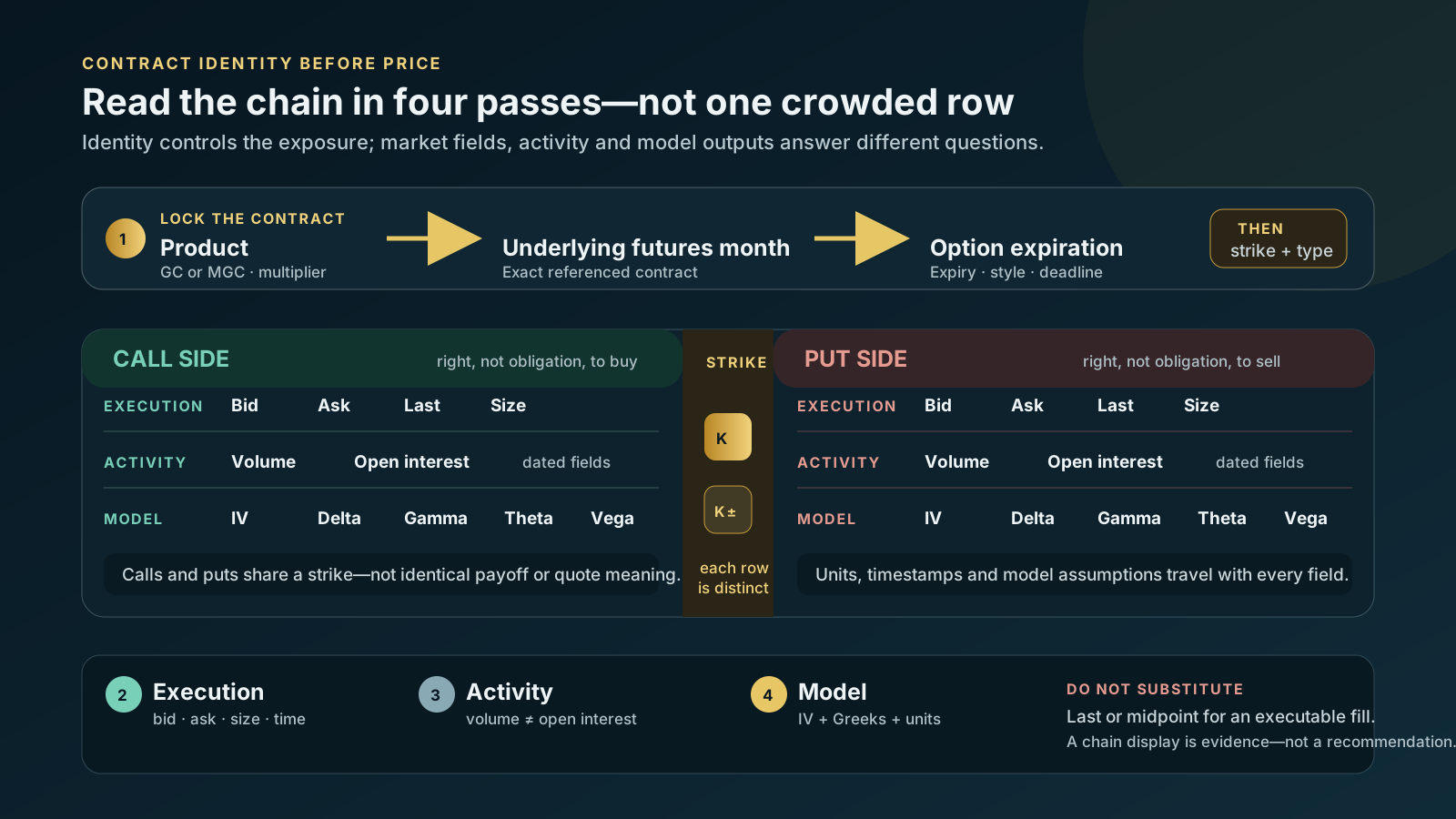
First lock the product, underlying futures month and option expiration. Only then compare the strike, call or put side, executable bid and ask, dated activity fields and model outputs. The diagram is schematic and contains no invented market quote.
SIX-PART CONTRACT MAP
Every gold option decision begins with six fields
Record the exact GC or MGC futures contract and delivery month.
A call relates to long exposure; a put relates to short exposure at the strike.
The specified exercise price, not the premium paid for the option.
The right is time-limited and operational deadlines can precede the final timestamp.
The quoted option price must be multiplied by the contract unit and contracts.
Buyer and writer have opposite payoff and obligation profiles.
PAYOFF VERSUS VALUE
Expiration payoff is not the same as the option's price before expiration
DECISION GATE
Do not place the order until eight questions have written answers
01Which exact option and underlying futures month?
02Is the position long or written, call or put?
03How is premium quoted and what is the full dollar amount?
04What is the expiration break-even after all known costs?
05What happens at several underlying futures prices?
06What are the broker's exercise, abandon and close-out deadlines?
07Could exercise or assignment create a futures position?
08What liquidity, margin, spread, tax and operational risks remain?
PRIMARY SOURCES & REVIEW BOUNDARY
Definitions come from regulators; current contract instructions come from the exchange
- CME Gold options contract specifications and the CME Gold product page for current listed-product context.
- Current COMEX Rulebook index for controlling product, exercise, settlement and clearing provisions.
- CFTC glossary for call, put, premium, strike price, assignment, intrinsic value, time value, Delta, Gamma and Vega definitions.
- CME options Greeks education for the risk-sensitivity framework, and CFTC Futures Market Basics for derivatives-market risk.
- NFA investor resources for registration checks, due diligence and customer-protection material.
Sources and links were reviewed August 2, 2026. Contract listings, strikes, expirations, exercise thresholds, broker deadlines, margin and fees can change. GoldObserve does not reproduce an option chain, licensed quote, volatility surface, margin schedule or broker instruction.
GOLD OPTIONS RESEARCH PATH
Continue with the next distinct decision
FREQUENTLY ASKED QUESTIONS
Gold options questions
What does a gold call option provide?
A call buyer receives the right, but not the obligation, to enter the specified long exposure at the strike under the contract rules. The writer accepts the corresponding obligation if assigned.
What does a gold put option provide?
A put buyer receives the right, but not the obligation, to enter the specified short exposure at the strike under the contract rules. The writer can be assigned the opposite side.
Is the option premium the maximum possible loss?
For a long option that expires without creating another position, premium plus transaction costs bounds that option purchase loss. Exercise can create a futures position with new risk. A writer can lose far more than premium received.
Does an option break-even price predict where gold will trade?
No. It is expiration payoff arithmetic based on strike and premium. It is not a probability, forecast, fair value or recommendation.