THE SHORT ANSWER
Identify the structure before interpreting the karat or value
“Gold jewelry” can describe a gold alloy throughout the metal walls, a hollow gold-alloy shell, a mechanically applied layer, an electroplated surface or gold over sterling silver. Those constructions answer different questions about durability, testing and recoverable metal. Start with the complete seller description and mark set; then use measurements and tests to challenge, not silently replace, that evidence.
VISUAL CROSS-SECTIONS
See what the gold claim actually describes
Read across the five schematic sections before interpreting a fineness mark, test reading or weight. The decisive distinction is whether gold describes the body, a wall, a mechanically applied layer or a plated surface over a documented substrate.
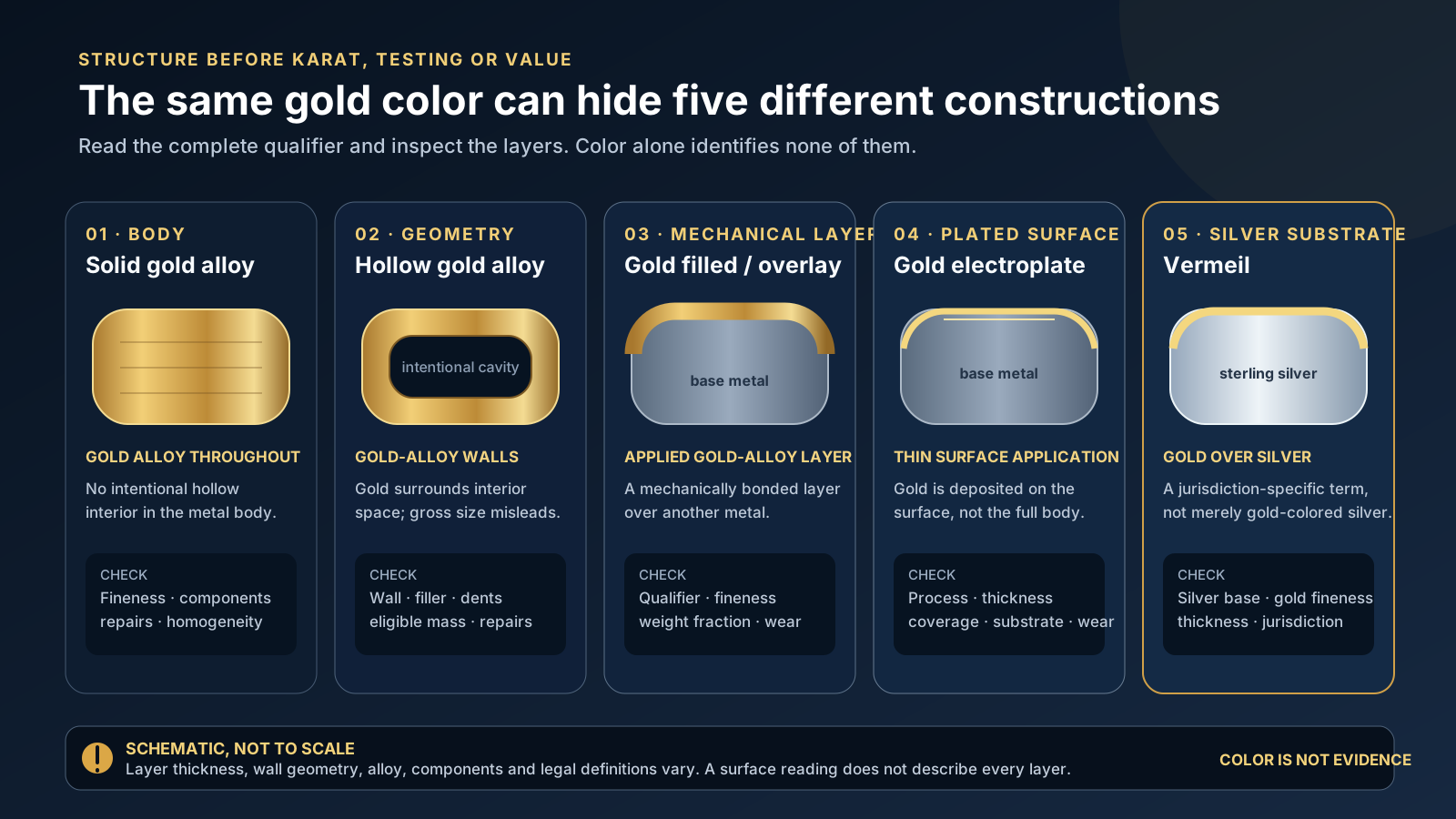
Method boundary: Layer and wall thicknesses are deliberately exaggerated for explanation and are not measurement standards. Terms and thresholds depend on jurisdiction, date and the complete qualifier. Color, one surface reading or one isolated fineness number cannot establish the construction of every part.
CONSTRUCTION MAP
Five structures that should not share one shortcut
DECISION SEQUENCE
Move from description to marks to physical evidence
- Freeze the commercial claim. Save the listing, invoice, return terms and exact construction words before they can change.
- Photograph the complete item and mark set. Include location, scale, clasp, seams, wear, repairs and adjacent qualifiers.
- Attach a jurisdiction and date. A mark is not self-interpreting across countries or historical periods.
- Choose tests for the actual uncertainty. Surface composition, layer thickness, geometry and bulk homogeneity are different measurement problems.
- Choose the market before calculating value.Wearable resale, collectible resale, silver value and refiner recovery use different inputs.
If the question is only karat-to-fineness conversion, use the gold karat and fineness guide. If the question is whether a measurement supports a composition claim, use the gold testing methods guide.
WHAT CHANGES THE ANSWER
A construction conclusion can reverse with one qualified word
“14K” next to a responsible party may support an alloy-fineness claim. “1/20 14K GF” describes a different object: a stated portion of mechanically applied 14-karat gold alloy over another metal. “925” with a gold-colored surface points toward a silver-substrate question, not a whole-item gold calculation. A repair joint or replaced clasp can also make one description true for one component and false for another.
Preserve these distinctions in an item-level construction record before seeking an appraisal or buyer offer.
OFFICIAL SOURCES AND SCOPE
Construction words only work inside a defined jurisdiction
- The U.S. FTC consumer guide to platinum, gold and silver jewelry explains karat marks, solid and hollow construction, mechanical overlays, electroplate, vermeil, wash and the responsible company's mark. It was published in November 2024.
- The FTC Jewelry Guides hub and 2018 revision record explain how marketers can avoid deceptive composition, coating, durability and value claims. These are U.S. marketing guides, not a universal product dictionary.
- Current 16 CFR 23.4 describes the U.S. use of “vermeil”: a sterling-silver base, gold or gold alloy of at least 10 karat on all significant surfaces, and a minimum fine-gold-equivalent thickness of 2.5 microns, with a disclosure condition for an intervening base-metal layer.
- The GOV.UK hallmark summary and practical guidance notes define the UK's complete hallmark, weight exemptions and special treatment of mixed, plated and filled articles.
Sources reviewed July 31, 2026. Rules, terminology, exemptions and recognized marks vary by country and date. Verify the law and official assay-office guidance for the market where an item is described or sold.
FREQUENTLY ASKED QUESTIONS
Questions that change the answer
Does 14K mean a piece is solid gold?
No. A fineness mark describes gold content in the referenced gold alloy; it does not by itself tell you whether the item is solid, hollow, plated, filled, repaired or made with non-gold components.
Is gold-filled jewelry the same as solid gold?
No. In U.S. FTC terminology, gold-filled construction uses a mechanically applied gold-alloy layer over another metal and is described with qualifying words and, where relevant, a weight fraction.
Can a stamp prove the construction?
No single stamp is conclusive. Read the complete mark set, seller description, jurisdiction, item geometry, condition and test evidence together, then investigate conflicts.
Can gross weight be multiplied by karat to value every gold-colored item?
No. Stones, base metal, silver substrate, filler, hollow space, solder and a surface layer can make gross-weight multiplication materially wrong.