THE SHORT ANSWER
Read each mark as a claim that needs the right source
A gold bar can show a refiner or mint mark, assay mark, weight, fineness, serial number and production date. Their meaning depends on the product standard and era. Record every field, compare it with the issuing source and pause when marks, packaging, dimensions or provenance conflict.
EVIDENCE CHAIN
Move from the applicable standard to the exact transaction
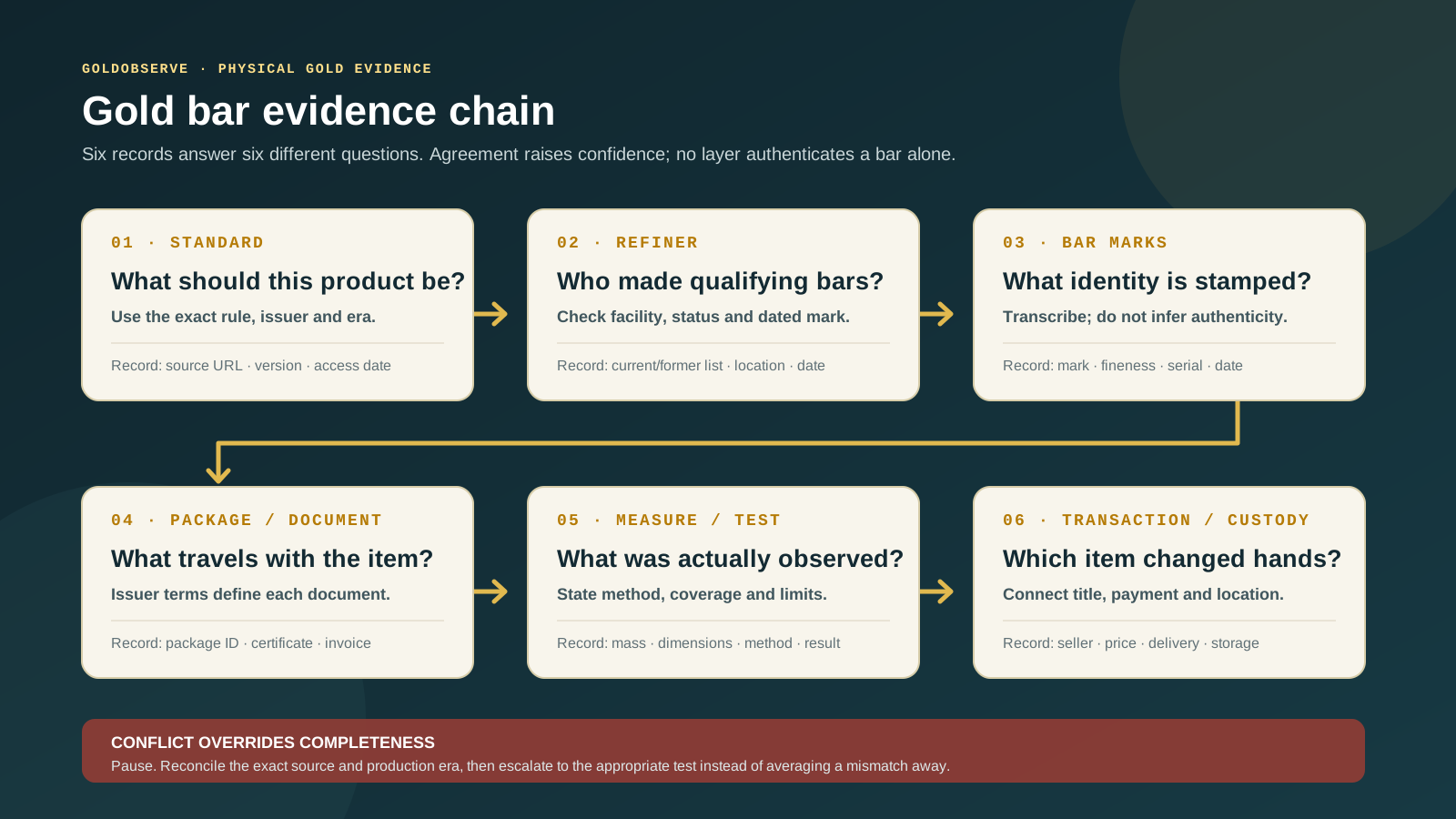
No single logo, list entry, serial, package or test closes the whole question. Use the diagram as a reading order: establish the product and era, identify the facility, transcribe the marks, reconcile accompanying records, document what a measurement or test actually observed, and connect the exact item to seller, payment, delivery and custody.
MARK-BY-MARK
Do not combine six different claims into one authenticity label
| Mark | Claim | Cross-check |
|---|---|---|
| Refiner or mint | Claimed producer | Official mark, facility and era |
| Assay mark | Quality-control identity | Applicable standard and issuer record |
| Weight | Nominal or recorded mass | Issuer label and calibrated measurement |
| Fineness | Parts per thousand gold | Product record and a suitable assay when needed |
| Serial | Traceability identifier | Package, certificate or inventory |
| Date | Production period | Era-specific rule and mark history |
SAFE WORKFLOW
Use visual evidence to decide what to test, not to declare a pass
Both sides, edges, packaging and invoice.
Keep punctuation, leading zeros and units.
Match the exact product and production era.
Use calibrated tools without damaging the bar.
Do not average a mismatch away.
Professional non-destructive testing if unresolved.
SERIAL NUMBER LIMIT
Uniqueness helps traceability but does not prevent copying
The LBMA/SGE kilobar specification says serial numbers should be unique and non-reusable and tied to inventory lists. Royal Mint describes matching numbers on certain bars and their sealed packaging. Those are issuer- and standard-specific controls. A number printed on a marketplace listing is not independently verified merely because its format looks plausible.
PRIMARY SOURCES
Rules, issuer records and consumer safeguards
- LBMA Good Delivery technical specifications for wholesale-bar weight, fineness, marks, date and dimensional fields.
- LBMA Gold Current List for a dated refiner and current-bar-mark check. GoldObserve links to the list rather than reproducing its proprietary contents.
- LBMA proactive monitoring procedures for continuing assay capability and quality-assurance context.
- Royal Mint serialized packaging FAQ for one issuer's matching-serial and opened-package boundary.
- U.S. Mint bullion consumer awareness for seller, specification, premium and third-party certification checks.
- CFTC precious-metals fraud advisory for delivery, storage, financing and missing-document warning signs.
Reviewed August 12, 2026. List status, bar marks, packaging and product specifications can change; record the exact source and check date.
FAQ
Gold bar marking questions
What markings should a Good Delivery gold bar have?
Current rules call for the refiner stamp, assay mark, fineness, serial number and, for relevant newer production, month and year.
Does a serial number prove a gold bar is real?
No. A number is one traceability field and can be copied. Match it to packaging, certificate, inventory or issuer systems where applicable and use other evidence.
Should every retail bar have an LBMA-style date?
No. The wholesale Good Delivery rules should not be copied onto every small retail product. Use the exact issuer's specification and production era.
Can a visual inspection authenticate a bar?
No. Visual comparison can identify missing or conflicting evidence, but composition and title may require professional testing and provenance.