THE SHORT ANSWER
Gifted gold can carry two basis tests into a later sale
Preserve the donor's adjusted basis immediately before the gift, the gift-date fair market value, acquisition and transfer dates, any gift tax paid and later adjustments. Publication 551 generally uses donor basis for gain. If gift-date FMV was lower, it uses that lower value for loss, with neither gain nor loss when a later sale falls between the two.
DUAL-BASIS EVIDENCE MAP
Collect the transfer file before choosing a gain or loss branch
The later sale determines which test is relevant. The visual keeps donor basis, gift-date fair market value, tax evidence and adjustments visible without pretending that one historical gold quote can replace the record.
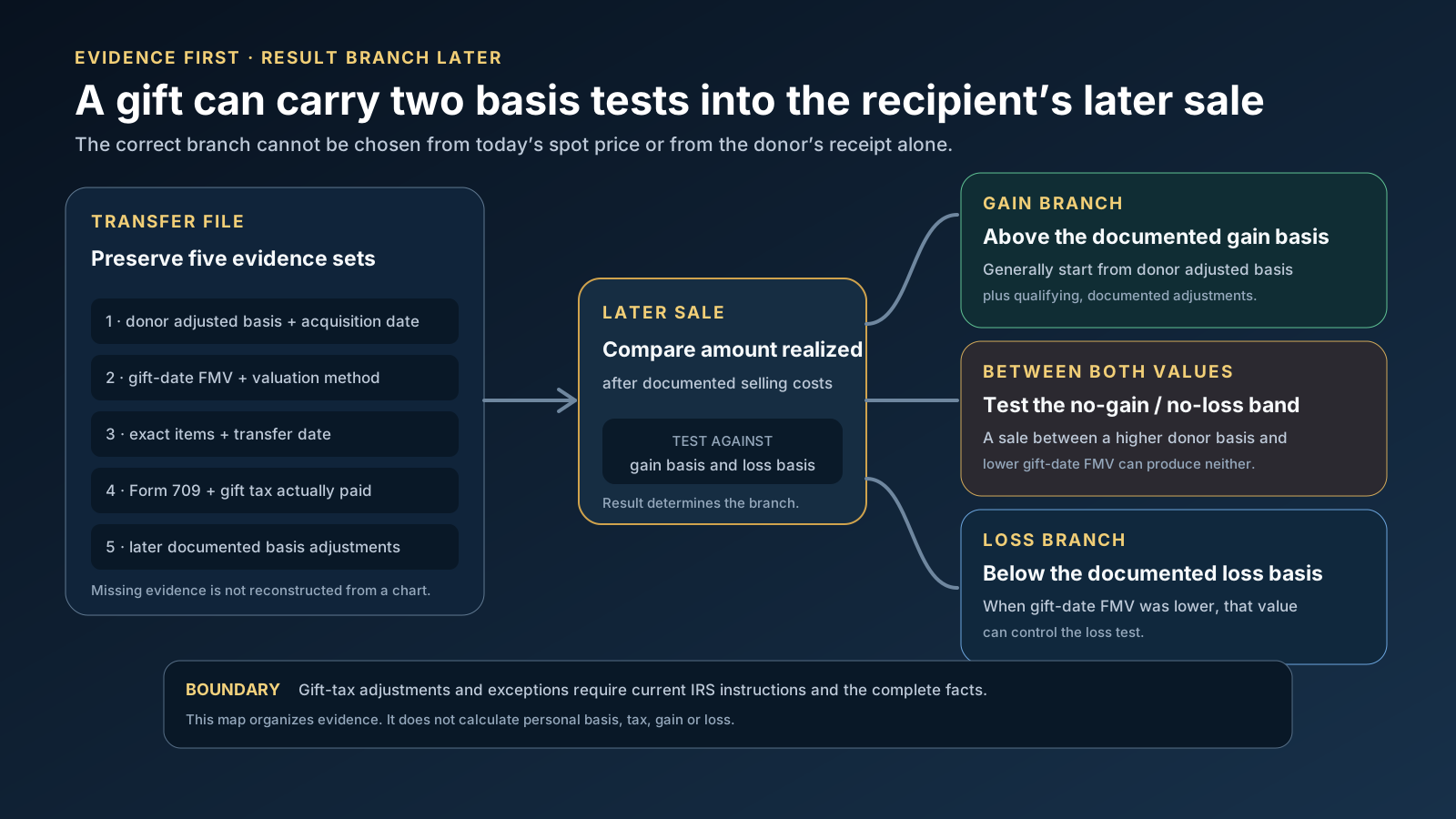
DUAL-BASIS MAP
The later sale result decides which starting value is relevant
DONOR FILE
A purchase receipt is the beginning of basis, not always the end
Publication 551 defines adjusted basis as original basis increased or decreased by applicable adjustments. For physical gold, preserve the original invoice, payment, acquisition costs, item allocation and any event said to change basis. Do not silently allocate one undivided invoice across unlike coins or jewelry. The donor should explain the allocation method and give the recipient the underlying evidence.
GIFT-TAX ADJUSTMENT
Gift tax paid does not simply become basis dollar for dollar
Publication 551 describes a possible increase for gift tax attributable to net appreciation on post-1976 gifts. The computation uses gift tax actually paid, the property's appreciation and the amount of the gift after applicable exclusions or deductions. Keep Form 709 and payment evidence, and let a qualified professional compute the adjustment rather than adding an estimated tax amount.
NO HISTORY LOOKUP
A historical spot quote cannot reconstruct donor basis or gift-date FMV
Spot does not reveal the donor's purchase cost, acquisition expenses, product premium, condition, quantity discount, gift tax or the market in which the property would commonly sell. GoldObserve deliberately records the value source supplied by the transfer file and does not backfill a missing quote, basis or appraisal.
PRIMARY SOURCES
Current federal guidance and product evidence
- IRS Publication 551 for gift-basis, dual-basis, gift-tax adjustment and record-transfer rules.
- IRS gift-tax FAQ, Form 709 instructions and 2026 inflation adjustments for donor, annual-exclusion and filing boundaries.
- IRS Publication 559 for gift-tax administration and the distinction between gifts and inheritances.
- U.S. Mint bullion consumer awareness for product specifications, premiums, two-way market context and dealer diligence.
Reviewed July 31, 2026. These sources describe federal rules. They do not decide state property law, title, capacity, marital rights, trust restrictions or a specific return position. Use the current form for the transfer year and qualified legal, tax and appraisal advice.
FAQ
Gifted gold basis questions
What is the basis of gifted gold?
Publication 551 generally uses the donor's adjusted basis for gain. When gift-date fair market value is lower than donor basis, a separate FMV basis can apply to loss, producing a possible no-gain/no-loss range.
Why do I need gift-date fair market value if donor basis carries over?
Gift-date FMV is needed for the lower-FMV dual-basis rule and can support gift-tax reporting. It also documents the property and market at transfer.
Does the donor's holding period transfer?
Publication 551 says the recipient's holding period generally includes the donor's holding period when basis is determined by donor adjusted basis. Preserve the donor acquisition date and evidence.
Can GoldObserve calculate gifted-gold basis?
Not from a current price alone. The correct analysis may require donor adjusted basis, gift-date FMV, gift tax paid, appreciation, holding period and later adjustments. The checklist records evidence but does not manufacture missing inputs.