THE SHORT ANSWER
Inherited basis is a documented estate value, not the decedent's missing receipt
IRS Publication 551 generally starts inherited property at date-of-death fair market value or an applicable alternate valuation, with exceptions and consistent-basis rules. Identify the exact items, estate valuation date, market and appraisal. Preserve Form 706 records and the beneficiary's Schedule A (Form 8971) when applicable. Do not substitute a current quote, purchase receipt or an unsourced historical chart.
ESTATE EVIDENCE MAP
Keep the inherited value attached to its item, date and authority
The main chain links ownership, property identity, valuation date, relevant market and estate reporting. Exceptions remain outside that line because a beneficiary cannot select them from a price chart.
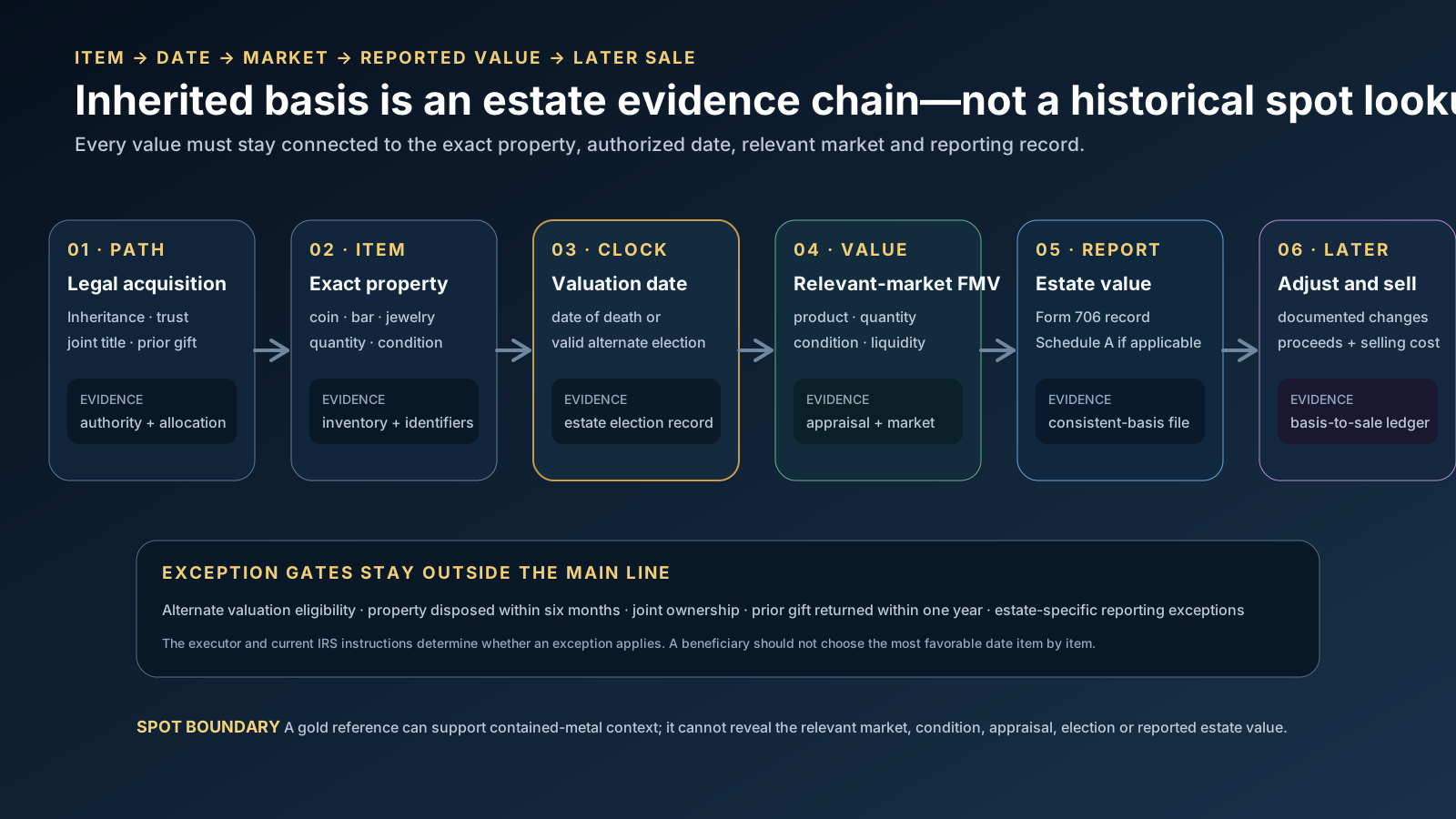
BASIS EVIDENCE CHAIN
Make every number traceable to an item, date and authority
Inheritance, trust, joint title or gift.
Item IDs and beneficiary allocation.
Estate-selected date and election record.
Market, quantity, condition and evidence.
Form 706 and Schedule A when applicable.
Documented post-acquisition basis changes.
FAIR MARKET VALUE
Spot price answers a narrower question than estate FMV
The IRS estate-tax FAQ describes fair market value using a willing buyer and willing seller, neither compelled and both knowing relevant facts, in the market where the property is commonly sold. A fine-gold reference may be useful for ordinary bullion, but the appraisal must still address product, quantity, condition, premiums, liquidity and valuation purpose. Proof coins, scarce dates, graded pieces and jewelry require more than contained-metal multiplication.
ALTERNATE VALUATION
Six months later is not a beneficiary price-selection shortcut
Form 706 instructions limit when an executor may elect alternate valuation and say it cannot be applied to only part of the estate. Property distributed or disposed of within the six-month period can use the relevant disposition date under those rules. Do not choose between two gold prices item by item. Preserve the filed election, distribution or sale date and the value used by the estate.
FORM 8971 BOUNDARY
Not every estate files it; applicable beneficiaries need the specific Schedule A
IRS instructions explain that specified executors filing Form 706 or 706-NA must file Form 8971 and furnish beneficiary-specific Schedule A statements, subject to listed exceptions. Where the consistent-basis requirement applies, the beneficiary cannot use an initial basis above the finally determined estate-tax value for the covered property. The estate should determine whether the form applies; the beneficiary should preserve the received schedule.
NO AUTOMATIC LOOKUP
GoldObserve deliberately does not backfill the estate's missing valuation
A historical spot observation cannot reveal whether the item was bullion, collectible, damaged, grouped, restricted, insured or sold in the relevant market. Long-term price licensing and source continuity also matter. The estate checklist records the valuation date and evidence supplied by the authorized process; it does not invent a historical quote or tax basis.
PRIMARY SOURCES
Current IRS and U.S. Mint evidence
- IRS Publication 551 for inherited-property basis, date-of-death fair market value, alternate valuation and consistent-basis boundaries.
- IRS Publication 559 for survivors, executors, administrators, estate basis and inherited property disposition.
- Instructions for Form 706 for estate valuation dates and the estate-wide alternate valuation election.
- IRS Form 8971 and Schedule A plus its instructions for beneficiary-specific basis reporting when applicable.
- IRS estate-tax FAQ for the willing-buyer/willing-seller fair-market-value standard and forced-sale boundary.
- U.S. Mint bullion consumer awareness for product specifications, premiums, dealer diligence and two-way market context.
- IRS Publication 544 and Form 8949 instructions for amount realized, inherited-property holding period, basis and disposition reporting.
Reviewed July 31, 2026. Federal tax publications do not determine who has authority under a will, trust, court order or state probate law. Confirm the current documents and obtain qualified advice for the estate and beneficiary.
FAQ
Inherited gold basis questions
What is the cost basis of inherited gold?
IRS Publication 551 generally describes inherited-property basis as fair market value at the date of death or an applicable alternate valuation, subject to exceptions and consistent-basis rules. Use the estate's actual records rather than a generic formula.
Is spot gold on the date of death fair market value?
Not necessarily. Spot can measure contained metal, but fair market value considers the market in which the item is commonly sold, quantity, condition, product premium and relevant facts. Collectible or jewelry value can diverge materially.
What if I received Schedule A (Form 8971)?
Review the property description and reported estate tax value. IRS guidance requires consistent initial basis for specified property and beneficiaries. Keep the schedule with later adjustments and sale records.
What if the gold was a gift before death?
Gift and inherited-property basis rules differ, and special exceptions can apply to appreciated property given back to the donor or spouse within one year. Obtain qualified advice rather than assuming a date-of-death step-up.