SCREEN, DO NOT CERTIFY
The micro-letter is one input in a layered examination
Current Australian Gold Kangaroo bullion coins include a micro-laser engraved letter within the design, and Perth Mint coins carry a P mintmark. Neither feature is a magic pass. A defensible screen combines the correct year-specific product record, design inspection, physical measurements, provenance and—when value or uncertainty warrants it—professional non-destructive testing.
SAFE SEQUENCE
Six checks that preserve the coin
The shared evidence ladder shows why the visible micro-letter belongs between the exact product reference and independent measurements—not above seller recourse, provenance or qualified testing.
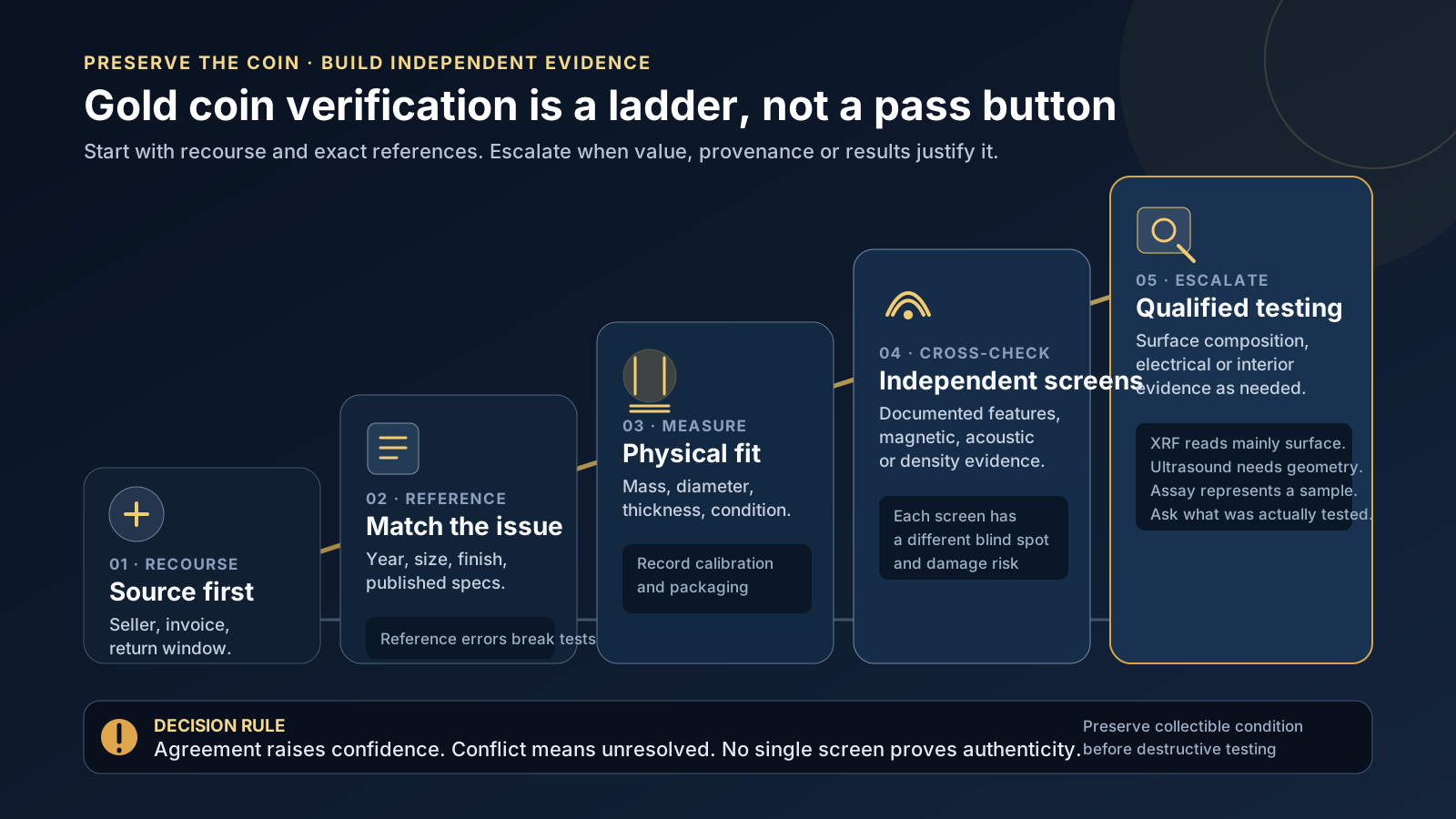
Record year, size, finish and visible denomination.
Open the exact Perth Mint product or mintage record.
Inspect the micro-letter, P mintmark and design details.
Use calibrated weight and dimension tools.
Review invoice, seller, packaging and custody history.
Use a reputable non-destructive test when unresolved.
Product boundary: The diagram is a general evidence order. The correct year-specific Perth Mint record and the observations made on the exact coin control this screen.
PACKAGING BOUNDARY
No certificate can be normal for bullion
Perth Mint's counterfeit guidance says its bullion coins do not include a certificate of authenticity. Absence of a certificate is therefore not evidence that an ordinary bullion Kangaroo is fake. Conversely, attractive packaging or a printed card does not prove that metal inside is genuine.
Proof products are different. Perth Mint's 2026 tenth-ounce proof has a proof finish, a maximum mintage of 500, a display case and a numbered certificate. The 2026 tenth-ounce bullion coin has a bullion finish, a maximum mintage of 200,000 and no certificate. Always establish the product class before judging its packaging.
MEASUREMENT LIMITS
A plausible number is not an authenticity verdict
Density substitutes can imitate one weight or dimension, while handling, scale calibration and measurement technique can affect readings. Compare all available fields with the correct official source and do not apply a 2026 specification blindly to a different year or special issue.
Do not drill, cut, file or acid-test a valuable coin. A reputable bullion or numismatic professional can select an appropriate non-destructive method and document the result.
PRIMARY SOURCES
Mint guidance and matching product records
- Perth Mint tips for avoiding fake coins and bars for micro-letter, P mintmark, sourcing and certificate guidance.
- 2026 one-ounce bullion product for the current design and physical fields.
- 2026 tenth-ounce proof product for the proof finish, mintage and certificate boundary.
FAQ
Gold Kangaroo security questions
What security feature is on a 2026 Gold Kangaroo?
Perth Mint describes a micro-laser engraved letter within the coin's design. Inspect it with magnification and compare it with the correct year-specific official product.
Does a P mintmark prove a Gold Kangaroo is genuine?
No. The P mintmark is an expected design element, not a standalone authentication result. Counterfeiters can copy visible features.
Should a bullion Gold Kangaroo have a certificate?
Perth Mint says its bullion coins do not include certificates of authenticity. Proof collector products can have different packaging and a numbered certificate.
Can an online checklist authenticate my coin?
No. It can organise screening observations. Valuable or uncertain coins need a reputable buyer or expert using appropriate non-destructive tests.