THE SHORT ANSWER
Preserve the evidence before arguing about the value
Record when and how the loss was discovered, freeze the item inventory, protect original photographs, invoices, appraisals and custody records, then notify the proper agency, insurer, carrier or custodian. Keep ownership, adjusted basis, pre-loss market value, policy value and settlement in separate fields. None of those numbers automatically substitutes for another.
CLAIM EVIDENCE CHAIN
A claim moves from preservation to a policy-controlled resolution
Read the chain from left to right, but keep the records separate. Preserve the incident before reconstructing it; connect every fact to an exact item; test coverage under the actual policy; use the valuation purpose and date the claim requires; then retain the accepted decision, payment and any later recovery event.
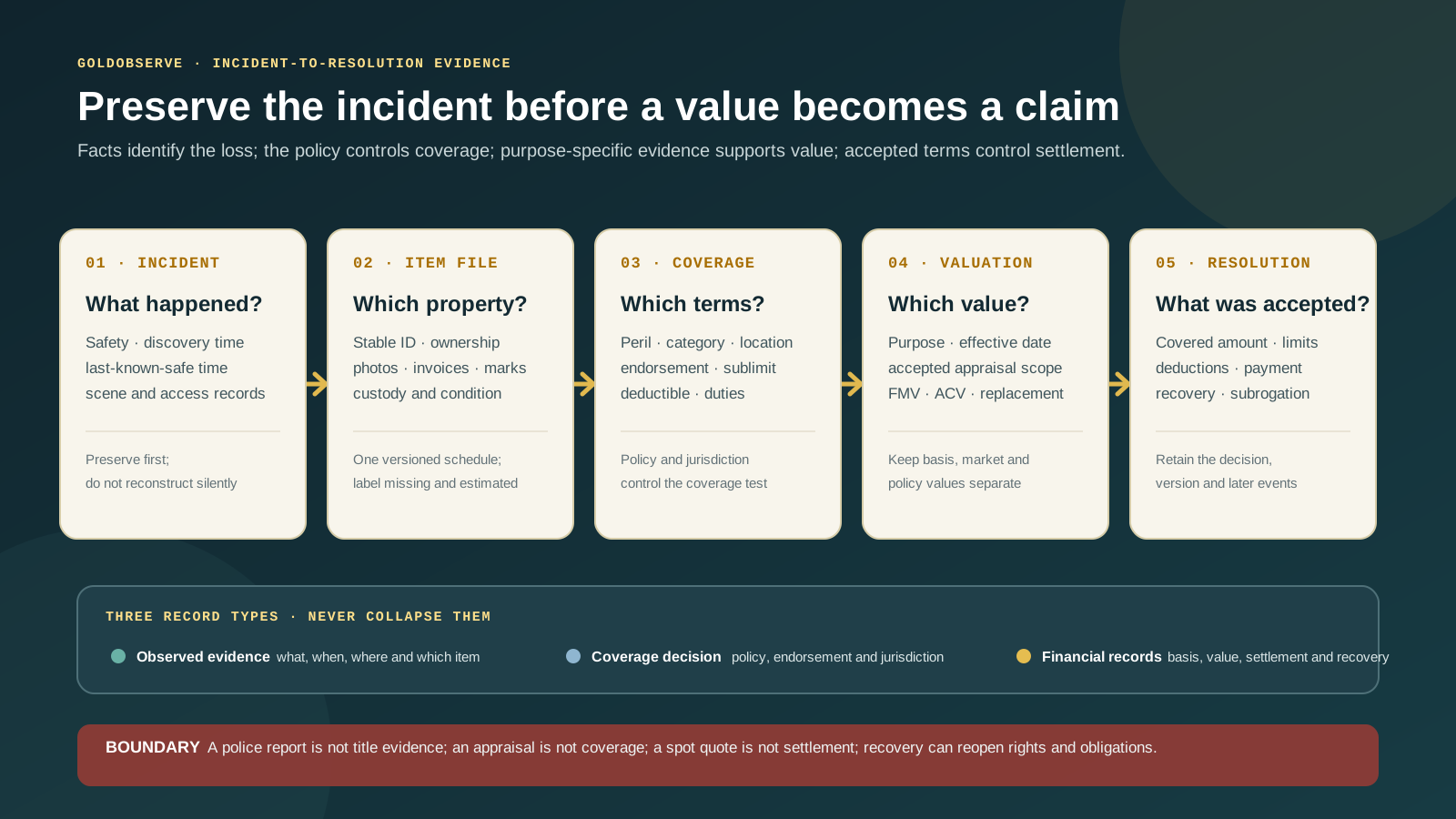
Method boundary: the diagram does not decide coverage, liability, tax treatment, ownership or payment. The policy, jurisdiction, accepted evidence and formal claim decision control.
FOUR VALUE RECORDS
A gold claim fails when unlike values are collapsed into one number
POLICY BEFORE PRICE
Read the valuable-property sublimit and endorsement before ordering an appraisal
NAIC consumer guidance warns that jewelry and other valuables can have limits far below their total value. Pull the declarations, base policy, scheduled-property endorsement and amendments. Identify covered causes, theft and mysterious-disappearance language, territory, deductibles, category sublimits, valuation basis and duties after loss. Ask the insurer what appraisal purpose and date it requires rather than commissioning a generic retail replacement report.
RECOVERY CONTROL
Recovered property after payment is not a private windfall
If an item is recovered, preserve its condition and notify law enforcement and the insurer immediately. The policy, settlement agreement and subrogation rights can determine possession, title, return of payment and evidence handling. Do not resell, clean, repackage or conceal a recovered item while those rights are being resolved.
PRIMARY SOURCES
Insurance-regulator, federal and carrier evidence
- NAIC homeowners and renters guidance and its consumer homeowners resource for valuable-property limits, inventories, appraisals and claim preparation.
- NAIC actual-cash-value and replacement-cost explanation for policy valuation language and depreciation.
- Ready.gov document-and-insure guidance for receipts, photographs, inventories and protected records.
- U.S. Mint bullion consumer awareness for product specifications, premiums and dealer-market context.
- USPS bullion insurance limits and Domestic Claims guide for service selection, proof of value, insurance evidence and packaging retention.
- IRS Publication 547, Form 4684 instructions and the July 2026 casualty-loss update for theft, reimbursement, disaster and 2026 scope boundaries.
Reviewed July 31, 2026. Coverage and claims are controlled by the actual policy, endorsement, jurisdiction and facts. Postal terms and tax law can change; verify the service and use the form and instructions for the incident year.
FAQ
Gold loss and insurance questions
What should I do first after discovering gold is missing?
Protect people first, avoid disturbing the scene, record the discovery and last-known-safe times, preserve access and custody records, notify appropriate law enforcement, insurer, carrier or custodian promptly, and build an item-level schedule.
Will homeowners insurance cover all stolen gold?
Not necessarily. Policies can impose theft sublimits on jewelry, coins, precious metals, money and collectibles. Scheduled-property endorsements, covered causes, deductibles, valuation language and evidence control the claim.
Is an appraisal the same as an insurance settlement?
No. An appraisal supports a value opinion for a stated purpose and date. Settlement applies policy definitions, limits, deductibles, depreciation, salvage and accepted evidence.
Can a stolen-gold loss be deducted on a federal return?
Not automatically. Personal-use, investment and business property follow different rules. The IRS announced a 2026 expansion for certain state-declared-disaster casualty losses, but ordinary theft is not made deductible merely by filing a police report.