THE SHORT ANSWER
Define the value question before measuring the gold
A defensible appraisal identifies the exact property, client, intended users, purpose, value definition, effective date and relevant market before reaching a number. It then documents inspection, composition, condition, comparable evidence, methods, assumptions, appraiser competence and reconciliation. A live spot quote supplies only one possible input.
APPRAISAL EVIDENCE CHAIN
The assignment selects the evidence before the appraiser selects a number
Read the chain from left to right. Purpose fixes the value definition, intended use and effective date; property evidence identifies what is actually being valued; relevant-market evidence supplies comparable observations; the method reconciles those observations; and the signed report preserves the conclusion, assumptions and limits.
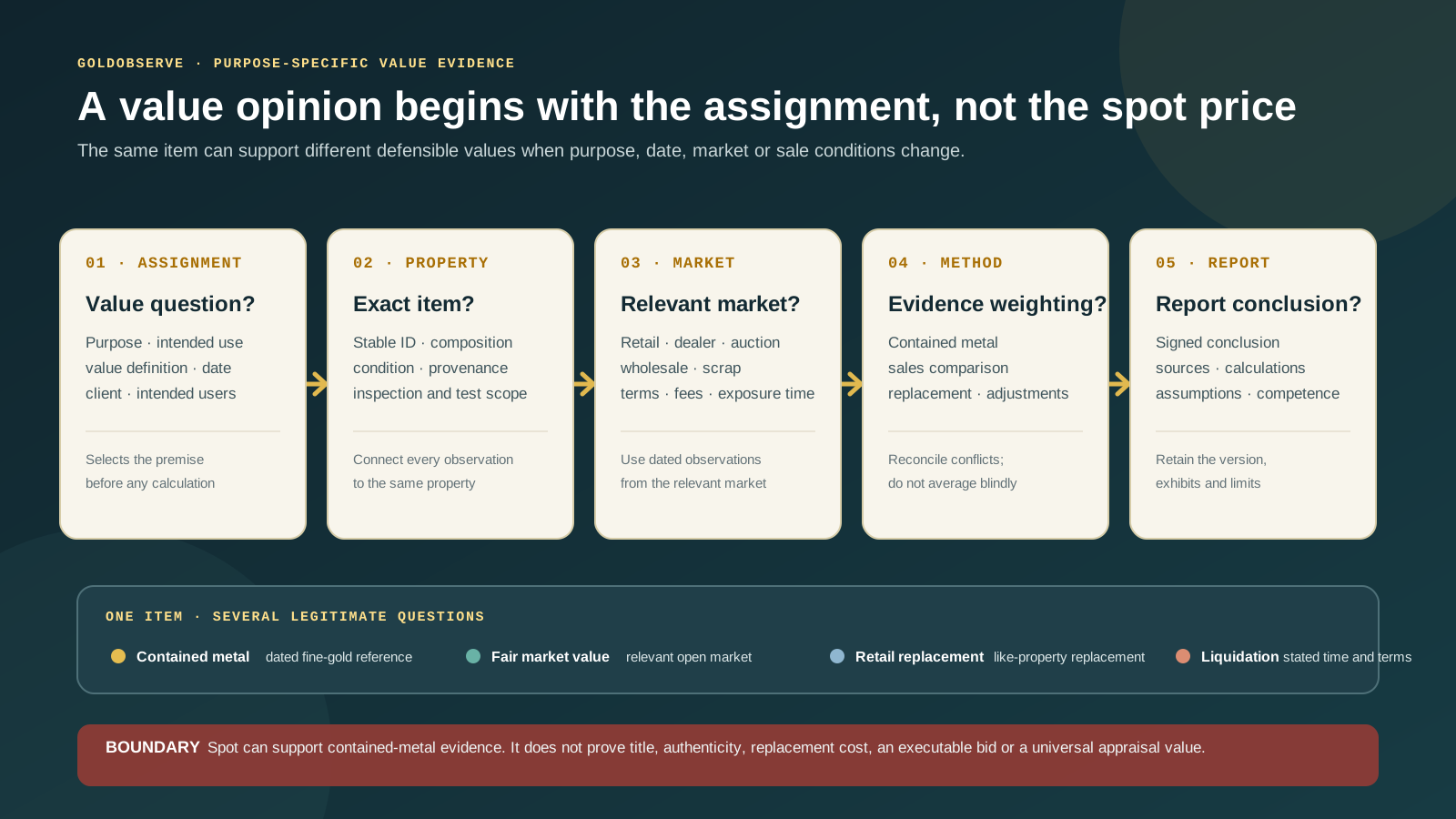
Method boundary: the diagram contains no market quote and produces no value. The governing assignment, current source evidence and signed report control.
ASSIGNMENT LOGIC
Six questions determine what evidence belongs in the report
Insurance, tax, estate, sale, division or purchase.
Exact items, inclusions, exclusions and stable IDs.
Effective date, not merely report or inspection date.
FMV, replacement, liquidation or another definition.
Retail, dealer, auction, wholesale or scrap.
Named client, intended users and use limits.
The conclusion can reverse when any one answer changes. A rare coin may command a collector premium in an orderly numismatic market yet receive only metal value in a rapid scrap transaction. An insurance replacement assignment can research a different market and cost structure from an estate fair-market-value assignment.
VALUE DEFINITIONS
One item can support several non-equivalent value opinions
PROPERTY EVIDENCE
Describe enough detail to reproduce the assignment
IRS guidance is unusually direct: an appraiser's opinion is no more valid than the facts supporting it. For coins, Publication 561 warns that age, rarity, demand and condition matter and that a trained grader is needed to distinguish fine grade differences. For jewelry, it calls for specialized analysis of construction, stones, fashion and condition rather than sentimental value.
METHOD AND RECONCILIATION
Show why the selected evidence answers this assignment
A metal-led method can be appropriate for fungible bullion when the product, fine content, condition, market and date are established. Sales comparison becomes more important when brand, scarcity, grade, provenance, design or stones create value not captured by melt. Replacement research may be relevant to an insurance assignment. Each method must state its data date, transaction costs, adjustments and limitations.
Reconciliation is not averaging every number. It explains why one indication deserves more weight. A dealer's advertised ask, a completed auction sale, a wholesale bid and a refiner payout can all be genuine observations while representing different markets, exposure times and net economics.
REPORT REVIEW
A useful report survives seven practical checks
- The purpose, intended use, users and value definition are explicit.
- The effective date is distinguished from inspection and report dates.
- Every value is tied to identifiable property and a relevant market.
- Methods, sources, calculations, adjustments and reconciliation are reproducible.
- Authenticity, title, testing and inspection assumptions are disclosed.
- The appraiser's property-specific competence and independence are documented.
- The signed report, photographs and source exhibits are retained as one versioned file.
PRIMARY AND STANDARDS SOURCES
Read the source that controls the assignment
- IRS Publication 561 and IRS Art Appraisal Services for fair-market-value, coin and jewelry evidence, qualified appraisal, qualified appraiser and report-content rules in federal tax assignments.
- The Appraisal Foundation's USPAP resource and personal-property appraisal overview for current standards and qualification context. USPAP applicability depends on law, policy, contract or professional obligation.
- NAIC homeowners and renters guidance for insurance limits, independent appraisals, documentation and policy-value boundaries.
- FTC Jewelry Guides and FTC gold-jewelry consumer guidance for truthful metal-content descriptions, karat marks, plating, hollow construction and other identity evidence.
- U.S. Mint bullion consumer awareness, official bullion programs and PCGS grading standards for product specifications, premium context and the boundary between grade and market value.
Reviewed July 31, 2026. Tax, insurance, court and professional standards can change. Confirm the exact assignment date, jurisdiction, policy, form instructions and appraiser obligations before relying on a report.
QUESTIONS
Gold appraisal questions
What is a gold appraisal?
A gold appraisal is a value opinion for identified property, a defined purpose, intended use, effective date and relevant market, supported by stated evidence, methods, assumptions and appraiser qualifications.
Can the same gold have several correct values?
Yes. Contained-metal value, orderly resale fair market value, retail replacement value and forced-liquidation value answer different questions. They are not interchangeable.
Does an appraisal prove gold is authentic?
No. An appraisal may rely on inspection, testing, certification or stated assumptions, but the report must explain the scope and limitations. A value opinion is not automatically an authenticity guarantee or title opinion.
How often should gold be appraised?
There is no universal interval. Update when the policy requires it, the relevant market or item condition changes materially, the assignment purpose or effective date changes, or the intended user will not accept the earlier report.